How youth-led action is helping tackle America's medical debt crisis

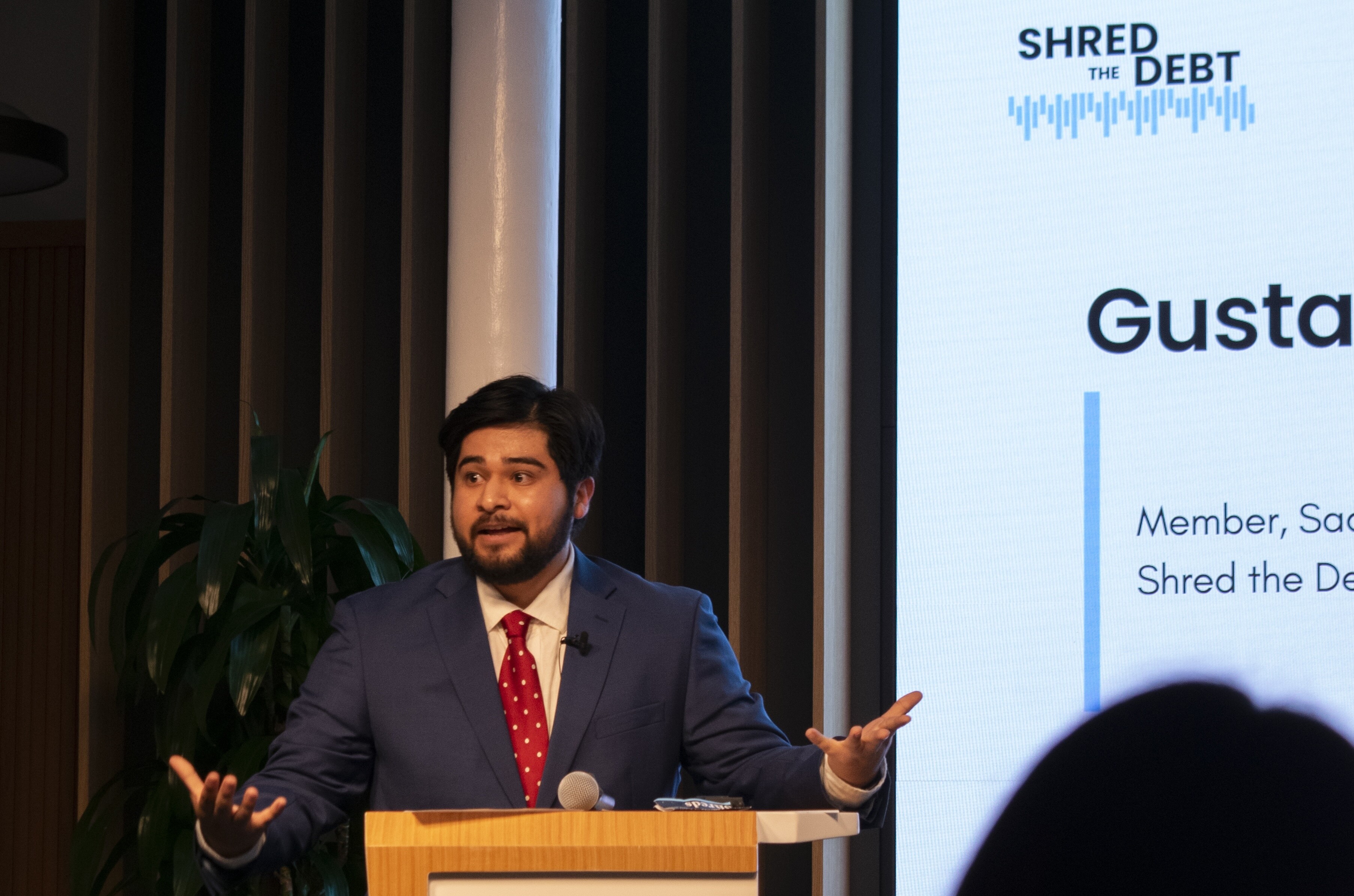
From local initiative to national campaign ... Shred the Debt gives young people a clear way to tackle a problem affecting millions. Image: World Economic Forum
- Shred the Debt, an initiative by the World Economic Forum's Global Shapers community in the United States, aims to eliminate millions of dollars in medical debt.
- Its growth from a local initiative to a national campaign reflects two conditions for scale: a widely recognised problem and a clear pathway for action.
- The Forum's latest Youth Pulse survey finds financial pressure is driving young people to seek societal impact, trust local leadership and engage through communities where they can make a tangible difference.
Medical debt is one of the most pervasive financial crises in the United States. It is the leading cause of bankruptcy in the United States and nearly half of Americans report skipping medical care because they are more afraid of the bill than the illness.
It is a crisis that does not discriminate by zip code, profession or political affiliation and yet, for decades, it has been treated as a private failure rather than a systemic one.
An initiative born at the community level
One project, which began in one city, has spread nationally. Shred the Debt started within the World Economic Forum's Global Shapers community when Gustavo Garcia, a Global Shaper whose own family had been directly uprooted by medical debt, decided that a personal crisis was, in fact, a collective one.
In partnership with Undue Medical Debt, a US-based non-profit that pioneered the model of purchasing medical debt portfolios for pennies on the dollar and abolishing them on behalf of families, Global Shapers began organizing their network to fundraise at scale.
A successful pilot cleared over $2 million in medical bills. Today, the project spans more than 20 hubs across the United States and the families it reaches will never see those bills again.
What the data tells us about young people
The campaign’s rapid expansion was no accident; it tapped into a shift in how young people respond to economic pressure and civic action.
The World Economic Forum's Youth Pulse 2026, which surveyed thousands of young people across regions, offers a revealing picture. Financial strain is the foremost source of stress for this generation, with inflation and economic instability ranking as the greatest personal threats to their lives.
Young people are now channelling that pressure into purpose. Across regions, young professionals increasingly prioritize societal impact over traditional measures of career success, including salary and job security.
At a time when many institutions are rethinking how to engage the next generation, these findings point to a different question: not whether young people are ready to drive change but what conditions allow their efforts to scale.
This shift extends directly to how young people view trust and leadership. Community leaders receive the strongest trust ratings among young people, while national political figures and institutions score significantly lower. Young people are not disengaged from change, they are seeking out the structures where their contribution feels most tangible and they are not doing it alone.
Ninety-five percent of respondents say that belonging to an intentionally designed community provides a critical space for learning, growth and dialogue.
What enables youth-led initiatives to scale?
The growth of Shred the Debt was driven by three conditions:
- The cause was universal. Medical debt touches nearly every American family in some form, bypassing the need to raise awareness or persuade the public. What’s required is only a credible path to action. Scalable programmes tend to start with problems people are already carrying, not problems they need to be convinced exist.
- Trust was distributed, not centralized. Each hub had real agency to fundraise, organize and build community in their own city. This mirrored what the data shows: young people respond to leadership that is proximate and accountable. When the power to act is local, participation follows.
- The role was concrete, not symbolic. Young people across more than 20 cities were given a specific mechanism to raise money that directly cancelled debt for families in their communities. Over nine out of 10 young people say community is essential but what sustains engagement is having a tangible role within it, not just membership.
How leaders and institutions should respond to youth-led solutions
The Global Shapers Community is built on the premise that young people are already driving systemic change. Shred the Debt offers one example of what is possible when young people are trusted with the space, resources and agency to lead.
The opportunity for institutions is to create the conditions that allow youth-led solutions to emerge, grow and scale.
Young people are not waiting for permission to tackle the systemic challenges of our time. The Youth Pulse 2026 data confirm this: more than one in three say they are likely to run for political office. They are also leading the adoption of digital tools for community organizing and social entrepreneurship as new ways to drive civic impact.
As more young people step forward to address complex challenges, institutions have an opportunity to support this momentum through infrastructure, co-ownership of the agenda and sustained investment in the community structures that enable long-term impact.
A generation ready to act already exists. The opportunity now is to build the conditions that allow its ideas, leadership and solutions to scale.
Don't miss any update on this topic
Create a free account and access your personalized content collection with our latest publications and analyses.
License and Republishing
World Economic Forum articles may be republished in accordance with the Creative Commons Attribution-NonCommercial-NoDerivatives 4.0 International Public License, and in accordance with our Terms of Use.
The views expressed in this article are those of the author alone and not the World Economic Forum.
Stay up to date:
Youth Perspectives
Related topics:

Forum Stories newsletter
Bringing you weekly curated insights and analysis on the global issues that matter.
More on YouthSee all

Daniel Mahadzir
September 24, 2026


