Closing the loop on plastics: How youth-led action is driving circularity
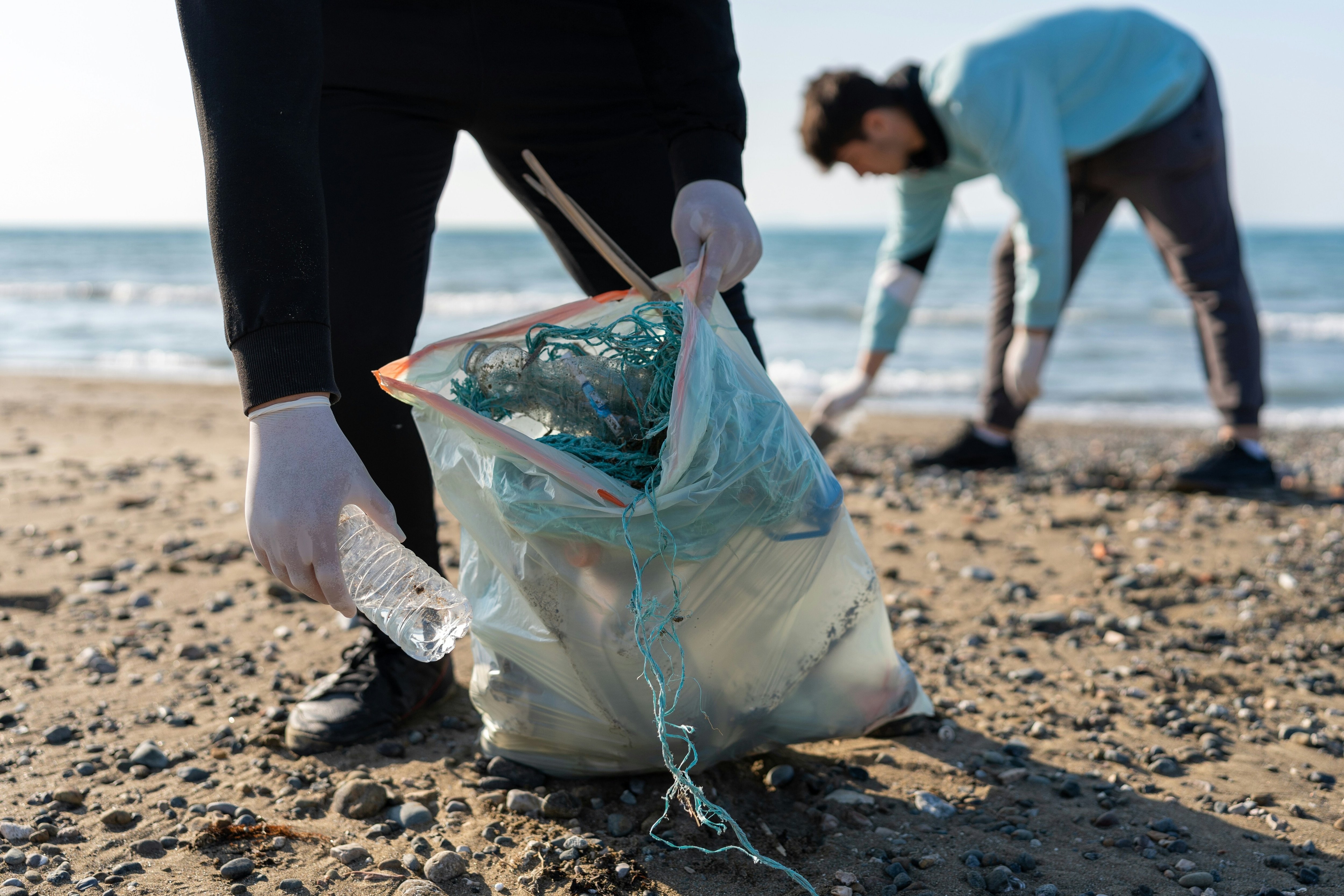
Young people are addressing the plastics challenge with circular solutions Image: Unsplash/Ahmet Kurt
- Plastic pollution remains at high levels despite widespread attention, with production having doubled over the past two decades and is expected to increase by 70% by 2040.
- The plastic value chain lacks circularity and although solutions exist, the challenge is connecting and scaling them, which requires infrastructure, finance, supportive policies and market demand.
- Globally, young people are addressing the challenge, putting their local knowledge into action. However, it will take collaboration and support from across private and public sectors to drive systems change.
Plastic pollution is a global problem that affects every locality. Most people do not see the islands of plastic waste floating in the ocean but they do see what shows up in their neighbourhoods: wrappers and containers collecting along roadsides, bags and sachets clogging drains, or bottles and fragments washing into water bodies.
Global plastics production doubled in less than two decades, reaching 460 million tonnes in 2019. Despite years of public attention and campaigns, only about 9% of plastic waste was recycled. Without interventions, plastic production is expected to increase by a further 70% by 2040, while the amount of waste that is mismanaged or leaked could rise by almost 50%.
These numbers only tell part of the story. Plastic pollution persists because the value chain was not designed for circularity. Products are often difficult to reuse or recycle; collection services do not reach every community; recyclers struggle to sort and recover enough high-quality materials; and markets provide too few incentives to keep that material in circulation.
These problems play out differently in different contexts, so the solutions also cannot simply be copied from one place to another. They need to consider how people consume, why waste accumulates and where recyclables can find value, all of which depend on the local context.
This is where young people can come in. They are closely connected to their communities and can help identify gaps that others often overlook. Many are already doing this by organizing local initiatives, testing innovative collection models, developing new business models and exploring alternatives to single-use plastics.
The 2026 International Youth Day theme, “Different Contexts, Common Aspirations,” recognises that while young people may be working in very different circumstances, they still share the same hope for a cleaner, more circular and plastic-free future. Now, thousands of young people worldwide are acting to realise that future.
Closing the loop is an implementation challenge
Closing the loop means keeping the material in circulation, rather than discarding it after a single use. This requires action and innovation across the life cycle. Products need to be designed to be reused or recycled. Then they must be collected and sorted properly, and where possible, traced, so that we know where the materials come from and where they go.
Finally, they must be reprocessed into new goods, hence closing the loop and thereby minimizing the need for new or virgin material. The challenge we see here is not a lack of solutions but the difficulty of connecting and scaling them.
A collection programme may recover large amounts of plastic waste but have no suitable recycler to send it to. A recycling facility may have the right equipment but lack a steady supply of usable material or consistent buyers for what it recycles. A reuse model may work well in a pilot but struggle to expand because return systems are inconvenient, expensive or mismatched with existing services.
Circular solutions need infrastructure, finance, supportive policies and market demand to move beyond isolated pilots. They also need clear pathways connecting actors and innovators with municipalities, recyclers and investors to become part of systems that work at the community, city and national levels.
This is why achieving plastic circularity is ultimately an implementation challenge.
Young people already driving change in their communities
Young people are already testing solutions in the communities where they live and work. By putting ideas into practice, they can adapt them to local needs and learn what works and what doesn't.
The World Economic Forum’s Global Shapers Community offers one example of how young people are translating local knowledge into practical action. Across more than 450 city-based hubs in around 140 countries and territories, over 11,000 young people are developing responses to challenges in their own communities.
Through Shapers for Plastic Action, they work with the Global Plastic Action Partnership to support locally designed responses to plastic pollution and connect them to a wider network.
Within three months of the initiative’s launch, more than 80 hubs had joined and over 22 new projects had been implemented. These included waste mapping and clean-ups in Haikou, storytelling-led recycling and reuse activities in Sarajevo, and school-based recycling and mangrove restoration in Cartagena.
Beyond the Shapers Community, young people are developing solutions across different parts of the plastics value chain.
Some are working upstream, where plastic is designed. HyaPak converts invasive water hyacinth into biodegradable packaging that can replace some single-use plastics.
Others are working midstream, where plastic is used. In Germany, The Ocean Package offers reusable shipping boxes made from recycled plastic, supported by digital tracking and return systems.
Many are working downstream, where plastic is discarded. Eco Star collects recyclable waste from households and businesses in Kuwait, while Enaleia works with fishing communities to recover plastic from the Mediterranean and Kenya’s Gjenge Makers turns discarded plastic into construction materials.
Young people are also developing the businesses and technologies needed to put these ideas into practice. The Mombasa Plastics Prize has supported young entrepreneurs in developing and testing businesses. Meanwhile, in India, three teenagers recently won The Earth Prize 2026 for Plas-Stick, a biodegradable powder that helps remove microplastics from water.
These examples show that young people are not waiting for change; they are already driving it.
From youth-led solutions to systems change
Youth-led initiatives, however, cannot build a circular plastics economy on their own; no one can. What is also needed is an enabling environment for true systems change.
Governments can involve young people when designing collection, reuse and extended producer responsibility systems.
Businesses can create demand through longer-term commitments to purchase recycled materials and services. Investors can finance shared infrastructure, such as sorting facilities, washing lines, transport and data systems, that individual entrepreneurs cannot build on their own.
National Plastic Action Partnerships offer one way to bring these actors together. By connecting government, business and civil society around country priorities, they can help link proven solutions to national plans, investment and implementation, as seen recently in Vietnam.
This International Youth Day should therefore be a moment to recognize the knowledge young people already bring, learn from the solutions they are testing and invest in those that work.
Plastic circularity will not be achieved through ambition alone. It will be built by connecting local knowledge and proven ideas with the stakeholders, institutions, finance and markets needed to create lasting change.
Don't miss any update on this topic
Create a free account and access your personalized content collection with our latest publications and analyses.
License and Republishing
World Economic Forum articles may be republished in accordance with the Creative Commons Attribution-NonCommercial-NoDerivatives 4.0 International Public License, and in accordance with our Terms of Use.
The views expressed in this article are those of the author alone and not the World Economic Forum.
Stay up to date:
Circular Economy
Related topics:

Forum Stories newsletter
Bringing you weekly curated insights and analysis on the global issues that matter.
More on Circular EconomySee all

Philippine de T'Serclaes
September 21, 2026


