The hidden carbon footprint of ICT and 4 ways your organization can reduce it

Early action is critical if ICT decarbonization is to deliver results Image: Unsplash+/Getty Images
- Information, communication and technology (ICT) is a major source of greenhouse gas emissions, but its current and future footprint remains difficult to quantify as AI drives rising energy demand.
- The ICT sector can improve decarbonization efforts through four remits: emissions data quality, circular economy strategies, data centre efficiency initiatives and logistics and packaging innovations.
- Early action is critical if ICT decarbonization is to deliver results but outcomes are more successful if all stakeholders work together.
As organizations approach their interim 2030 net-zero targets, information and communications technology (ICT) is already recognized as a material contributor to organizational emissions. However, its full scale and trajectory are often harder to pin down across devices, data centres and the wider technology lifecycle.
Globally, the ICT industry accounts for roughly 1.5-4% of greenhouse gas (GHG) emissions, comparable to aviation.
At the same time, the rapid adoption of artificial intelligence (AI) is pushing up compute intensity and energy demand, with global data centres projected to consume 945 terawatt-hours of energy per year by 2030, more than the energy consumption of Japan.
This vast energy consumption has created a supply surge and demand shortage, pushing up prices for computing hardware and straining ICT budgets.
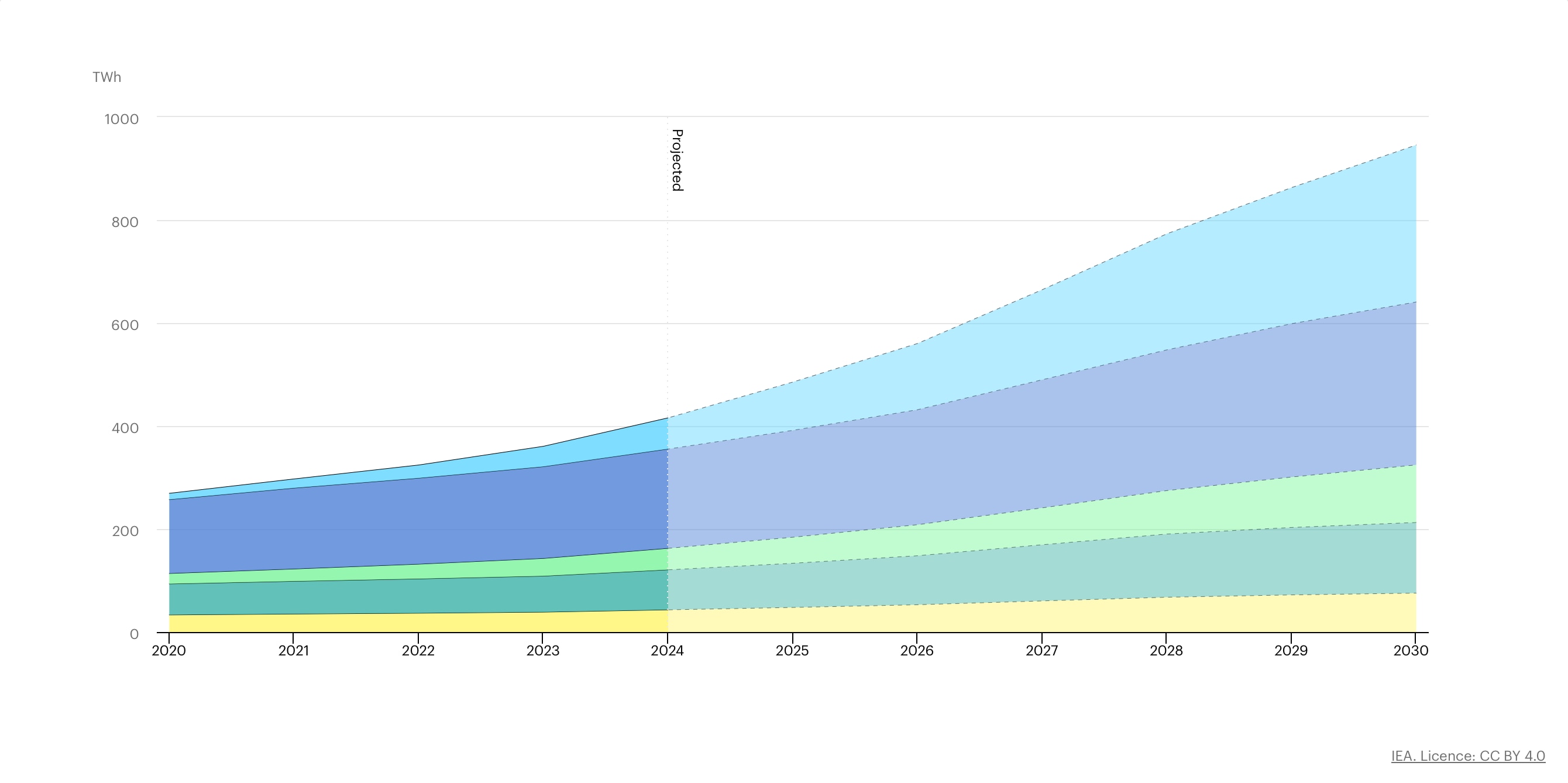
This can be a challenge for company’s decarbonization goals. One report found that around 63% of the companies it tracked are committed to net-zero targets and evidence suggests many organizations are increasing rather than tempering their decarbonization ambitions.
In sectors such as professional services, finance and media, where the primary resources are people and technology, technology-related emissions are already material.
In finance and insurance, for example, ICT can account for more than a third of Scope 2 emissions according to research by McKinsey. Decarbonizing ICT is therefore no longer optional but a critical pathway for organizations seeking to meet their net-zero commitments.
4 steps to help decarbonize ICT
Thankfully, unlike many decarbonization challenges, ICT is comparatively actionable. Four practical areas consistently deliver results:
- Emissions data quality
- Circular economy strategies
- Data centre efficiency initiatives
- Logistics and packaging innovations
Following these four steps and tackling each of these areas can produce predictable, measurable reductions in carbon and cost for organizations.
1. Collect better data for accurate emissions analysis
The first step to decarbonizing IT is collating emissions data that is accurate enough to support decision-making.
As sustainability reporting frameworks such as the Corporate Sustainability Reporting Directive (CSRD) and International Sustainability Standards Board (ISSB) aligned disclosure standards and California’s Climate Corporate Data Accountability Act (SB 253) come into force across major global markets, auditable sustainability data and third-party assurance are becoming standard requirements.
Many organizations still rely on spend-based emissions calculations, which estimate carbon impact based on supplier revenue and average emissions factors.
While this approach is a useful starting point, it introduces uncertainty and often skews towards conservative, worst-case figures.
Higher purchase prices can also appear as higher emissions, even when they reflect more durable, repairable, or energy-efficient products. There is even less clarity on where action will have the greatest impact and on overreporting.
Within ICT hardware, more granular measurement approaches are required. More advanced lifecycle assessments are best conducted in line with ISO 14040, 14044 and 14067 standards.
This form of assessment calculates emissions at the component level across manufacturing, transport, use and end-of-life and is widely regarded as the gold standard for product-level carbon measurement.
Lenovo, for example, has released a lifecycle assessment for its next-generation ThinkPad range (both new and refurbished devices) and makes this third-party-assured data available through its Carbon Impact Portal, with the option of highly granular, region-specific product carbon footprint data.
2. Extend device lifetimes through circular models
The second step to decarbonizing ICT is extending the lifecycle of devices. The world generates around 62 million tons of e-waste each year. Moreover, for many organizations, end-user devices account for a significant share of ICT emissions.
Up to 80% of a typical laptop carbon footprint is generated during manufacturing, while energy use during operation is comparatively low.
This makes device longevity one of the most effective interventions available. At Lenovo, we recently undertook third-party-verified lifecycle assessments of our certified refurbished devices. We found that the refurbished devices we assessed carry half the emissions of their new versions.
Circular device models such as this have moved beyond pilot programmes and into mainstream procurement.
Refurbished equipment is now available with full warranties, manufacturer parts and enterprise-grade support directly from the original equipment manufacturer (OEM), at a lower cost than new.
ICT employee acceptance is also high, with research from Gartner showing that over 70% of employees globally would be happy to use a refurbished device, particularly when refurbished devices are positioned as part of a wider sustainability strategy.
OEMs are also expanding refurbishment-as-a-service offerings, allowing organizations to extend device lifecycles through upgrades, refurbishment and battery replacement as needed.
At end of life, secure data erasure and responsible asset recovery remain essential and recent increases in component costs mean the value left in old devices has risen significantly.
3. Improve data centre efficiency
Step three shifts attention to ICT infrastructure, such as data centres. Unlike personal hardware, their emissions are dominated by continuous and energy-intensive operation.
Facilities operating at a power usage effectiveness (a metric that measures the ratio of total facility energy use to the energy consumed by ICT equipment alone) of around 1.1 consume 84% less overhead energy than the industry average.
But how can we achieve better energy usage? Physical efficiency, for example, focuses on liquid cooling (versus traditional air cooling), power distribution and facility design to improve effectiveness.
For example, at Lenovo we have found that liquid cooling increases efficiency by up to 40%. Workload efficiency is also important and centres on consolidating and right-sizing compute tasks to avoid idle capacity and ensure optimized allocation. Companies running AI workloads should take a holistic approach and aim to increase efficiency across the IT stack, maximizing the AI tokens that can be produced per kilowatt-hour of energy.
Once companies have improved energy efficiency as much as possible, they can explore sourcing renewable energy through procurement options such as power purchase agreements.
4. Rethink logistics and fulfilment
Finally, the fourth step is to address the often-overlooked logistics and fulfilment aspects of ICT, where minor operational decisions can have a disproportionate impact.
Better planning can reduce reliance on air freight, which emits more GHG emissions than sea freight.
Consolidating shipments and using bulk packaging reduces both transport emissions and material use. Even packaging choices matter. Moving away from plastic can deliver meaningful reductions in material waste at scale for organizations managing large device fleets.
How to shift from intention to execution
Early action is critical if ICT decarbonization is to deliver results. Establishing a credible baseline, improving data quality and committing to a multi-year plan are key for converting ambition into results.
Outcomes improve when ICT, procurement, sustainability teams and OEM partners work together towards a shared programme rather than isolated purchasing decisions.
Combining lifecycle management, reporting-grade data and operational improvements allows progress to compound over time. Successful companies also set clear key performance indicators, such as reaching 20% refurbished devices by 2030.
With credible targets and disciplined execution, ICT can shift from a constraint to one of the most predictable decarbonization workstreams in the organization.
Don't miss any update on this topic
Create a free account and access your personalized content collection with our latest publications and analyses.
License and Republishing
World Economic Forum articles may be republished in accordance with the Creative Commons Attribution-NonCommercial-NoDerivatives 4.0 International Public License, and in accordance with our Terms of Use.
The views expressed in this article are those of the author alone and not the World Economic Forum.
Stay up to date:
Sustainable Computing
Related topics:


Forum Stories newsletter
Bringing you weekly curated insights and analysis on the global issues that matter.
More on Climate Action and Waste Reduction See all

Philippine de T'Serclaes
September 21, 2026