What young leaders are telling us about the future: 5 signals from the World Economic Forum’s youth summit
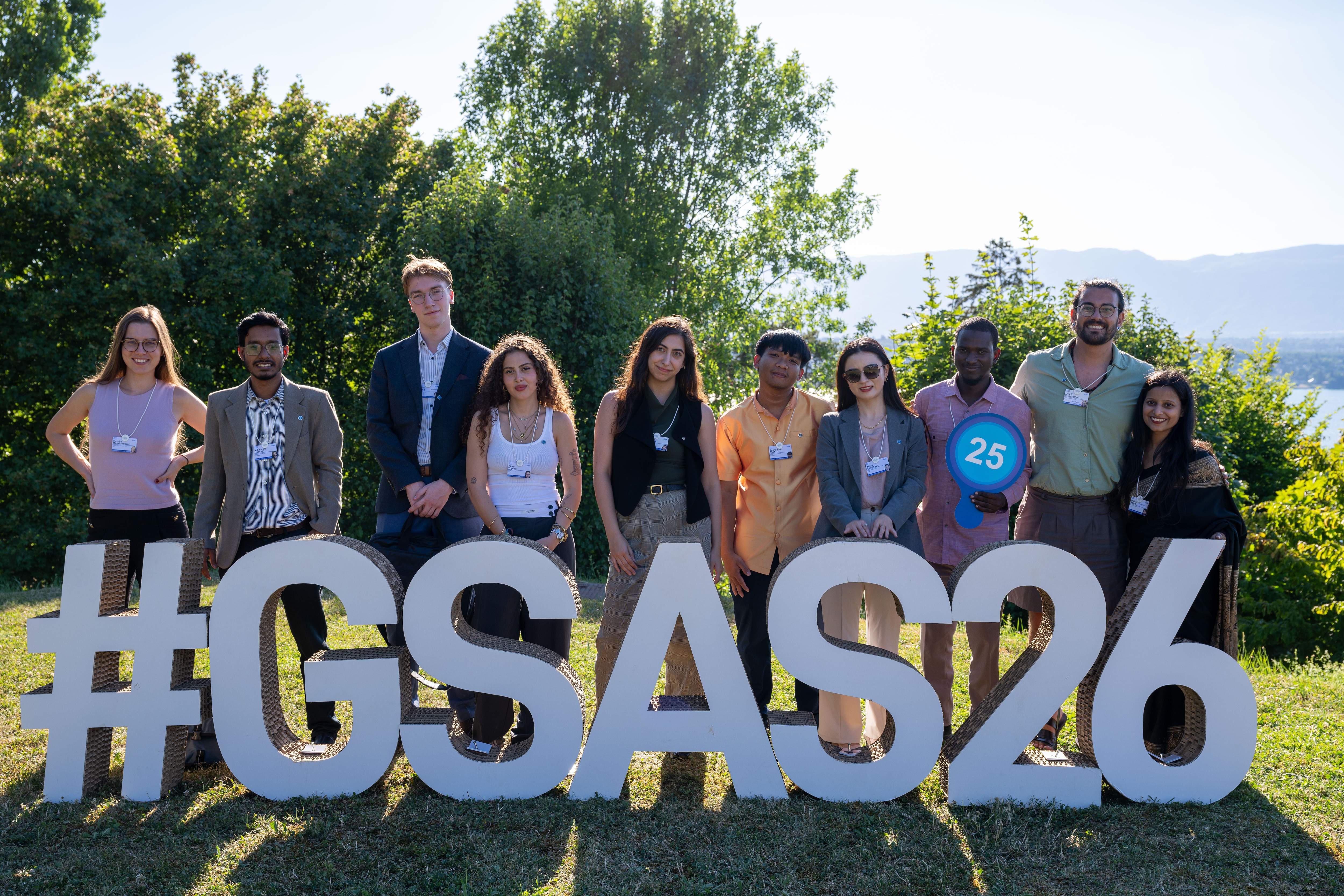
Young people shared their insights into the forces defining the world at this year's Global Shapers Annual Summit. Image: World Economic Forum
- Young people are experiencing shifts in technology, work and climate in ways that can offer early signals of broader economic and societal shifts.
- At the Global Shapers Annual Summit 2026, young leaders highlighted how intergenerational collaboration, agency and new definitions of ambition are shaping their response to uncertainty.
- Listening to young people is not only about representation; their lived experience can help leaders make better decisions.
Every generation comes of age amid change. For young people today, several profound transformations are converging at once: artificial intelligence is reshaping work, climate change is altering communities and economies, and traditional assumptions about careers, leadership and institutions are being tested.
These shifts are often discussed in terms of what they will mean for young people. But what if we paid closer attention to what young people can tell us about them?
At the World Economic Forum’s Global Shapers Annual Summit 2026, nearly 500 leaders under 30 from more than 120 countries and territories came together in Geneva. Across conversations on technology, entrepreneurship, climate action and leadership, young people were identifying changes already under way, proposing ways to navigate them and challenging institutions to respond differently. Five signals stood out:
1. Mixing generations can produce better leadership
Intergenerational leadership is often framed as a question of representation: How do we give younger generations a seat at the table? Conversations at the summit suggested a more ambitious idea. Different generations bring different knowledge, experience and perspectives to the same problems; mixing them can improve how organizations make decisions.
“True partnership instead of tokenization” is how Lynn Malkawi, a Global Shaper from the Amman Hub, described what meaningful intergenerational leadership should look like. The relationship, she argued, needs to work in both directions, with generations recognizing the value and expertise each brings.
OECD research finds that multigenerational workforces can benefit from complementarities between the experience of older workers and the skills of younger ones, improving performance and productivity.
The opportunity, then, is not simply to transfer power from one generation to another. It is to combine it. Younger leaders may bring proximity to emerging technologies, changing social expectations and new behaviours; more experienced leaders bring institutional knowledge, networks and lessons accumulated over time.
For institutions navigating rapid change, generational diversity can be a decision-making advantage.
2. Anxiety can become a source of agency
Young people are experiencing some global challenges more personally and for longer than generations before them. Climate change is perhaps the clearest example. A global study of 10,000 people aged 16 to 25 across 10 countries found that 59% were very or extremely worried about climate change, while more than 45% said those feelings negatively affected their daily lives.
At the Summit, Kiara Winona Sweeney, a Global Shaper from the Munich Hub, urged her peers to “turn it into agency and turn that agency into action” by building partnerships, mobilizing volunteers, testing solutions and learning from failure.
“We’re not the future leaders”, she said. “We are leaders right now and we are here to secure our future as well.”
Across the Global Shapers Community, that mindset is translating into locally led solutions to global challenges. Agency does not require certainty. Institutions can strengthen it by giving young people the resources, relationships and room to test ideas and turn concern into practical action.
3. Young people are experiencing AI as both an accelerator and a disruptor
Young people are embracing AI, but they are also among those most exposed to the changes it could bring to work. A recent World Economic Forum report found that more than one in three young workers globally are employed in occupations with medium-to-high exposure to AI-driven task change.
Ben Pfeffer, a Global Shaper from the Austin Hub, observed that more young people are “betting on themselves”, starting businesses, non-profits and other ventures, in part because AI has made it faster and easier to build.
As Marc Benioff told participants during the summit’s opening plenary: “Artificial intelligence is one of the most powerful technologies ever placed in human hands.” He argued that AI will be one of the most consequential technologies in human history. His message to the young leaders was clear: “You will lead the AI revolution.”
That leadership comes with responsibility. As young people become some of AI’s earliest adopters, builders and entrepreneurs, they will also help shape how it is used and who benefits from it.
4. Economic uncertainty is changing the meaning of ambition
For generations, professional success has often been represented as a ladder: education, an entry-level role, promotions and eventually leadership. That model is becoming less certain as technology reshapes entry-level work, and young people reconsider traditional definitions of career progression.
At the Summit, Kacha (Shogun) Mahadumrongkul, a Global Shaper from the Bangkok Hub, argued that with fewer entry-level opportunities available, young people increasingly “have to take agency and create their own new opportunities”. AI, he added, is reducing some of the barriers associated with starting something new.
New LinkedIn data found that nearly three-quarters of Gen-Z entrepreneurs have multiple income streams, reflecting the rise of portfolio careers. Deloitte’s global research, meanwhile, found that only 6% of Gen Zs and millennials identify reaching a leadership position as their primary career goal.
This does not suggest that young people are less ambitious. Rather, ambition may be taking different forms, with greater emphasis on agency, learning, purpose and flexibility. The next generation still wants to progress, but its definition of progress may be changing.
5. Young people can help us see around corners
Perhaps the most important signal from the summit was also one of the simplest: Listening to young people can help us understand what may come next.
Foresight depends on identifying emerging trends and weak signals before they become mainstream. Different generations can notice different signals because they experience change from different vantage points. Young people are often early adopters of new technologies and will live longest with decisions being made today.
As Bryonie Guthrie, Manager of Strategic Foresight at the World Economic Forum, explained: “Different generations are going to understand the future in a different way and they’re going to see signals of the future in a different way.” Without bringing those perspectives together, institutions risk missing signals that could change how the future plays out.
The World Economic Forum’s Youth Pulse offers one way of listening at scale. In 2026, nearly 5,000 young people across almost 500 locations shared their insights on AI, economic security, climate change and institutions. Their responses offer insight into how shifts are already being experienced by the next generation.
Young people should therefore be seen as more than stakeholders affected by long-term decisions. Their experiences can provide useful intelligence about emerging behaviours, expectations, risks and opportunities.
Listening to young people is about more than representation. It can help institutions ask better questions and make better decisions about the future.
Don't miss any update on this topic
Create a free account and access your personalized content collection with our latest publications and analyses.
License and Republishing
World Economic Forum articles may be republished in accordance with the Creative Commons Attribution-NonCommercial-NoDerivatives 4.0 International Public License, and in accordance with our Terms of Use.
The views expressed in this article are those of the author alone and not the World Economic Forum.
Stay up to date:
Future of Work


Forum Stories newsletter
Bringing you weekly curated insights and analysis on the global issues that matter.
More on YouthSee all

Daniel Mahadzir
September 24, 2026


