Japan is combining tech and human connection to help people live well until 100
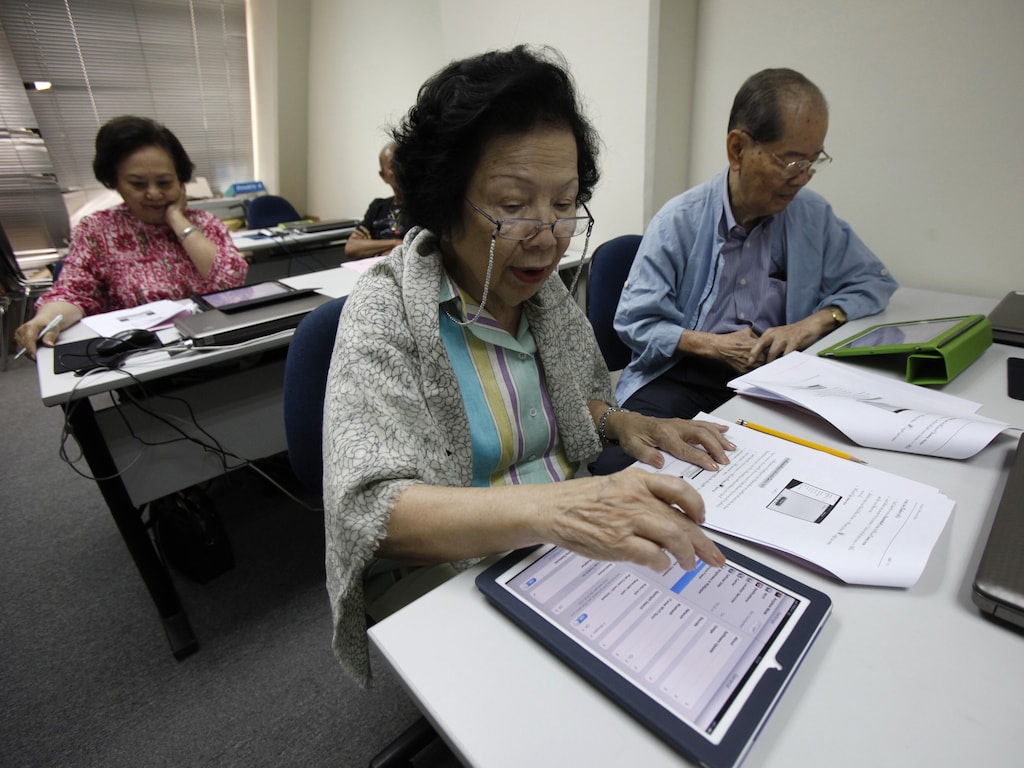
Japan now aims for its hundreds of thousands of 100-year-olds to live healthy lives until the age of 100, and it is using technology to help make that happen. Image: REUTERS/Chaiwat Subprasom (THAILAND - Tags: ANNIVERSARY SOCIETY SCIENCE TECHNOLOGY)
- Japan now has over 100,000 centenarians, yet healthy life expectancy trails life expectancy by around a decade.
- AI cognitive checks and ‘digital co-living’ tools aim to support self-care and delay the need for care.
- Mobile supermarkets and later retirement ages are keeping older people socially connected and active.
In September 2026, Japan announced that its population of centenarians had exceeded 100,000 for the first time.
The average life expectancy in Japan in 2022 stood at 81.05 years for men and 87.09 for women. There was, however, a gap of around nine years for men and 12 years for women between life expectancy and healthy life expectancy. With people aged 65 and over already accounting for nearly 30% of the population, longer lives accompanied by extended periods of health challenges and limitations on daily activities can affect not only individual quality of life but also the wider health and care system. Creating an environment that enables people to remain healthy and independent for as long as possible is therefore becoming increasingly important.
The burden of caregiving for families and growing workforce shortages in the care sector present additional challenges. Rather than waiting until people need care, there is a growing need for preventive approaches that can help delay or reduce the need for it.
Against this backdrop, Japan is pursuing initiatives that support healthy longevity through both technology and social participation.
Japan's government initiatives building the foundations
Japan’s Cabinet Office is promoting ambitious research and development through its large-scale Moonshot Research and Development Program. Of its 10 goals, Goal 7 aims to enable people to “enjoy life to 100 years old without health concerns”. With Japan’s centenarian population projected to reach 300,000 by 2040 and labour shortages in healthcare and elderly care expected to intensify, the programme supports research designed to help people enjoy longer lives in good health. Ten research projects are currently under way, including “Bringing hospitals into the home, controlling inflammation at home”, with the aim of helping prevent and overcome major diseases while contributing to more sustainable healthcare and elderly care systems.
The Ministry of Health, Labour and Welfare has also set out its Health Care 2035 vision. It identifies three goals for Japan’s health system by 2035: enhancing the value of healthcare, supporting individuals’ proactive choices across society, and enabling Japan to lead global health. The initiative seeks to strengthen the foundations of the health system by creating an effective environment for innovation, developing information infrastructure and securing the necessary workforce and financial resources.
Healthy ageing alongside technology
Companies are also developing technologies designed to help extend healthy life expectancy.
As household structures change and fewer generations live under one roof, Panasonic is developing a system that enables “digital co-living”, helping family members maintain a degree of connection even when they live apart and supporting older people in living with greater peace of mind. By combining tools that enable different forms of remote connection, the initiative aims to encourage self-care while creating opportunities for social participation and a greater sense of purpose, ultimately helping prevent or delay the need for care.
Many people combine work with caring for family members in Japan, leading to an estimated economic loss of ¥9.2 trillion ($58.3 billion) by 2030. Support tools such as digital co-living could help ease the burden on caregivers while also reducing the associated economic impact.
One example of technology supporting self-care is ONSEI Pro, an app developed by Nippontect Systems that allows people to check their cognitive function. Users simply answer questions by voice on a tablet, and AI analyses and visualizes their cognitive function within a short period of time. The app began being introduced into selected health screening programmes in summer 2026 and is expected to support the early detection of cognitive decline.
Systems that encourage more social participation
While technology is playing a growing role, increasing attention is also being paid to social participation’s role in maintaining health among older people.
One example of a service that supports independent living while helping older people stay socially connected is the mobile supermarket Tokushimaru. An estimated 7 million people across Japan experience difficulties with everyday shopping because they lack convenient access to supermarkets and other stores. Tokushimaru loads its trucks with more than 400 products, including fresh food, and brings them to locations near customers’ homes.
Rather than simply delivering groceries, the service positions shopping as an enjoyable part of daily life, creating regular opportunities for people to step outside their homes and talk with others. Its drivers also play a role in informally checking on customers’ well-being. Tokushimaru now works with regional supermarkets across Japan, building a network that stretches from Hokkaido to Okinawa and reflecting growing demand for this type of service.
Working lives are evolving too. While many Japanese companies traditionally set mandatory retirement at 60 and offer re-employment until 65, pharmaceutical company Shionogi is introducing a system from in 2027 that will allow employees aged 65 and over who wish to continue working to remain employed as regular full-time employees.
Meiji Yasuda has extended the upper age limit for post-retirement contract employment to 70. From FY 2027, it also plans to introduce a flexible retirement system at age 70 that will allow employees to choose how they work according to their individual life plans. Such initiatives expand opportunities for older people to contribute the experience they have accumulated while maintaining social connections through work.
Healthy life expectancy through technology and human connection
As Japan’s population ages, extending the number of years during which people can live healthy, independent lives is becoming an increasingly important challenge. This requires not only responding once people need care, but also taking preventive action to support health at an earlier stage.
Technology can play an important role in monitoring health, supporting self-care and reducing the burden on families and caregivers. However, technological progress alone cannot address all the challenges of an ageing society. Human connection, dignity and opportunities to participate in society must also remain central.
Japan is responding to demographic ageing by combining technological innovation with a human-centered approach. By treating technology and human connection as complementary pillars of healthy longevity, its experience could offer valuable lessons for ageing societies around the world.
Don't miss any update on this topic
Create a free account and access your personalized content collection with our latest publications and analyses.
License and Republishing
World Economic Forum articles may be republished in accordance with the Creative Commons Attribution-NonCommercial-NoDerivatives 4.0 International Public License, and in accordance with our Terms of Use.
The views expressed in this article are those of the author alone and not the World Economic Forum.
Stay up to date:
Longevity Economy
Related topics:


Forum Stories newsletter
Bringing you weekly curated insights and analysis on the global issues that matter.
More on Health and Healthcare SystemsSee all

Alok Medikepura Anil
October 14, 2026


