Beyond the AI gold rush: How the Global South can lead the bioeconomy revolution
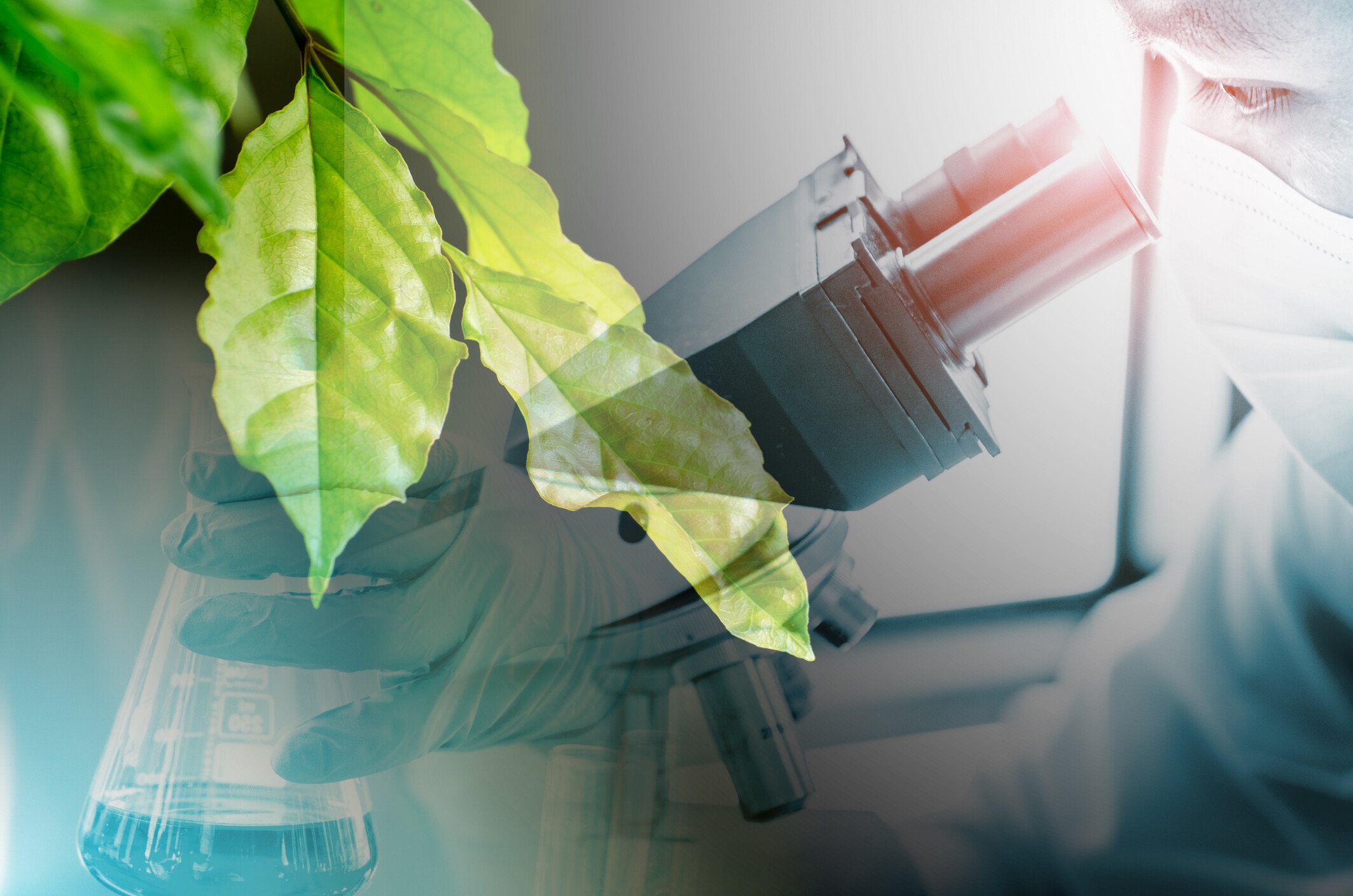
The intersection of biotech and deep tech offers the Global South economic opportunities. Image: Getty Images/iStockphoto
- Bypassed by previous industrial revolutions, the Global South now has an opportunity to lead in emerging biotech.
- As the Global North dominates AI, the South remains exposed to unregulated models and autonomous agents.
- Developing nations can leverage agricultural strengths and low-cost manufacturing to produce high-value biotech for global markets.
From the first industrial revolution to the fourth, a constant trend has emerged: labour market shifts and wealth accumulation within the Global North. The Global South has largely remained a consumer market for northern products and a sourcing market for raw materials, driving inequitable wealth accumulation throughout the past three industrial ages.
In the first three industrial revolutions, shifts that occurred over generational time frames provided governments with enough leeway to organically absorb shocks arising from social and labour instability.
Present-day emerging technology is evolving orders of magnitude faster. We are witnessing rapid artificial intelligence (AI) adoption among the masses, exponentially growing cybersecurity threats, the mainstream readiness of driverless cars, and the evolution of robotics systems equipped with vast computing power and autonomous decision-making capabilities. Yet this unprecedented speed of change provides an opportunity for agile, adaptation-ready Global South countries to innovate, regulate, incubate and nurture ideas to maturity.
Governments across the Global South now stand at a crossroads driven by the Law of Pacing: Technology changes exponentially, while organizational change is more incremental due to the slow pace of adaptation of laws, regulations and social systems.
Policymakers are forced to ask whether to slow growth, cushion job losses and tighten technology regulation, or allow unregulated technology to expand across society in pursuit of rapid economic gains in this modern gold rush. Compounding this dilemma are looming global conflicts and growing geopolitical mistrust, which threaten to disrupt innovation across an already fragmented Global South.
The trajectory towards frontier AI and early autonomous agents sets an alarming tone, characterized by the rapid rise in advanced technologies, lack of proactive regulation and knee-jerk policy responses to uncontrolled technological growth. While AI has become embedded in daily work and personal routines – with consumer data actively extracted to refine models – few guardrails exist across most Global South countries. This leaves citizens vulnerable to unregulated, northern-developed AI models and autonomous agents capable of escalating their role from service operators to unauthorized system administrators.
Autonomy through biotech
Moving beyond the fast-evolving world of AI, where the Global South lacks dominant market competitors, a new frontier opportunity is emerging: deep tech/science combined with biotech. Think robotics-focused hardware like 3D printing, used in collaboration with conventional biotech practices to introduce the world to the wonders of bioprinting.
Technology convergence of these fields holds the potential to expand national bioeconomies. It enables nations to secure bioenergy independence and reduce dependence on fossil fuels, grow their biopharma exports and integrate into northern healthcare supply chains, develop climate-resilient crops that improve national food security, invent equitable healthcare solutions for the masses, and engineer bioplastics to reduce ocean pollution.
Learning from the lost opportunities of past technological eras, where emerging technologies were either over-regulated or left entirely unchecked, Global South governments must create policy that ensures equitable access to tech across all economic strata and leverage international cooperation to accelerate innovation.
As humanity navigates the transition from artificial intelligence towards artificial general intelligence (AGI), and as deep tech accelerates silicon chip design towards a new supercomputing era, crucial lessons are to be learnt about why the Global South failed to nurture a formidable global solution provider in software and chip manufacturing. Deep tech and biotech could represent the unwritten story where that lost opportunity can be reclaimed.
Breaking old hegemonies
In the realm of AI, which is rapidly approaching mass adoption, the lack of uniform global regulatory frameworks reflects deep geopolitical fragmentation. The United States relies on protectionist measures to safeguard domestic innovation, the European Union enforces heavy regulatory frameworks that risk hindering innovation speed, and China maintains state-controlled tech with limited public transparency on algorithm training and data use.
Meanwhile, Global South nations predominantly occupy a "wait and watch" consumer position. Equity and access remain low, while global AI firms compete for users across developing markets. AI has yet to be deployed at scale to solve systemic national-level problems in these regions.
Furthermore, cross-border collaboration is constrained by citizen data-infringement concerns, the non-transparent deployment of autonomous defence capabilities of privately built sovereign AI models, and strict export controls imposed due to geopolitical concerns.
A similar pattern defines deep tech and silicon chip manufacturing, an emerging frontier dominated by first-world innovators. The US continues to heavily invest and subsidize domestic R&D and manufacturing, China maintains a growing R&D and strong production ecosystem, and the European Union invests considerably in R&D while lacking scaled domestic fabrication capabilities.
The Global South represents the largest consumer market for these technologies, but possesses a minimal Original Equipment Manufacturer (OEM) footprint, resulting in negligible global equity. Cross-border cooperation remains severely restricted due to geopolitical bottlenecks, rare-earth mineral export restrictions and data privacy concerns.
However, the technology convergence that we witness from the intersection of biotech and deep tech presents a dramatically different picture. Western economies maintain high R&D spending, while China continues to strengthen its manufacturing pipelines with a national priority towards boosting its bioeconomy.
Global South economies possess proven low-cost, mass-manufacturing capabilities – as demonstrated during global vaccine rollouts during the COVID-19 pandemic. Because many Global South nations are fundamentally agrarian, expanding the bioeconomy offers an unprecedented opportunity for high equity and access, addressing the critical need to maintain food security.
Developing nations can leverage their existing agrarian and manufacturing ecosystems to build high-value upstream R&D tailored for global supply chains, which can attract capital inflow through Western-funded foreign direct investments.
Most importantly, cross-border collaboration potential in biotech remains exceptionally high but is hindered by regional mistrust and growing geopolitical conflicts. As the rapid development and deployment of COVID-19 vaccines proved, even in a world divided by conflict and mistrust, global scientific and manufacturing networks can unite around shared crises.
The Global South might have lost the race to innovate in global AI, but its governments can still invest in, nurture and regulate their local bioeconomy ecosystem to capture gains that we expect over the next decade.
Innovating in a fragmented world requires innovation in policy, diplomacy and regulation that ensures equitable access that citizens can trust. The opportunity exists now for the Global South to use technology to bridge the gap and catch up on the lost opportunities of the previous technological eras.
Don't miss any update on this topic
Create a free account and access your personalized content collection with our latest publications and analyses.
License and Republishing
World Economic Forum articles may be republished in accordance with the Creative Commons Attribution-NonCommercial-NoDerivatives 4.0 International Public License, and in accordance with our Terms of Use.
The views expressed in this article are those of the author alone and not the World Economic Forum.
Stay up to date:
Artificial Intelligence


Forum Stories newsletter
Bringing you weekly curated insights and analysis on the global issues that matter.
More on Health and Healthcare SystemsSee all

Rana Dajani and Ahmad Jadallah
October 12, 2026


