World leaders discuss pandemic preparedness, and other health stories
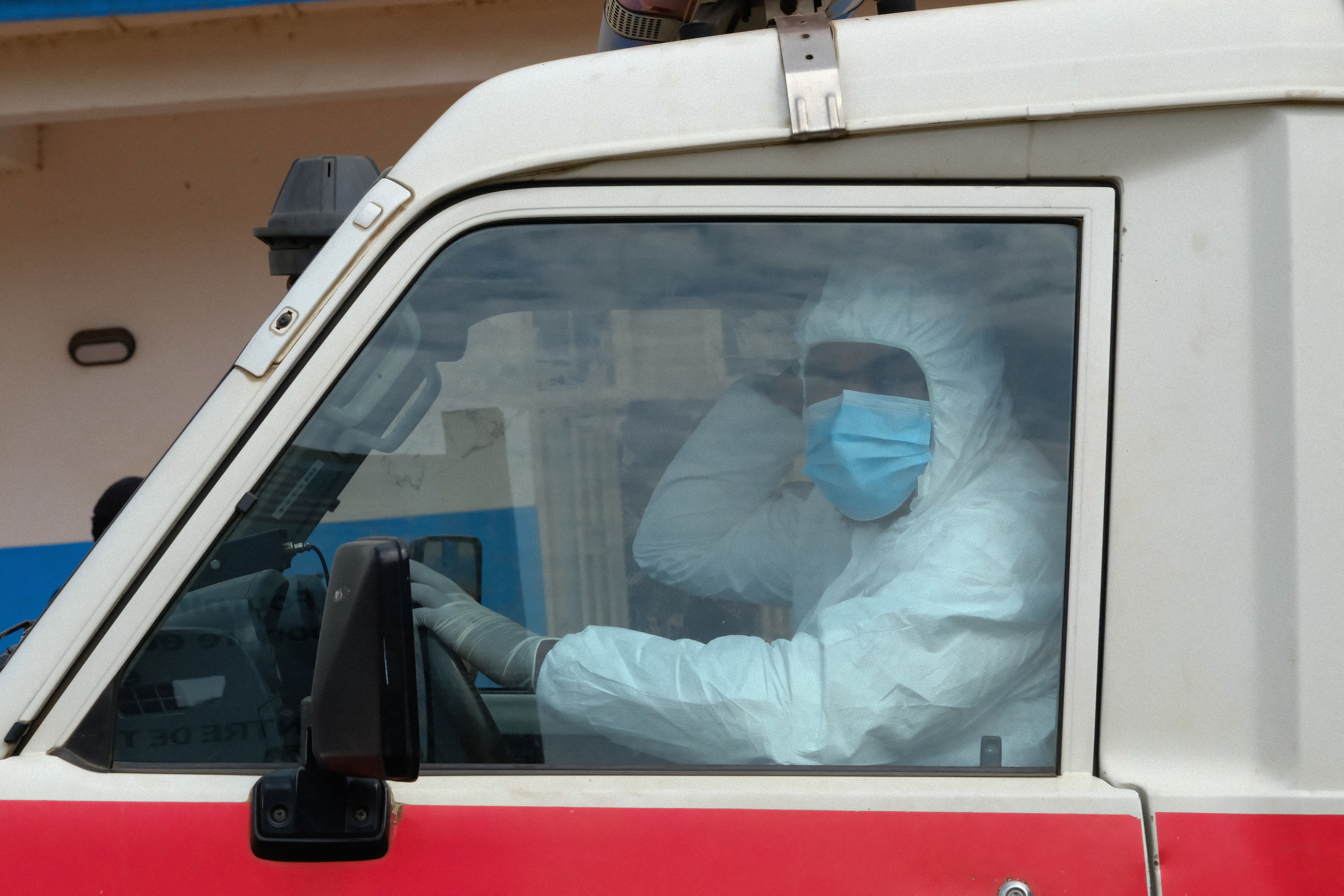
Preparation will be crucial for dealing with the next pandemic, the United Nations says. Image: REUTERS/Gradel Muyisa Mumbere
- This global round-up brings you health stories from the past month.
- Top stories: World leaders discuss pandemic preparedness; WHO calls for stronger ethics oversight of AI in health; Pennsylvania measles outbreak grows.
1. World leaders renew pandemic preparedness commitment
World leaders met to discuss pandemic prevention, preparedness and response at September's United Nations General Assembly (UNGA) in New York.
A one-day high-level meeting focused on coordinating global action, financing and equitable access to medical supplies. At the meeting, leaders renewed their commitment to making the world safer from future pandemics and highlighted the need for sustained, more equitable investment in this area.
Countries stressed that strengthening pandemic prevention, preparedness and response is not just a health issue, but one that spans government and society and that must involve communities and all relevant stakeholders.
Because the timing of the next pandemic cannot be predicted, the UN says preparation is crucial. Six years after COVID-19, the world is still “grappling” with how to do this.
Because an outbreak in one country can quickly spread to others, surveillance, data sharing, research and development – as well as access to vaccines and treatments – are international priorities, according to the organization.
Sustainable and predictable financing and a legal framework for global coordination and collaboration underpin everything, it adds.
Leaders at UNGA recognized the progress has been made, including the first binding global accord on pandemic prevention, preparedness and response – the World Health Organization (WHO) Pandemic Agreement – which was adopted in May 2025.
The agreement still requires 60 ratifications to legally enter into force, and negotiators need to finalize rules on sharing pathogens and ensuring access to resulting vaccines, diagnostics and treatments.
And countries couldn't reach consensus on a declaration that was supposed to cap the UNGA pandemic meeting, AP reports.
"Although differences remain, I am confident that countries will find common ground, just as they did with the agreement itself," WHO Director-General Tedros Adhanom Ghebreyesus said in New York.
The need to advance global research and development is highlighted by studies that suggest an international outbreak could be caused by a novel or currently unidentified pathogen – referred to as "Disease X". One paper found that, after Influenza viruses, experts see Disease X as representing the biggest pandemic threat.
A recent World Economic Forum (WEF) roundtable session underscored the need for collaboration on pandemic preparedness, highlighting systemic weaknesses in how data is generated, shared and used and reinforcing the need for trusted and robust interoperable systems.
2. WHO calls for stronger ethics oversight of AI in health
The WHO has called for stronger ethical oversight of artificial intelligence (AI) in health research, warning that the speed of innovation must not outpace safeguards for human rights, equity, privacy and public trust.
A new report from the organization calls on researchers, ethics committees, regulators, funders and publishers to strengthen scrutiny throughout the research lifecycle to help ensure that AI-enabled health research is carried out responsibly and for the benefit of all.
The announcement comes as AI continues to transform healthcare, driving advances in everything from diagnostics to drug development.
Pharmaceutical companies, for example, are stepping up investment in AI tools to accelerate drug discovery, design molecules and streamline clinical-trial planning.
Industry forecasts cited by Reuters suggest machine learning could halve early-stage drug-development costs and timelines within three to five years, with a swathe of partnerships between tech and drug companies made since the beginning of 2025 highlighting the sector’s momentum.
The WHO said research ethics committees will need greater expertise, training and resources to assess issues such as transparency, bias, accountability and potential harms, particularly as AI tools are deployed more widely and unevenly across global health systems.
In Europe, meanwhile, European Commission President Ursula von der Leyen recently argued that AI should support rather than replace clinicians. She said AI could give doctors faster access to information needed for diagnosis and treatment but stressed that patients should not be left to receive major medical decisions from a machine.
3. News in brief: Health stories from around the world
US measles outbreak worsens: A measles outbreak in the US state of Pennsylvania has grown further, with almost 800 reported cases at the time of writing. This year has been the worst for measles infections in the US since the early 1990s, with more than 3,400 cases counted so far in 2026. The viral disease is highly contagious but preventable through childhood vaccination, the WHO says.
Experts examine link between arts and health: Researchers have developed a roadmap for integrating the arts into health and wellbeing systems across the globe. Across two papers, they look at evidence suggesting engagement with the arts can contribute to mental, physical and social health, argue that the field has reached a stage where it requires systems-level integration, and how it can move from evidence to action.
Insight into cause of deadly UK meningitis outbreak uncovered: Scientists have found that the meningitis B strain behind a deadly outbreak in Kent, United Kingdom, earlier this year acquired DNA from other less harmful throat bacteria in a process known as horizontal gene transfer. These changes altered how the bacteria interacted with human cells, making it better at causing severe illness and potentially affecting how it was recognized by the immune system. The outbreak, linked to a Canterbury nightclub, infected 21 people in a week; two died and nine required intensive care.
Aid changes pressuring Global South countries: A new report highlights how abrupt changes to global health financing – such as the US withdrawal from a number of international health initiatives – have forced countries in the Global South to urgently restructure their finances. External health financing in Africa, for example, was reduced by almost 70% between 2021 and 2025, leaving countries historically dependent on aid to adapt quickly. The changes, alongside the COVID-19 pandemic and rising costs of living, have created a “new urgency” for healthcare reform in the region, the report says.
Chile gets WHO validation on rabies elimination: Chile has become the first country in South America to receive WHO validation for eliminating dog-transmitted rabies as a public health issue, the organization says. The last reported case of human rabies – usually fatal once clinical symptoms appear but preventable through interventions including vaccination – transmitted by dogs in Chile was in 1972.
No “magic bullet” for malaria: A new review has stated that eliminating malaria won’t happen through a single “magic bullet”, and that wiping out the disease will require a combination of strategies. The paper says there were 282 million malaria cases in 2024 across 80 malaria-endemic countries – an increase of about 9 million cases from the previous year. The strongest path towards eliminating malaria long-term, it argues, will be the sustained, coordinated deployment of multiple complementary interventions: combining mosquito control, antimalarial drugs and vaccines.
Researchers analyze “mental fogginess” in pregnancy: Scientists say they may have identified the possible cause of the forgetfulness and “mental fogginess” many pregnant women experience. In tests on laboratory mice, the researchers identified a neuronal pathway between two brain structures that becomes altered under the high levels of estrogen that accompany pregnancy.
Mini-strokes linked to long-term dementia risk: Researchers say there is a correlation between a transient ischemic attack, known as a mini-stroke, and long-term risk of dementia. People who experienced a mini-stroke had a 34% higher overall risk of dementia than people without a mini-stroke or stroke, the study published in Neurology says.
Multi-cancer early detection test: A study published in Nature Medicine has found that a blood test designed to detect multiple cancers identified cancer signals across 17 broad cancer types. These include ovarian, lung, breast and colorectal cancers, and many which do not have recommended screening tests, reports Mayo Clinic News Network.
4. More on health from Forum Stories
Outcome-based care, which measures success by patient outcomes relative to the resources used, is currently not being implemented by any health system end-to-end. A new report from the WEF’s Centre for Health and Healthcare in collaboration with Boston Consulting Group looks at how systems can accelerate the shift to this model and close the gap between growing healthcare spending and stagnating or declining health-adjusted life expectancy.
Research funding is one of the “greatest inventions”, according to two Nobel Prize-winning scientists, biologist Victor Ambros and chemist Thomas Cech. Their achievements would not have been possible without publicly funded research, the pair say in a video from the WEF’s Centre for Health and Healthcare. Discover more:
From 21–24 September, the Centre for Health and Healthcare was in New York running its health programme at the WEF's Sustainable Development Impact Meetings, held on the sidelines of the UN General Assembly. Across a series of high-level roundtables, the Centre convened leaders from government, industry, finance, international organizations, academia, philanthropy and civil society to shape practical, cross-sector solutions to some of the most pressing challenges in global health. We focussed on building health systems that are centred on prevention and better patient outcomes, harnessing AI to transform care and outbreak preparedness, and unlocking new financing for women's health and the fight against noncommunicable diseases.
License and Republishing
World Economic Forum articles may be republished in accordance with the Creative Commons Attribution-NonCommercial-NoDerivatives 4.0 International Public License, and in accordance with our Terms of Use.
The views expressed in this article are those of the author alone and not the World Economic Forum.
Forum Stories newsletter
Bringing you weekly curated insights and analysis on the global issues that matter.
More on Health and Healthcare SystemsSee all

Ramsey L. Alwin and Michelle Branham
September 30, 2026


