From detection to action: Why collaboration is key to disease outbreak and pandemic response
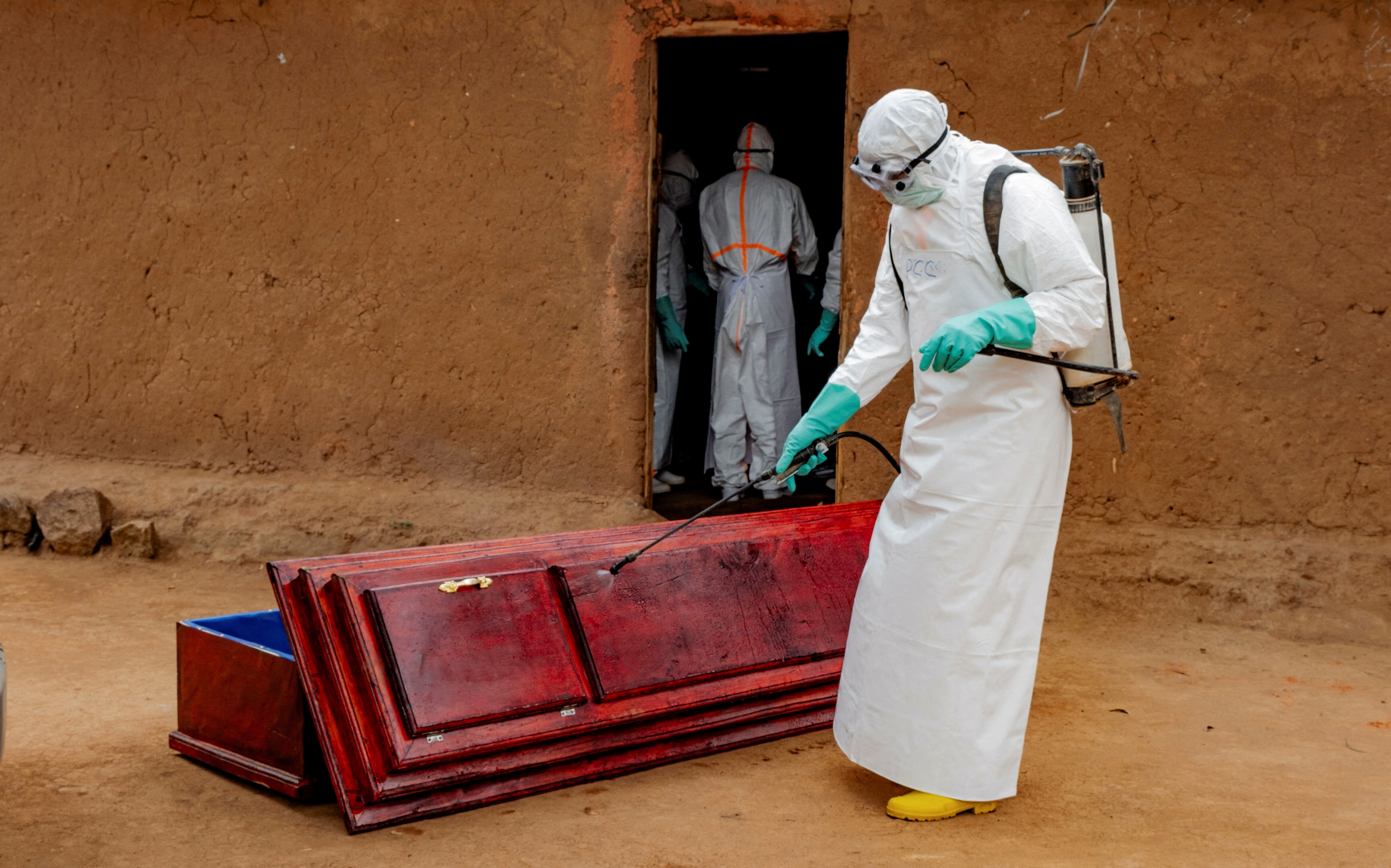
Fragmented data flows and weak interoperability can hinder outbreak response in regions such as Africa. Image: Reuters/Gradel Muyisa Mumbere/File Photo
- Multi-domain signals are already being generated across infectious disease outbreak monitoring systems, but fragmented data flows and weak interoperability prevent them from reaching decision-makers in time.
- Data generation gaps still undermine early detection in many regions. Even where data exists, a key determinant of response speed is how quickly it can be shared, interpreted and acted upon within trusted governance frameworks.
- As traditional global health funding and collaboration structures evolve, more integrated approaches involving public and private sector partners are becoming essential to translate early signals into timely action.
Every infectious disease outbreak begins with a signal, usually subtle, ambiguous and easy to overlook. Such alerts are often missed because they move through disconnected monitoring systems. An isolated cluster, data point or warning may be part of a broader pattern, but too often that pattern becomes clear only after an outbreak has taken hold.
Outbreak monitoring, the continuous collection and interpretation of data on endemic and emerging infectious diseases, is foundational to early action. In practice, however, monitoring systems remain uneven across geographies, fragmented and too slow for fast-moving threats.
These gaps framed a recent World Economic Forum Annual Health Roundtable session, where leaders from public health, industry and technology examined why advances in science and data still fail to translate early signals into timely action.
The discussion highlighted systemic weaknesses in how data is generated, shared and used, reinforcing the need for trusted and robust interoperable systems.
Partnerships key to effective outbreak response models
The funding and collaboration models that have long underpinned global health security are under strain at a time when stronger coordination is needed. Therefore, public-private partnerships are increasingly important for preparedness and response to address the evolving biological threat landscape.
The challenge is sustaining engagement beyond an emergency. Public and private institutions have different incentives, timelines and risk considerations. Enduring partnerships must connect capabilities, data flows and outcomes around shared value, so that public health goals can be realized while maintaining optimal stakeholder participation. Without this alignment, unresolved agreements, regulation and operational constraints can slow execution.
These consequences become clearest when an emerging threat requires multiple organizations to interpret and act on incomplete information at a rapid pace.
Operational integration matters as much as strategic intent. Systems and agreements should be built and tested before a crisis, while collaboration during endemic surveillance can establish operating rhythms that hold under significant pressure.
One emerging model is the Pandemic Preparedness Engine (PPX), a digital research and development platform led by the Coalition for Epidemic Preparedness Innovations (CEPI) and supported by the Forum. Still under development, PPX is intended to integrate data to accelerate the full vaccine lifecycle, from genomic surveillance and epidemiological modelling to vaccine design, clinical development and regulatory submissions.
PPX is designed to enable the secure analysis of distributed data by bridging governance, technical infrastructure and research pathways. By streamlining the journey from threat identification to vaccine development, it supports CEPI’s ambition to accelerate outbreak response through the 100 Days Mission, which aims to develop safe, effective and accessible vaccines within 100 days of identifying a new pandemic threat.
Turning outbreak signals into decisions
Recent outbreaks illustrate what is at stake. In the Democratic Republic of the Congo, the first known suspected case in the 2026 Bundibugyo virus disease outbreak developed symptoms in late April. The World Health Organization (WHO) was alerted about an unexplained, high-mortality illness, including deaths among health workers, before laboratory analysis confirmed the disease on 15 May.
Retrospective investigation then revealed a wider pattern of suspected cases and deaths. The gap was not an absence of signals, but the time required to connect the cluster with investigation, sampling and laboratory identification.
A contrasting example was an Andes hantavirus outbreak linked to the expedition ship MV Hondius. After a cluster of severe respiratory illness was reported to the WHO on 2 May, authorities across several countries coordinated testing, isolation and contact tracing. Once contacts completed follow-up without further secondary cases, the WHO concluded that transmission had been interrupted and the outbreak no longer posed a public health risk.

Although different in scale, pathogen and context, both outbreaks show how quickly connecting clinical, epidemiological and laboratory information can guide rapid decision-making by authorities. Fragmented systems, weak interoperability and processes not designed for urgency hold back integration and response, leaving warnings delayed or unacted upon as data moves across institutions, sectors and borders, as was seen early in the Bundibugyo outbreak.
These constraints are especially visible across Africa, where infectious disease threats, climate pressure and stretched health systems overlap.
Signals may include clusters of unexplained illness, unusual community deaths, infections among health workers, rising laboratory positivity, animal die-offs or climate changes associated with disease risk. Individually inconclusive, they gain value when combined with epidemiological, laboratory and health-system information.
Yet the connections needed to translate them into decisions, such as deploying diagnostics, targeting surveillance or mobilizing a public health response, are not reliably in place.
Governance remains a central piece of integrated monitoring. Reliable data sharing depends on clear rules for access, use and safeguards that build trust among partners. Emerging approaches include pre-negotiated data-sharing frameworks, federated models and trusted intermediaries that enable rapid exchange and analysis without requiring countries to relinquish control of sensitive data.
The Preparedness Data Exchange (PDX), launched by the WHO Regional Office for Africa in March 2026, brings together risk scoring, surveillance, laboratory trends, climate intelligence, health-system readiness, workforce data and media monitoring.
By creating a unified risk picture, it is intended to help ministries and WHO country offices identify vulnerabilities and inform measures such as pre-positioning supplies, deploying rapid-response teams and reinforcing laboratory capacity.
PDX’s relevance is reflected in its ability to connect signals that might otherwise remain isolated. A rise in laboratory positivity, for example, may carry greater meaning when considered alongside community reports, climate conditions and local health-system readiness.
Moving from outbreak detection to action
The next phase of pandemic preparedness will not be determined by technology alone. It depends on aligning partnerships, systems and incentives so that signals can be shared, understood and translated into timely decisions. This is as much a question of governance and coordination as capability.
Surveillance systems are generating growing volumes of data, increasingly enriched by advanced analytics, but the availability of information remains uneven across geographies and health systems, leaving important signals incomplete in many settings.
The greater challenge is turning those signals into action. Information often remains fragmented, delayed or disconnected from decision-making, limiting its operational value. Strengthening data collection matters, particularly in under-resourced settings. Equally important is ensuring that insights can be linked, validated and mobilized in time to inform response efforts.
Impact depends not only on available tools, but on how quickly and confidently insight moves across institutions, sectors and geographies. Trusted frameworks must be in place before a crisis, not assembled during the response.
The central question is no longer simply whether outbreak signals can be detected. It is whether institutions and partnerships are equipped to connect them and act in time.
The authors thank Dr Rocco Casagrande and Dr Corey Meyer from Deloitte Consulting LLP – who are also members of the World Economic Forum’s Health Security initiative, along with the authors – for supporting the design of the roundtable and providing critical input for this blog.
Don't miss any update on this topic
Create a free account and access your personalized content collection with our latest publications and analyses.
License and Republishing
World Economic Forum articles may be republished in accordance with the Creative Commons Attribution-NonCommercial-NoDerivatives 4.0 International Public License, and in accordance with our Terms of Use.
The views expressed in this article are those of the author alone and not the World Economic Forum.
Stay up to date:
Pandemic Preparedness and Response
Related topics:

Forum Stories newsletter
Bringing you weekly curated insights and analysis on the global issues that matter.
More on Health and Healthcare SystemsSee all

Michael Byczkowski and Andy Moose
September 18, 2026