How Japan’s Lake Biwa is pioneering the nature-positive economy
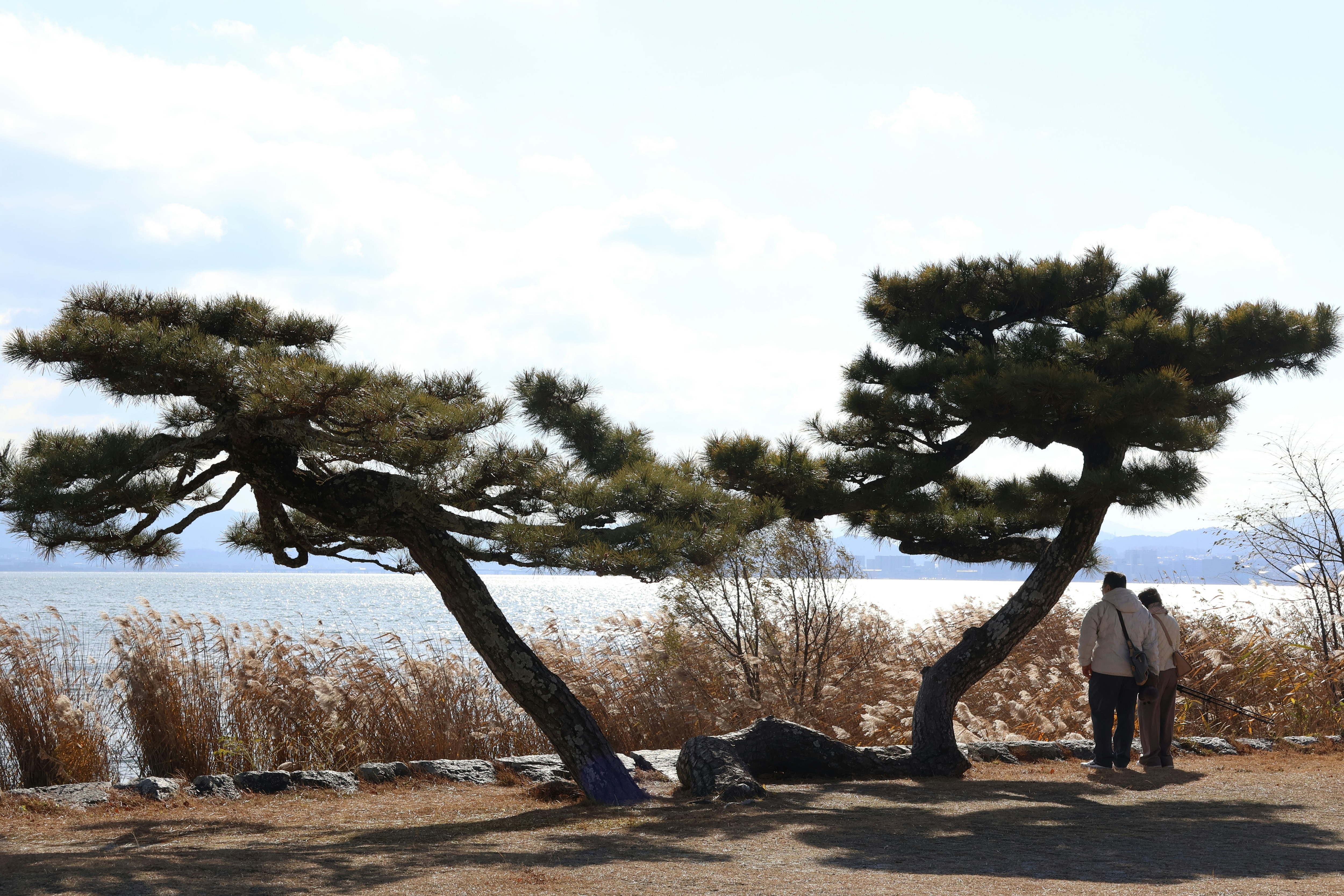
Lake Biwa is one of Japan’s most ecologically valuable freshwater ecosystems. Image: Yanhao Fang/Unsplash
- Japan’s Lake Biwa shows how treating watersheds as connected systems protects nature and economies.
- Innovative finance mechanisms like the Shiga Tri-Link Loan tie business lending to biodiversity goals.
- Cross-sector partnerships prove that nature-positive restoration is essential for climate resilience.
Lakes are essential components of healthy ecosystems, providing habitats for countless species while supplying freshwater and supporting local economies. Yet lakes around the world are increasingly under pressure from climate change and human activity. The Caspian Sea, the world’s largest lake, is shrinking as upstream river dam construction reduces inflows. Meanwhile, harmful algal blooms are becoming more frequent and severe as global temperatures rise, degrading water quality and threatening biodiversity.
Japan’s largest lake, Lake Biwa, has also experienced water pollution caused by population growth and industrial activities, although conservation efforts have been underway for decades. Located in Shiga Prefecture, adjacent to Kyoto, Lake Biwa covers an area roughly equivalent to that of Singapore. Flowing through the Seta River, its waters reach Osaka Bay about 50 kilometers downstream and supply drinking water to approximately 14.8 million people in Kyoto, Osaka and surrounding areas.
Lake Biwa is also one of the world’s oldest lakes, with a history dating back approximately 4 million years. As the world’s third-oldest ancient lake, it is home to 62 endemic species, including the nigorobuna carp, making it one of Japan’s most ecologically valuable freshwater ecosystems.
Surrounded by mountains and plains, Lake Biwa forms part of an interconnected landscape in which forests, rivers, rice paddies and the lake itself function as a single ecological system known as the Lake Biwa System. This interconnected landscape supports rich biodiversity and healthy water cycles, while communities around the lake have lived in harmony with nature for over 1,000 years.
One such example is the Kabata water system in the Harie district on the western shore of Lake Biwa. Spring water is drawn directly into homes and used sequentially for cooking, washing and other household purposes. Fish consume organic waste before the water is returned to the lake, creating a sustainable water management system that has been maintained for generations.
However, rapid urban development, together with agricultural and industrial wastewater, caused Lake Biwa’s water quality to deteriorate significantly from the late 1970s onwards. The consequences extended beyond drinking water security, affecting industries and communities that depend on the lake.
These challenges prompted Shiga Prefecture to implement a wide range of environmental initiatives that anticipated many of today’s nature positive principles. What began as the grassroots Soap Movement, which encouraged households to replace synthetic detergents with soap, has expanded to include reed bed restoration, invasive species control and environmental education. Together, these initiatives have engaged residents, businesses and local governments in protecting the Lake Biwa System as an integrated ecosystem.
Linking finance to environmental performance
One of the latest initiatives is the Shiga Tri-Link Loan, launched in April 2026. This financing framework brings together the prefectural government, financial institutions and businesses to promote environmental action among companies operating in Shiga Prefecture. Targeting primarily small and medium-sized enterprises, the programme links lending conditions to environmental performance across three pillars: carbon neutrality, nature-positive practices and the circular economy.
While sustainability-linked finance has traditionally focused on measurable carbon reduction targets, this is Japan’s first financing framework to incorporate nature-positive and circular-economy indicators, including invasive species control, food waste reduction and clothing reuse. By broadening environmental performance metrics, the programme lowers barriers to participation while encouraging a more comprehensive approach to sustainability.
Asia’s first Blue Flag marina on a lake
Environmental conservation in Shiga Prefecture has been driven by collaboration among government, businesses and local communities. Decades of collective efforts have contributed to measurable improvements in water quality and ecosystem health, including lower nitrogen and phosphorus concentrations, declining invasive species populations, and increased adoption of environmentally friendly agriculture and locally sourced timber.
These achievements have also gained international recognition. Yanmar Sunset Marina, operated by Yanmar Corporation, became the first marina on a lake in Asia to receive Blue Flag certification in 2025 and successfully renewed its certification in 2026. Managed by the Foundation for Environmental Education, Blue Flag is one of the world’s longest-running and most respected international environmental certification programmes.
Investing in the next generation of environmental leaders
Despite these successes, one pressing challenge remains: the declining number of environmental educators and practitioners capable of passing on knowledge about Lake Biwa’s ecosystems.
To address this, Shiga Prefecture established the Shiga Environmental Learning Leader Development Programme, which offers an eight-session curriculum covering ecological restoration, fundraising, environmental education and risk management. By equipping a new generation of practitioners with practical skills, the programme aims to ensure the long-term stewardship of the region’s natural environment.
Protecting lakes to build resilience
Lakes support biodiversity while providing essential resources that underpin human well-being and economic activity. As climate change and development continue to reshape freshwater ecosystems, protecting lakes is becoming increasingly important, not only for restoring biodiversity but also for strengthening water security and community resilience.
Lake Biwa demonstrates how managing an entire watershed as a connected ecosystem can create lasting environmental, social and economic benefits. Its experience shows that collaboration among governments, businesses, financial institutions and local communities can accelerate progress toward nature-positive outcomes while strengthening regional resilience.
Lake Biwa’s transformation offers an opportunity to rethink not only lakes themselves, but also the forests, rivers, farmland and communities that sustain them as part of a single interconnected system. Achieving a nature-positive future will require treating nature not as a constraint on economic development, but as an asset that underpins long-term prosperity. Scaling integrated watershed management, cross-sector collaboration and sustained investment will be critical to building resilient societies in an increasingly climate-constrained world.
Don't miss any update on this topic
Create a free account and access your personalized content collection with our latest publications and analyses.
License and Republishing
World Economic Forum articles may be republished in accordance with the Creative Commons Attribution-NonCommercial-NoDerivatives 4.0 International Public License, and in accordance with our Terms of Use.
The views expressed in this article are those of the author alone and not the World Economic Forum.
Stay up to date:
Nature and Biodiversity


Forum Stories newsletter
Bringing you weekly curated insights and analysis on the global issues that matter.
More on Nature and BiodiversitySee all

Ana Spalding
September 28, 2026


