From ocean ambition to action: Closing the 30x30 implementation gap
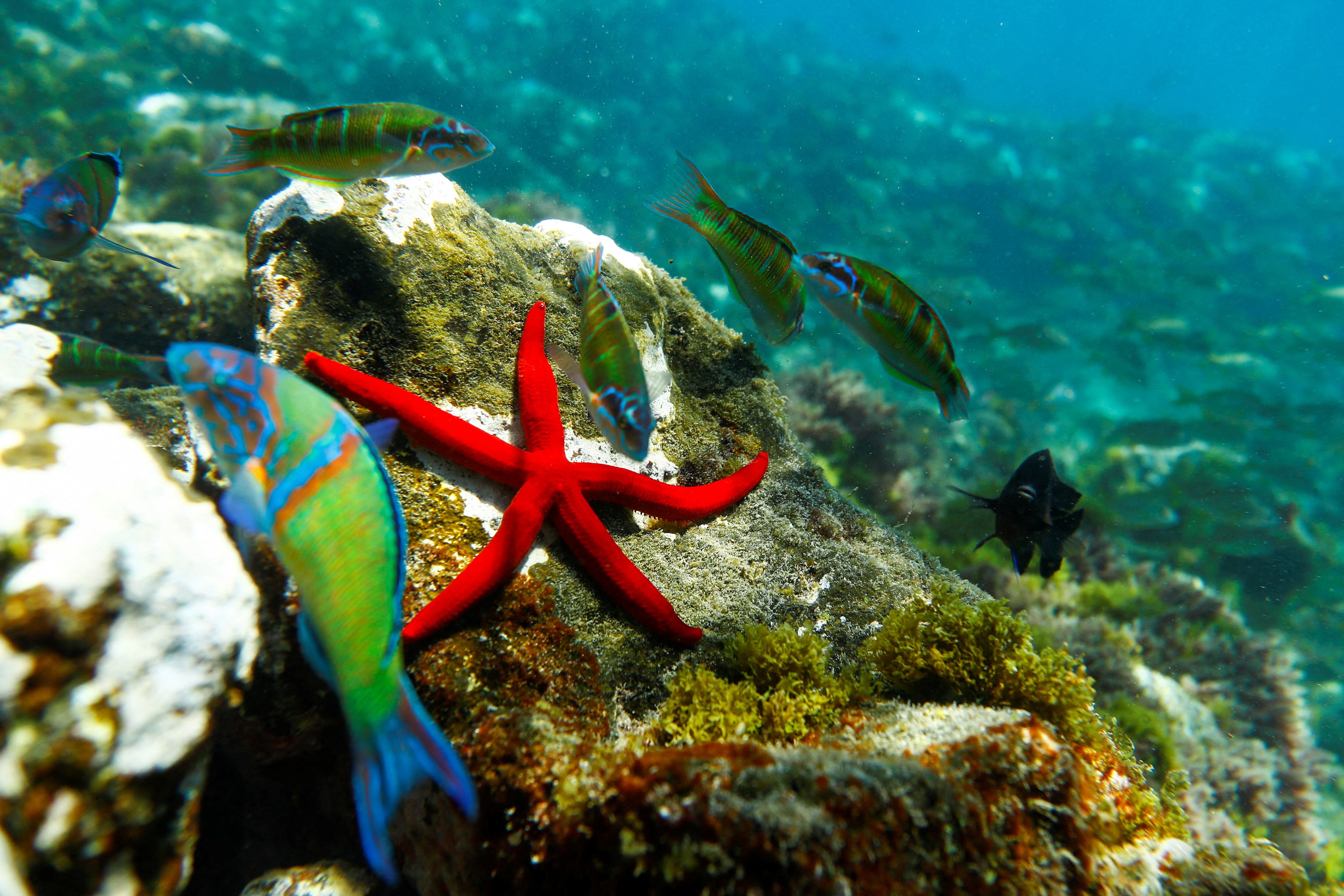
Only around 3.5% of the ocean is considered adequately protected - far short of the 30x30 target. Image: Reuters/Borja Suarez
Ana Spalding
Director, Adrienne Arsht Community-Based Resilience Solutions Initiative, Smithsonian Tropical Research Institution, Smithsonian Institution- Around one-fifth of the ocean still needs to be conserved by 2030.
- Expanding marine protected areas must be matched by efforts to improve their effectiveness, as only 3.5% of the ocean is considered adequately protected.
- Effective protection depends on local leadership, strong governance, long-term finance, scientific expertise, data and technology.
On the sidelines of the United Nations General Assembly last week, the World Economic Forum launched its Friends of Ocean Action Vision for 2030, setting out priorities for the final years of a decade in which the international community made ambitious commitments to ocean conservation.
Among the most consequential is 30x30. Under the Kunming-Montreal Global Biodiversity Framework, governments agreed to conserve at least 30% of marine and coastal areas by 2030. With less than four years remaining, the challenge is no longer simply announcing new protections but ensuring they are operational.
Marine protected areas now cover around 9.8% of the ocean, according to the Marine Protection Atlas, a project of the Marine Conservation Institute.
Researchers found that at least half of existing marine protected areas remain unimplemented or operationally ineffective (i.e. incompatible with biodiversity conservation) and the Marine Protection Atlas reported that only about 3.5% of the ocean is currently safeguarded at a level experts consider adequate.
A recent report from the Smithsonian Tropical Research Institute (STRI), Closing the Implementation Gap: Capacity Development for Effective Marine 30x30, explored a way to change that through capacity development and sharing – strengthening the abilities of individuals, institutions and systems by enhancing skills, expanding knowledge and providing organizational support to improve performance and achieve shared goals.
Their research indicates that we can only reach our collective 30x30 biodiversity goals and deliver the associated community benefits if everyone plays their part. They can do so by turning designation into durable, effective protection by seizing capacity development opportunities that are regionally contextual and coordinated across various conservation components.
The next phase of 30x30 must therefore address two challenges at once: substantially expanding the area under conservation while improving the quality of protection already in place.
The Friends of Ocean Action Vision reflects this shift from ambition to delivery, bringing together leaders from government, business, science and civil society around the practical conditions needed to turn global commitments into lasting results.
Short-term funding may support the designation of a marine protected area without providing the sustained resources needed for management, monitoring and enforcement.
”What makes marine protection work?
The STRI report makes clear that no single model exists for successful marine conservation. Ecological, political, economic and social circumstances vary widely across regions, as do governance structures, financing needs and relationships with the ocean. Approaches must therefore be rooted in regional and local contexts.
Strong institutions and local leadership are central. Protected areas need people with the skills, resources and authority to manage them over the long term, supported by sustained partnerships among governments, Indigenous Peoples and local communities, scientists, civil society, businesses and financial institutions.
Capacity development is therefore much broader than training. It encompasses the enabling environment that allows conservation to succeed: stable governance and policy; long-term and accessible finance; inclusive stakeholder engagement; access to data and technology; integration of ecological and social priorities; and effective public communication.
The challenge is to ensure that these conditions support implementation in practice and that local institutions have the capacity to sustain them over time.
Financing effective protection
Finance illustrates how this challenge plays out in practice. Sustainable ocean finance is expanding through blue bonds, dedicated funds and blended-finance mechanisms. At the 2025 Blue Economy and Finance Forum, more than $25 billion in existing investments were identified and €8.7 billion in new commitments secured through 2030.
However, the availability of capital does not guarantee effective conservation.
Short-term funding may support the designation of a marine protected area without providing the sustained resources needed for management, monitoring and enforcement. Local organizations can also face significant barriers to accessing international finance, despite often being well placed to deliver conservation outcomes.
The challenge is therefore to connect growing financial resources more effectively with long-term conservation needs. This means providing sustained support, improving access for local implementers and ensuring that those responsible for managing protected areas have the resources to do so effectively over time.
Connecting technology with capacity
Technology presents a similar challenge. Advances in satellites, artificial intelligence and digital ocean platforms are improving our ability to monitor marine ecosystems, detect illegal activity and understand environmental change. But access to better information does not, by itself, lead to better management.
In many regions, limited training, digital infrastructure and institutional support constrain the ability of governments, protected-area managers and coastal communities to use these tools effectively. Investment in technology must therefore be matched by investment in the people and institutions that apply it.
The challenge is to connect technological advances more effectively with management needs. As conservation expands into larger and more remote areas, better data can strengthen monitoring and enforcement but only if those responsible for protected areas have the skills, systems and authority to turn information into action.
Bringing together resources and expertise
Bringing these elements together will become increasingly important as 2030 approaches. Roughly another fifth of the global ocean must be conserved in less than four years, requiring progress within national waters and in areas beyond national jurisdiction.
The scale and speed of that expansion make quality as important as coverage. Achieving 30x30 will require not only new areas to be conserved but also the governance, finance, partnerships and technical capabilities needed to ensure that protection endures and delivers measurable ecological benefits.
This is where the Friends of Ocean Action Vision can help shape the next phase. By bringing together political leadership, regional expertise, finance and innovation, the initiative can help strengthen conditions for conservation and scale solutions.
The world has already defined the scope of its ambition. The task between now and 2030 is to turn that ambition into durable results. Ultimately, 30x30 will be judged not simply by how much ocean is conserved but by what that conservation achieves.
Ana Spalding is also a member of the Friends of Ocean Action, a group convened by the World Economic Forum's Ocean Agenda.
Don't miss any update on this topic
Create a free account and access your personalized content collection with our latest publications and analyses.
License and Republishing
World Economic Forum articles may be republished in accordance with the Creative Commons Attribution-NonCommercial-NoDerivatives 4.0 International Public License, and in accordance with our Terms of Use.
The views expressed in this article are those of the author alone and not the World Economic Forum.
Stay up to date:
Ocean

Forum Stories newsletter
Bringing you weekly curated insights and analysis on the global issues that matter.
More on Nature and BiodiversitySee all

Julia Strong and Susan Cook-Patton
September 28, 2026


