Why grid expansion alone won’t solve industrial electrification
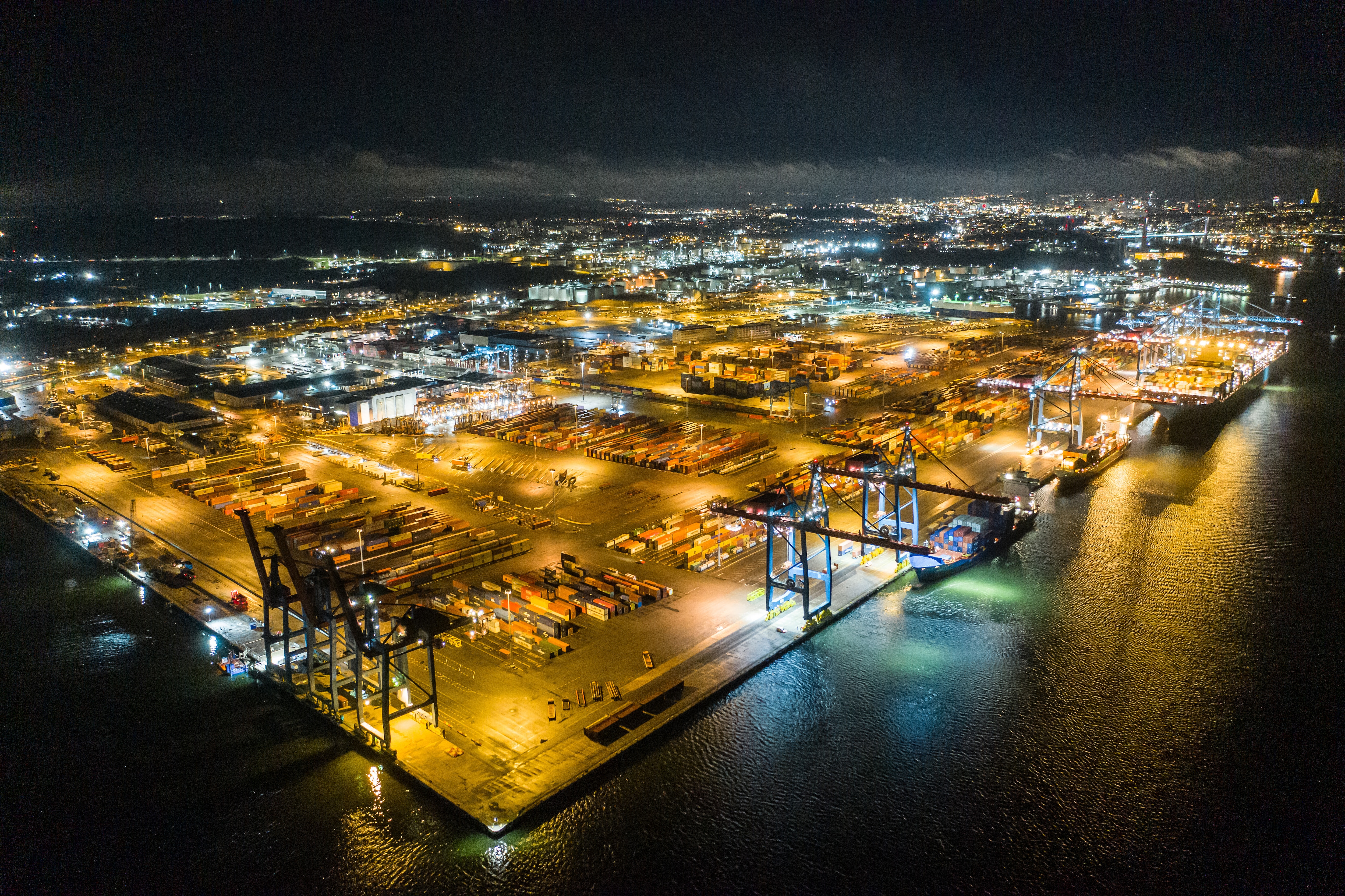
The transition to industrial electrification cannot be solved simply by building more grid capacity. Image: Port of Gothenburg
- Industrial flexibility is real but limited: large-scale manufacturers often cannot rapidly reduce electricity use without affecting productivity, safety or competitiveness.
- Better forecasting and trusted data exchange may deliver more near-term value than flexibility markets alone.
- The energy transition requires collaboration across sectors; industrial clusters can play a key role as coordination platforms.
As industries and transport systems electrify, in many regions demand for electricity is rising faster than grids can expand. Industrial clusters – geographical areas where companies operate in close proximity – are competing for limited capacity while transport systems are becoming dependent on reliable, real-time access to electricity. At the same time, geopolitical instability is forcing countries to rethink energy resilience and industrial security.
In this new landscape, the challenge is no longer just how to generate enough clean electricity. It is to ensure that industries, grid operators and transport systems can plan, invest and operate as coordinated ecosystems.
A real-world test case in Gothenburg
This was the starting point for Tranzero Energy, a Swedish collaboration project between actors in industry, transport and energy sectors. Participants included Volvo Group, Volvo Cars, Scania, Stena Line, Port of Gothenburg, Gothenburg Energy, Gothenburg Energy Networks, Vattenfall and Vattenfall Distribution, with AI Sweden coordinating the initiative.
Over the past year, this pre-study explored how an industrial cluster approach could help stakeholders become more resilient and flexible as electricity systems grow more constrained and complex. More specifically, it examined how to secure access to fossil-free energy at the right time and place, at sufficient scale and at competitive cost. The findings challenge several common assumptions about industrial electrification. They also point towards new ways of organizing the transition.
The partners decided to focus on a specific use-case area: Hisingen, an area in the Gothenburg region and at the heart of one of the Nordic region’s leading industrial and logistics ecosystems.
The findings are likely to be relevant far beyond Gothenburg, as industrial clusters across Europe, and globally, are facing similar challenges.
Why industrial grid flexibility is more complex than it looks
Across Europe, industrial flexibility – the ability of electricity consumers, producers or storage assets to adjust consumption or generation when the power system is under stress – is increasingly seen as a key lever for balancing future electricity systems, based on the ability of certain industrial processes to temporarily reduce consumption during periods of grid stress. The Tranzero Energy project explored this in practice, reinforcing both the opportunity and the complexity: the potential is real, but it varies significantly depending on the industrial actor, the process and the local context.
An analysis across participating industries indicated that large-scale manufacturing and process industries often have limited ability to rapidly reduce electricity use without affecting productivity, delivery schedules, safety or competitiveness. In some cases, sudden disconnections are technically or financially impossible as they risk damaging equipment or disrupting critical industrial processes.
Flexibility does exist, but its value depends heavily on timing, duration and economic consequences. Some processes may adapt with sufficient advance notice, while others cannot respond at all during acute grid events.
This suggests that the most economically efficient sources of flexibility may not always sit within core industrial production. Demand response solutions, such as smart charging, vehicle-to-grid technology, battery storage and heating systems, could provide greater benefits at lower societal cost than interrupting industrial production.
Reducing grid stress through predictive energy forecasting
One of the project’s clearest findings was that better forecasting and planning, combined with close collaboration with the electricity grid owner, can deliver greater near-term value than flexibility markets – where users are paid to adjust their power consumption – alone.
As electricity systems become more variable, imbalance costs – arising when actual electricity consumption or production deviates from what was forecast and contracted in advance – are increasing rapidly. This creates growing challenges for industries and for the electrification of heavy transport.
For charging operators and transport companies in particular this leads to a difficult challenge: predicting where and when heavy vehicles will need charging. Uncertainty creates costs that can affect the economics of electrified transport operations.
Tranzero Energy identified AI-based short-term forecasting models as a potential practical tool to help industries and grid operators better anticipate electricity demand and reduce system stress. Sharing forecasts between large electricity users, energy suppliers and grid operators could reduce costs while improving overall grid efficiency.
In increasingly complex electricity systems, predictive capabilities and trusted data exchange may therefore become critically important factors alongside long-term physical infrastructure investments.
Building an integrated ecosystem for heavy electric transport
Electrifying transport requires many parts of the ecosystem to develop together – from transport buyers and vehicle manufacturers to charging operators, energy suppliers and grid companies.
To work in practice, electric transport cannot succeed through vehicle technology alone. It needs reliable access to charging, predictable electricity prices, and minimal disruption to daily operations.
This may in the future require new tariff models, improved forecasting tools, booking systems and business models that share risks more fairly, so that electrification makes commercial sense for everyone involved. For commercial transport, advance booking provides the predictability needed to maintain business productivity while keeping overall energy system costs under control.
Cross-sector collaboration: The missing link in grid management
Perhaps the most important lesson from Tranzero Energy was organizational rather than technical.
The initiative created a structured forum where industries, grid operators and energy companies could discuss operational realities, risks and constraints. That process alone generated significant value by improving understanding between actors that rarely collaborate this closely.
As electricity, transport and industrial systems become more interconnected, industrial clusters may become critical platforms for managing the energy transition.
The experience from Gothenburg suggests that the transition to industrial electrification cannot be solved simply by building more grid capacity or expecting industry to become infinitely flexible. It requires a more intelligent system able to balance competitiveness, resilience and decarbonization at the same time – and that may ultimately require new ways of collaborating as much as new technology.
Stefan Strömberg, PR & Communications Officer, Port of Gothenburg, also contributed to this article.
Don't miss any update on this topic
Create a free account and access your personalized content collection with our latest publications and analyses.
License and Republishing
World Economic Forum articles may be republished in accordance with the Creative Commons Attribution-NonCommercial-NoDerivatives 4.0 International Public License, and in accordance with our Terms of Use.
The views expressed in this article are those of the author alone and not the World Economic Forum.
Stay up to date:
Energy Infrastructure


Forum Stories newsletter
Bringing you weekly curated insights and analysis on the global issues that matter.


