How world models could help AI navigate the physical world
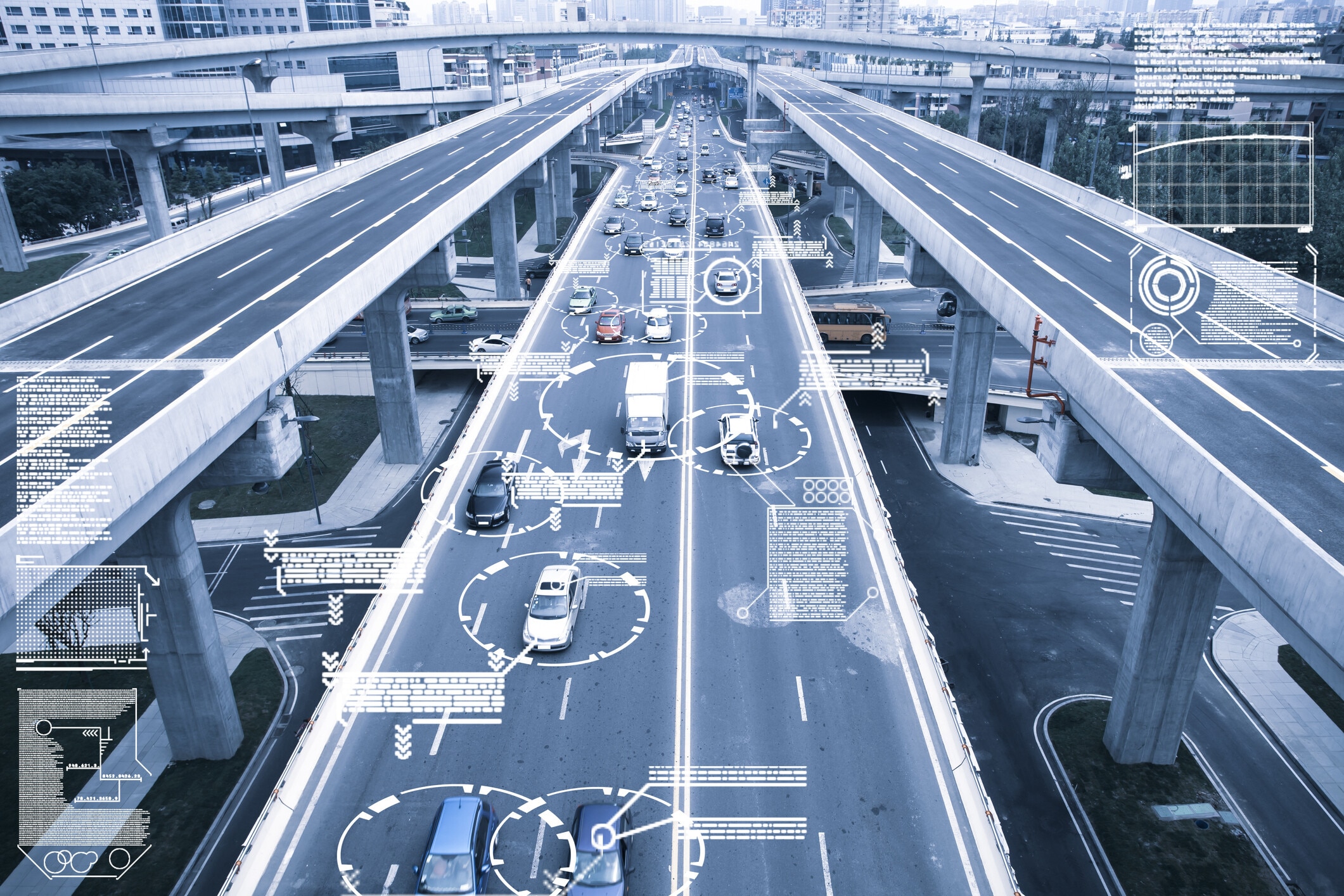
World models use observations such as video, images and sensor readings to predict how the environment may respond when an action is taken. Image: Getty Images/iStockphoto
- World models help AI predict how an environment may change in response to an action, enabling it to compare options before acting in the physical world.
- Interest is accelerating as researchers look beyond language-centred AI towards systems that can track space, time and changing physical states.
- But realistic simulations are not always reliable, and the model, the planner and the deployed system must each be tested against real-world outcomes.
Imagine a warehouse robot reaching for a package it has never seen. Before moving, it uses a learned model of its surroundings to compare several possible actions.
Researchers and investors are betting that this ability to predict what may happen before acting could make artificial intelligence (AI) systems more capable of operating in factories, vehicles and infrastructure.
Such systems are referred to as world models – models that represent how environments change and predict how actions may affect them.
What is a world model?
There is no settled definition. A recent roadmap from Shanghai AI Laboratory describes a world model as an internal representation of an environment and how its state changes over time. It learns from observations such as video, images, and sensor readings, as well as data linking actions to outcomes, then predicts how the environment may respond to an action.
A world model attempts to answer a practical question: if an agent takes an action, what is likely to happen next? It generates possible outcomes which, in many systems, a separate planner compares before selecting an action. A taxonomy proposed by Fei-Fei Li and World Labs distinguishes renderers, simulators and planners: what a world looks like, how it behaves and what an agent should do.
Accurate prediction does not necessarily demonstrate causal understanding. A model may learn patterns that break when the surrounding conditions change.
Why is momentum building now?
The idea is not new. The 2018 World Models paper, DeepMind’s MuZero and DreamerV3 showed how agents could learn or plan through modelled futures.
The current push reflects a gap in language-centred AI. Language models can reason across descriptions of reality, but most are not trained primarily on data linking physical actions to their consequences.
World models aim to track space, time, changing states and interventions. The World Economic Forum’s Top 10 Emerging Technologies of 2026 report points to richer physical-world data, larger models and architectures that predict compressed representations rather than every visual detail.
Physical AI also depends on data showing how actions affect real environments. These records often come from robots, vehicles, teleoperation systems and other physical operations, rather than publicly available web content. Stanford Institute for Human-Centered AI (Stanford HAI) warns that their scarcity could concentrate control among organizations with access to large operating fleets or comparable sources of interaction data.
Current research and investment are moving in three broad directions: improving physical prediction, generating interactive simulations and developing alternatives to language-model-centred scaling.
Meta’s V-JEPA 2 applies predictive representations to robot planning, while Google DeepMind’s Genie 3 generates interactive environments. Yann LeCun’s AMI Labs has raised $1.03 billion to pursue an approach centred on world models, reasoning and planning. Dealroom estimates that companies in the category have raised $3.2 billion so far in 2026. The funding shows confidence, not proof, that general-purpose world models have arrived.
AMI Labs says it is pursuing universally intelligent systems centred on world models. In the near term, world models may work alongside language models, pairing semantic reasoning with models of space, state, and action.
The concept is also beginning to extend beyond physical environments. Recent research on social world models explores whether AI can represent beliefs, intentions and interactions to predict social dynamics, while related social-simulation tools are beginning to move into commercial use. Reliable prediction of complex real-world social behaviour, however, remains an open challenge.
Where could world models create value first?
Robotics offers some of the clearest published benchmark evidence so far. Real-world training is slow, costly and sometimes dangerous. Meta reports that V-JEPA 2 achieved 65–80% success rates on selected pick-and-place tasks involving new objects and environments. These remain bounded laboratory results.
Autonomous driving provides a larger-scale setting for testing world-model simulations. Waymo says its world model can generate controllable camera and lidar simulations for rare events and altered routes. Learned models may make scenarios easier to generate and vary than simulators built primarily from manually specified environments. Their value will ultimately depend on whether improvements demonstrated in simulation transfer reliably to real-road performance.
Infrastructure and industrial operations remain more speculative. The Forum’s Top 10 Emerging Technologies report illustrates the potential through a hypothetical port that uses operational and weather data to stress-test loading plans before staff approve them. Similar systems could eventually help decision-makers explore how changes in transport, energy and other connected infrastructure affect one another. For now, however, these scenarios illustrate possible uses rather than established deployments.
The near-term business case is reducing the cost and risk of experimentation. Learned world models could make simulated environments easier to generate, vary and update as new operational data becomes available. Teams could rule out options before committing capital or exposing people and equipment to risk.
A further governance concern arises when the same vendor supplies an autonomous system and the simulation used to validate it. Customers and regulators may then struggle to distinguish genuine robustness from performance under conditions selected by the vendor. Human oversight does not fully resolve this problem unless reviewers can understand the available options, intervene in time and override the system when necessary.
The reliability gap of world models
Simulation errors are not always obvious. Stanford HAI describes a “visual plausibility trap” in which an environment appears coherent while representing important physical properties incorrectly.
A simulated robot might appear to manipulate an object successfully even though its mass, friction or rigidity has been modelled inaccurately. The action can look credible on screen but fail in the physical world. The same problem can undermine evaluation: when a learned environment is used for both training and testing, a system may adapt to the simulator’s assumptions and receive a high score while remaining unsafe under real-world conditions.
Current systems also remain limited in scope and duration. DeepMind says Genie 3 supports a restricted range of actions and only a few minutes of continuous interaction. These constraints limit its current usefulness for long-horizon planning and extensive safety testing.
Evaluation therefore needs to cover the full chain: whether the model makes accurate predictions, whether the planner selects appropriate actions and whether the complete system performs safely in the real world.
This requires comparisons with real-world outcomes, testing under edge cases, post-deployment monitoring and independent access to performance evidence. For safety-critical applications, performance in simulation should be treated as preliminary evidence rather than proof of real-world reliability.
World models are not necessary for every AI application. Forecasting tools, optimization systems, language models connected to reliable data and conventional simulators can solve many problems more cheaply.
Organizations should consider using a world model when actions materially change future conditions, real-world experimentation is costly or dangerous, results can be checked against independent evidence and safe fallback options remain available. Where these conditions are absent, conventional simulation, forecasting or optimization may offer a cheaper and more dependable solution.
Don't miss any update on this topic
Create a free account and access your personalized content collection with our latest publications and analyses.
License and Republishing
World Economic Forum articles may be republished in accordance with the Creative Commons Attribution-NonCommercial-NoDerivatives 4.0 International Public License, and in accordance with our Terms of Use.
The views expressed in this article are those of the author alone and not the World Economic Forum.
Stay up to date:
World Models
Related topics:


Forum Stories newsletter
Bringing you weekly curated insights and analysis on the global issues that matter.
More on Artificial IntelligenceSee all

Rakesh Kumar Murugan
September 27, 2026


