Are ‘frenemies’ the future of global trade?
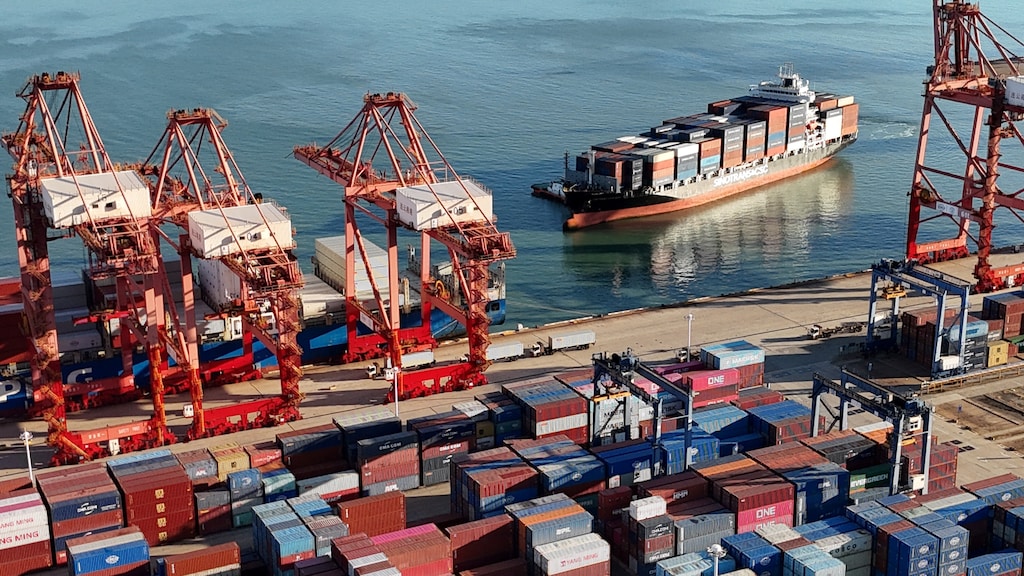
A cargo ship approaching a container terminal in Jiangsu province, China. Image: Reuters
With geopolitical conflicts and technological advancements reshaping global trade, governments worldwide are rethinking how to move goods, services and capital across borders.
Many countries have pursued policies that attempt to bring back domestic production or shift economic activity to allies — so-called friendshoring. Yet many are also insulating commerce from other areas of tension with less-than-friendly partners, ensuring that trade can continue with “frenemies.”
This week, at a World Economic Forum event in Dubai, United Arab Emirates, public and private sector leaders gathered to discuss a range of issues facing the global economy, and examine how leaders can address future challenges including how to ensure trade continues amidst geopolitical strife.
“We're probably looking into a future where we're going to have what I like to call 'frenemies',” said Florence Gaub, Director of the Research Division at the NATO Defense College. “You continue to trade, but you actually don't get along on other things.”
‘Dependence on the single route will never work’
The war in the Middle East and subsequent disruptions to the global energy supply chain remain one of the major forces pushing companies and governments to rethink trade.
“The private sector appears to have so far adjusted well to the geopolitical shocks of direct conflict and contestations over trade,” noted the International Monetary Fund’s (IMF) recent World Economic Outlook. “But as brief pauses and bouts of attacks alternate in a prolonged and dragging conflict, some of the margins of adjustment that buffered the global economy at the onset under the assumption of short-lived hostility get narrower, and the possibility of larger economic costs becomes more palpable.”
The IMF reported that global growth is projected to slow to 3.1% this year, while global headline inflation is expected to rise to 4.7%. “Energy-importing economies outside the technology value chain face the most difficult outlook,” the IMF added.
Karen E. Young, a Senior Research Scholar at the Center on Global Energy Policy at Columbia University in the US, said during the WEF event in Dubai that the conflict is “reconfiguring the practices of trade and energy flows.” The crisis, she added, has caused companies and governments to boost their capacity to operate during periods of prolonged volatility.
“Dependence on the single route will never work,” added Farid Belbouab, the Group CEO of Gulftainer, while stressing the importance of “building different routes and giving that optionality.”
‘Make openness more secure’
Despite significant disruptions, global trade and cooperation have persevered as governments increasingly seek out areas of common interest and isolate points of tension.
“We see that cooperation generally continues to grow, except in the area of peace and security,” Gaub added, citing the World Economic Forum’s 2026 Global Cooperation Barometer.
Released earlier this year, before the war in Iran began in February, the barometer found that global cooperation had advanced around targeted, interest-based issue areas as well as in more regional capacities.
“We have to make openness more secure,” Timcho Mucunski, Minister of Foreign Affairs and Foreign Trade of the Republic of North Macedonia, said at the event in Dubai. “The nations that succeed in the next five, 10, 15, 20 years will not be the nations that build the largest walls, but the nations that build the most resilient bridges.”
Don't miss any update on this topic
Create a free account and access your personalized content collection with our latest publications and analyses.
License and Republishing
World Economic Forum articles may be republished in accordance with the Creative Commons Attribution-NonCommercial-NoDerivatives 4.0 International Public License, and in accordance with our Terms of Use.
The views expressed in this article are those of the author alone and not the World Economic Forum.
Forum Stories newsletter
Bringing you weekly curated insights and analysis on the global issues that matter.


