The Arctic boreal forests are burning: Here's why this matters to the world
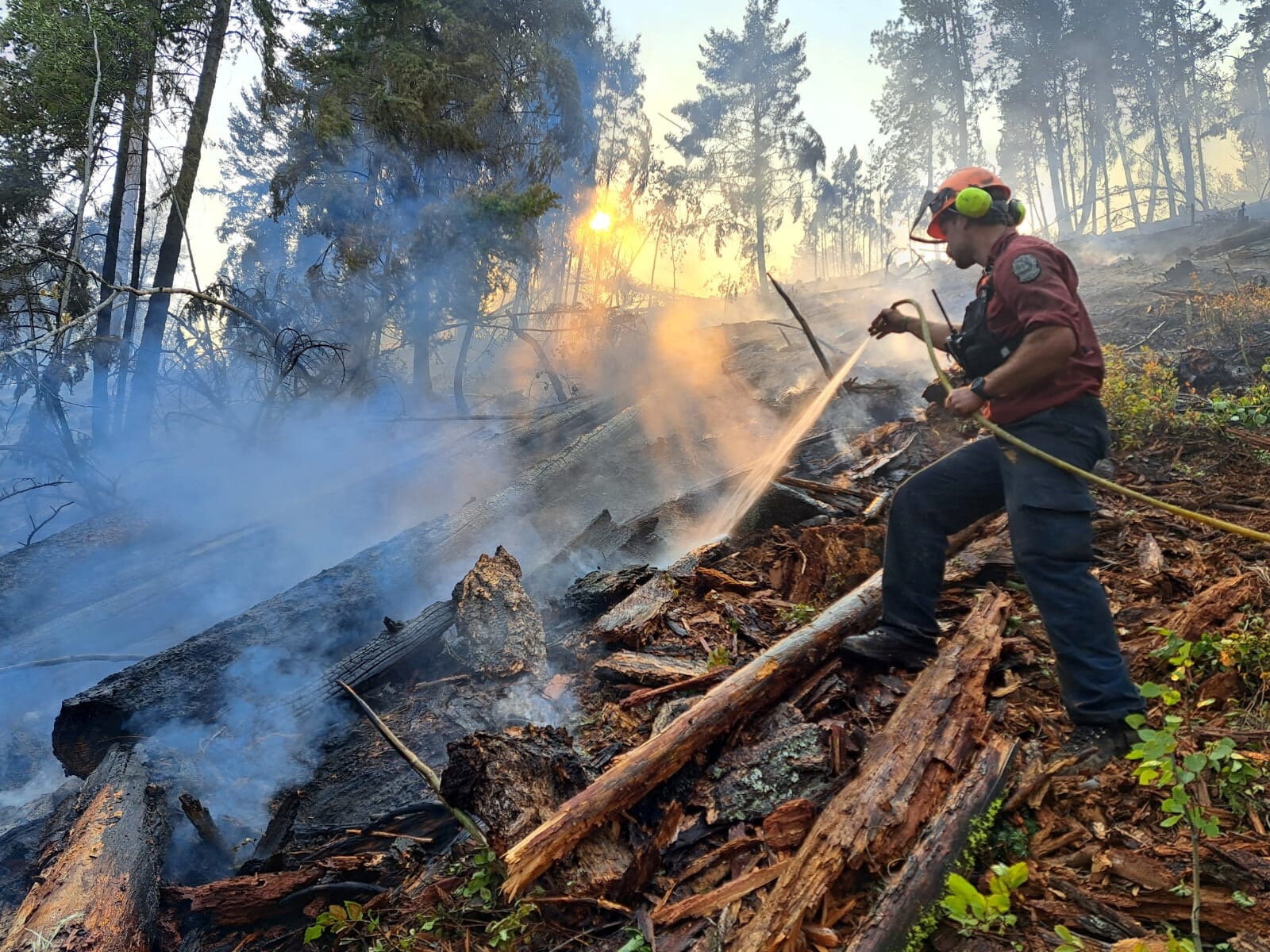
Some of the world's largest wildfires occur in the boreal and Arctic regions. Image: BC Wildfire via REUTERS
- Wildfire is increasingly one of the defining climate risks of our time, with 335 million hectares of land burned worldwide in 2025.
- Some of the world's largest wildfires occur in the boreal and Arctic regions, and are a major source of global carbon emissions.
- Protecting the boreal from wildfire is key to tackling climate change, protecting public health and building resilience worldwide.
Almost 4 million hectares of land burned across Canada during this summer’s fire season, much of it in the remote boreal forests that lie across the country’s north.
Fires darkened the sky as they swallowed dry forest metre by metre. Indigenous communities were forced to evacuate from remote homelands as the fires approached, while smoke pushed air pollution in cities across Canada and the northern United States to new records and made international headlines.
Globally, wildfire is becoming one of the defining climate risks of our time. 2025 saw 335 million hectares burned worldwide, exposing weaknesses in land management, infrastructure and risk finance.
Wildfires in the Arctic and boreal regions
The Arctic does not always come to mind when considering forest assets at risk from fire, yet some of the world's largest and fastest-growing wildfires now occur in the Arctic and boreal region, which circles the Northern Hemisphere across eight countries to form a ring around the North Pole and makes up the world’s largest biome.
Primarily triggered by lightning strikes and exacerbated by global warming, which is warming the Arctic boreal forests at up to four times the global average, these fires are becoming a major source of worldwide carbon emissions.
Wildfire activity in the Canadian and Alaskan boreal has been accelerating. In 2023 in Canada, over 16.5 million hectares burned – nearly seven times the historical average. Fire has also become less predictable as rapidly increasing temperatures and longer growing seasons alter regional environments. For example, in 2022 over a million acres burned in south-west Alaska, a region where wildfires have historically been rare.
Though wildfire is a part of natural boreal ecosystem function, the climate-driven intensification of fire is radically worsening the emissions trajectory and changing the characteristics of northern burning.
Boreal wildfire is fast becoming one of the most significant global risks for large-scale emissions from changing natural systems.
Beyond the direct impacts, these blazes create a growing “wildfire tax” through health impacts, lost productivity, infrastructure damage and rising insurance costs. This makes investment in early detection and prevention essential.
While wildfires in the more populated areas of the continental US, across Europe and in the Amazon garner attention because of their proximity to humans, northern fires result in emissions and smoke on a scale far beyond borders.
Why Arctic and boreal wildfires are a global problem
Arctic and boreal regions store an immense amount of carbon. Boreal forests alone house roughly two-thirds of global forest carbon.
Rapid climate warming at high latitudes has led to an intensification of boreal wildfires, with alarming increases in the frequency, size and severity. As these fires intensify, they combust and release to the atmosphere large quantities of carbon.
The average area burned annually in this region has roughly doubled today compared to the mid-20th century. In 2023 alone, for example, massive wildfires across Canada released approximately four times more carbon than all other sectors in the country that year combined.
Direct emissions from these fires are only one part of the problem. Boreal forests also are home to ancient carbon stored below ground. This includes much of the world's permafrost as well as extensive peatlands. These ecosystems have sequestered massive soil organic carbon stores for millennia.
High-intensity wildfire can hasten the degradation and thaw of these stores by removing the duff and soil layers that insulate them. Permafrost is ground that has stayed frozen for thousands of years. When it starts to thaw, especially in places where it contains a lot of ice, the ground can suddenly collapse.
Abrupt thaw can release more greenhouse gases into the atmosphere than slow warming-induced thaw, potentially doubling the emissions coming from permafrost as it releases stored carbon to the atmosphere as carbon dioxide (CO₂) and methane (CH₄), sometimes over many years and sometimes abruptly through subsidence and ground collapse.
Estimated circumpolar net emissions of CO₂ and CH₄ from wildfire and post-fire permafrost thaw by 2050 are 43–53 gigatonnes of carbon dioxide equivalent (Gt CO₂e); they will grow to 147–275 Gt CO₂e by the end of the century, according to estimates. By comparison, direct CO₂ emissions from the 2023 Canadian wildfire season were approximately 2 Gt CO₂; nearly half the total US emissions of 4.6 Gt CO₂ that year.
Overwintering fires, sometimes called “zombie” fires, also remain an issue. These happen when fires continue smoldering under winter snow, only to reignite fully during the spring thaw. Zombie fires can sometimes be identified by steam rising from ground beneath frozen forests, and used to be uncommon, but as global temperatures rise they’ve become more frequent.
The human cost of northern blazes
Northern fires have an enormous cost to both humans and wildlife. In the most remote parts of the boreal forest they are left to burn out as they pose no immediate threat to infrastructure or human life, but the reality is they have significant impacts.
The soil in boreal regions is usually very rich in carbon, so when these ecosystems burn they can release massive amounts of carbon stored both in the trees and vegetation, as well as this deep soil carbon.
Another risk is to wildlife and ecosystem function. Boreal ecosystems have evolved with wildfire and fire is essential for many species to thrive. However, when the amount of fire grows beyond what that ecosystem has evolved with, it can put ecosystem values at risk.
For example, caribou depend on slow-growing surface lichens that take a very long time to recover and too many fires reduce the amount of habitat that caribou can use. On the other hand, species like moose thrive in recently burned areas. The key is to get the right amount of fire on the landscape at the right time, and to avoid the catastrophic fires that are beyond the historic capacity of an ecosystem.
The impact on human health is also significant. Fires from the boreal forest produce a huge amount of smoke, exposing people downwind of the fires to dangerous particulate matter for long periods.
Studies have attributed excess deaths to the Arctic wildfires, while fine particulate matter in wildfire smoke penetrates deep into the lungs, increasing the risk of respiratory diseases and asthma exacerbations. It was estimated that the 2023 Canadian wildfires caused 82,100 chronic (long-term) premature deaths worldwide.
Global efforts to prevent and combat wildfires
The Global Wildfire Leadership Network (GWLN), a community housed within the Forest Future Alliance, mobilizes corporate leaders, investors, insurers, philanthropies, innovators, governments, Indigenous leaders and delivery partners to help shift wildfire management from reactive suppression to prevention, preparedness and long-term resilience.
GWLN supports credible action across forests, farmlands, wetlands and cities, strengthening ecosystems and communities facing escalating fire risk.
North Fire is a new cross-border collaboration of scientists and practitioners working to steward wildfire for climate benefit. The initiative was launched in spring 2026 to bring together diverse disciplines – including ecology, fire science, Indigenous knowledge, policy and land management – united by the belief that fire, managed wisely, can be a powerful tool for landscape health and climate resilience.
North Fire has seed funding through grants to three backbone partner organizations – Woodwell Climate, the POLIS Project on Ecological Governance and Alaska Venture Fund. Core to its work is the development of a cross-border and cross-disciplinary learning network, where scientific and technological progress, community practices and insights, and policy and finance tools can be shared and advanced.
The growing scale and impact of boreal wildfires demand a shift from reacting to disasters to reducing risk before they occur.
This means investing in better forecasting, early detection and rapid response, strengthening community preparedness and resilience, expanding cultural and prescribed burning to create more fire-resilient landscapes, and building the policy and financing frameworks needed to support these efforts at scale.
Protecting the boreal from wildfire is not only about safeguarding northern communities and ecosystems. It is an essential part of tackling climate change, protecting public health and building resilience for a warming world.
Don't miss any update on this topic
Create a free account and access your personalized content collection with our latest publications and analyses.
License and Republishing
World Economic Forum articles may be republished in accordance with the Creative Commons Attribution-NonCommercial-NoDerivatives 4.0 International Public License, and in accordance with our Terms of Use.
The views expressed in this article are those of the author alone and not the World Economic Forum.
Stay up to date:
Arctic

Forum Stories newsletter
Bringing you weekly curated insights and analysis on the global issues that matter.
More on Nature and BiodiversitySee all

Ana Spalding
September 28, 2026


