When machines can make mid-flight decisions, who gives AI the authority to fly?
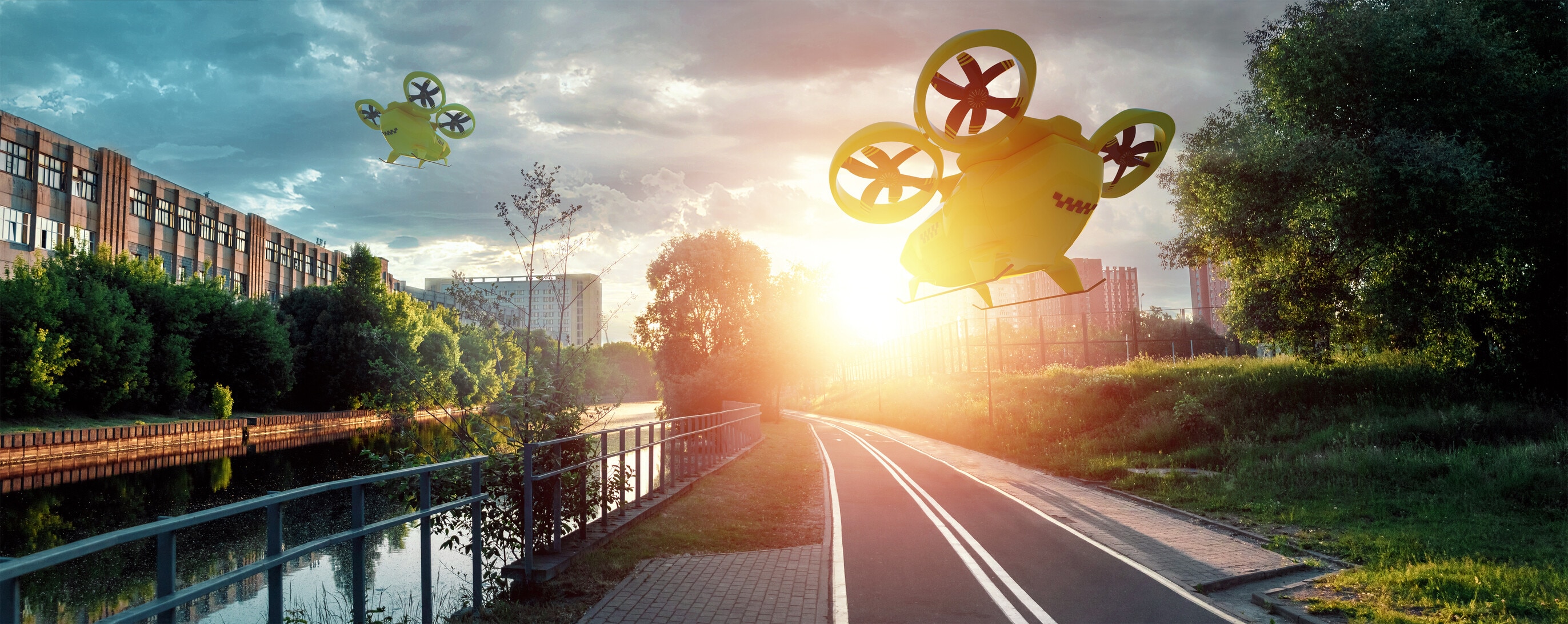
AI in aviation is a fast-developing field but it needs clear governance. Image: Getty Images/iStockphoto/Marharyta Marko
- AI could soon make more decisions in flight, raising a fundamental question: how much authority should machines have?
- Advanced air mobility will require clear rules about who benefits, who bears risk and who is responsible when automated decisions cause harm.
- The next phase of aviation must go beyond certifying intelligent machines to also define the authority under which these systems operate.
Air taxis may be among the first passenger aircraft to operate without a pilot onboard making or supervising every operational decision. But even if such advanced air mobility (AAM) vehicles can calculate routes, how will they have the authority to choose a new one if circumstances change mid-air?
Aviation has long assumed that people make important decisions while machines help execute them. With AAM, which the US Federal Aviation Administration (FAA) describes as highly automated, electrically powered vehicles capable of vertical take-off and landing, that assumption is beginning to change.
Of course, modern aircraft already rely on automated systems, but next-generation drones and electric vertical take-off and landing (eVTOL) aircraft designed for advanced air mobility go further. They can use software to interpret conditions, identify risks and make decisions.
But even though an aircraft operates as an individual machine, aviation is a system. Imagine an autonomous air taxi operating above a dense urban area when a thunderstorm prevents it from taking its planned route. What if communications have deteriorated and another aircraft enters the same corridor? Who has the authority to decide what the aircraft should do next—the onboard AI, a remote operator or air traffic control?
The aviation industry is learning how to certify intelligent machines, but it has not yet decided how much authority to give them. When an artificial intelligence (AI) aviation system must calculate several possible responses to changing conditions in the air within seconds, who decides what “safest” means?
AI in aviation: ‘humans-in-the-loop’
This question is becoming more urgent as advanced air mobility moves from the concept stage into the regulatory preparation stage.
In October 2024, the US FAA issued a final rule addressing powered-lift pilot aircraft (vehicles that can take off and land vertically, then fly forward like an aeroplane). It has also selected eight partners for its eVTOL Integration Pilot Program. The agency is using human-in-the-loop simulations to examine how eVTOL aircraft can share airspace and airport facilities with conventional aircraft.
Aviation regulation has long been structured around human roles: the pilot in command, the AI system operator, the air traffic controller, the aircraft manufacturer and the regulator. AI complicates this arrangement because it won’t always merely execute a predetermined instruction – if conditions change mid-flight, it may have to evaluate competing risks and select one course of action over another.
To govern this shift, aviation needs more than a test of whether an AI system is technically capable. It needs to pay attention to five governance conditions:
- Authority covers whether the system is legally and operationally permitted to make a particular decision.
- Assurance looks at the evidence that supports confidence in its performance within a defined domain.
- Auditability asks whether the decision, its inputs and any handover can later be reconstructed.
- Adaptability explores whether the original permission remains valid when weather, data quality, software behaviour or service availability changes.
- Answerability ensures a person or organization is in a position to explain, correct and respond when an AI aviation system acts.
This is a proposed governance framework, not an existing international rulebook. And these layers expose a crucial distinction that a system may be capable of making a decision without being authorized to make it, and that a person may be formally responsible without having the time, information or technical means to control the outcome.
The ability to make a decision is not the same as the right to make it.
That distinction matters because an AI system’s decision-making logic reflects choices made by developers, manufacturers, operators and regulators. It’s important to know who defined its priorities, who approved them and who had the power to change them. The designated person needs to have the information, competence, time and technical means to influence the outcome of an AI system’s decision-making process.
Governing AI decision-making logic
Every AI decision does not need to be manually approved, of course. That would defeat the point of automation and could create safety risks. Regulators and operators should instead define different levels of delegated authority, covering the decisions that may be automated, those requiring human confirmation and any emergency decisions that can be taken autonomously and reviewed afterwards.
This means AI aviation systems should record material flight decisions, such as any information they received, the alternatives they considered and why they selected a particular course of action. A handover between an operator, an onboard system and a digital service should be treated as a governed event, not an invisible technical transition.
And this accountability must follow the decision chain, not simply remain in the cockpit. The chain may include the designer who defined the system’s objectives, the manufacturer who integrated it, the operator who deployed it, the regulator who approved the operation and the human supervisor who was expected to intervene. The existence of an algorithm should not create a responsibility gap.
International coordination will also be essential. Aircraft, operators, software and data increasingly cross borders, while aviation safety depends on common standards. The International Civil Aviation Organization (ICAO) has recognised that innovation requires timely global policies and standards, together with cooperation among states, industry and academia. Its Global Air Navigation Plan offers a model for aligning global, regional and national approaches.
Aviation in the AI era
The next phase of aviation should therefore go beyond certifying intelligent machines to define the authority under which they operate as well. Regulators should specify which decisions may be delegated. AI aviation system operators should maintain a verifiable chain of human accountability. Manufacturers should make material AI-related decisions traceable and reviewable.
And this is not only an aviation concern. Society – those affected by AI-enabled aviation, including passengers, aviation workers and anyone living beneath flight paths – should determine who benefits, who bears the risks and who must take responsibility if automated decisions cause harm. Aviation could provide an early test of how societies could govern AI as software moves from advising humans to exercising delegated authority over the physical world.
The future of flight will depend not only on what machines can decide, but on who gives them that authority – and who remains accountable for the consequences.
Don't miss any update on this topic
Create a free account and access your personalized content collection with our latest publications and analyses.
License and Republishing
World Economic Forum articles may be republished in accordance with the Creative Commons Attribution-NonCommercial-NoDerivatives 4.0 International Public License, and in accordance with our Terms of Use.
The views expressed in this article are those of the author alone and not the World Economic Forum.
Stay up to date:
Artificial Intelligence
Related topics:


Forum Stories newsletter
Bringing you weekly curated insights and analysis on the global issues that matter.
More on Artificial IntelligenceSee all

Julien Boudet and Kelsey Robinson
September 30, 2026


