Why tactile intelligence may become the next infrastructure layer for physical AI
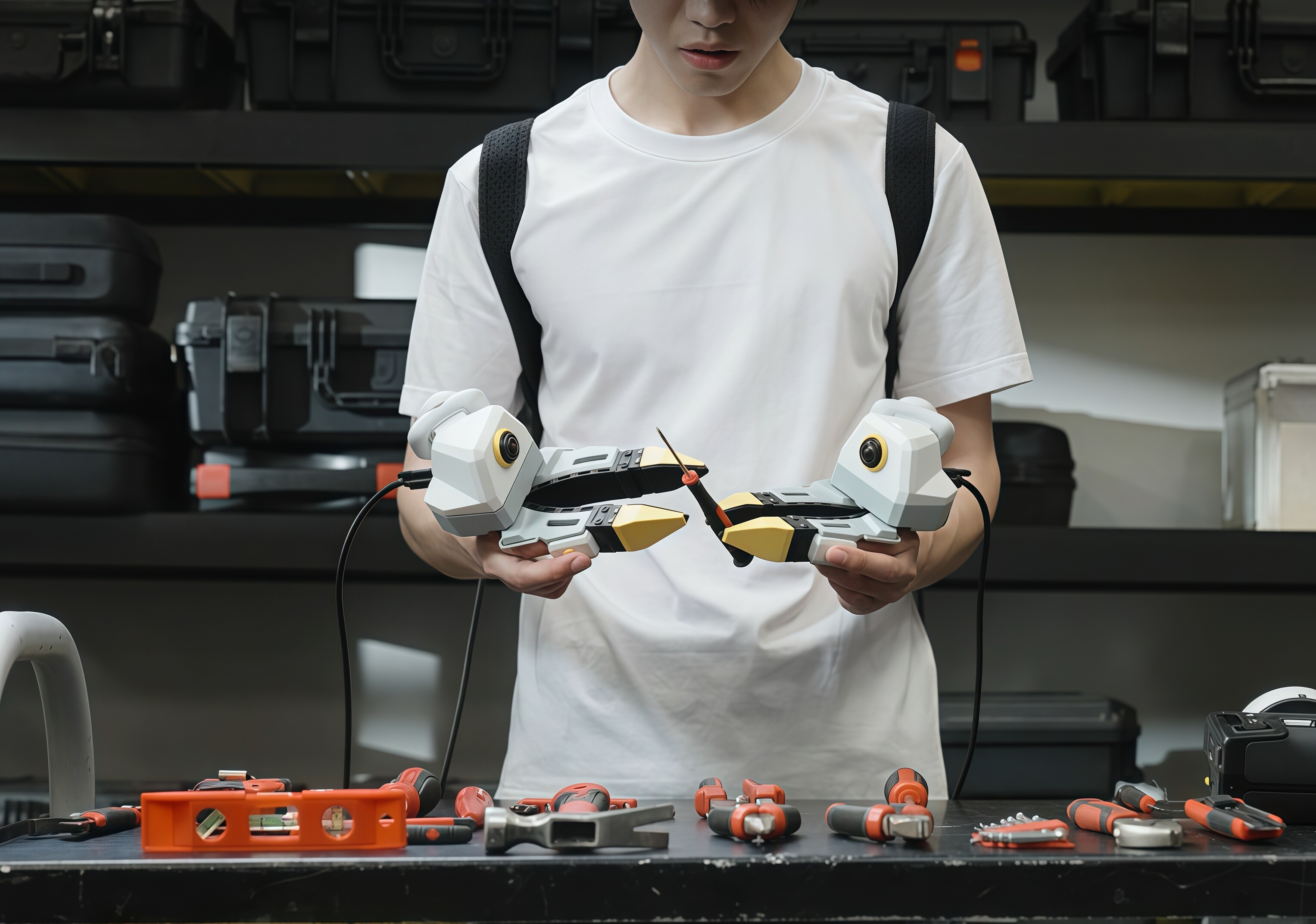
Tactile intelligence in robotics is what's driving them forward Image: Xense Robotics
- Artificial intelligence (AI) is increasingly interacting with the real world with the number of industrial robotic units expected to top 700,000 units worldwide from 2028.
- Physical AI is currently hindered by a lack of visual perception; however, its capabilities are carried by promising tactile intelligence – direct feedback on contact, force and deformation.
- High-quality tactile interaction data can help improve and ultimately increase robotic use cases.
Physical artificial intelligence (AI) is driving a new industrial revolution, transforming AI from a purely digital capability into an intelligent force that can perceive, interact with and operate in the physical world.
In recent years, vision and language models have enabled machines to recognize images, understand instructions and generate content.
However, as robots move into real-world environments – from factories and warehouses to hospitals and homes – the fundamental challenge is shifting beyond whether they can “perceive” and “understand” the world, to whether they can reliably interact with and operate within it.
Robots need to grasp, assemble, transport, inspect and collaborate with people. They also need to sense contact, pressure, friction, deformation and material state. Therefore, the next phase of physical AI will not be defined by building ever-larger models but by developing richer and more comprehensive physical perception capabilities.
This transition is becoming increasingly urgent as robots move from laboratories into large-scale industrial deployment.
According to the International Federation of Robotics' World Robotics 2025 report, nearly 4.67 million industrial robots are currently in operation worldwide, with annual installations expected to exceed 700,000 units from 2028 onward.
The World Economic Forum’s Future of Jobs Report 2025 also highlights that 22% of today’s jobs are expected to undergo structural transformation by 2030.
Despite this accelerating demand, industrial automation continues to face a critical shortage of systems capable of operating safely, reliably and adaptively in complex real-world environments.
Robots have demonstrated promising results from tactile intelligence
One of the fundamental bottlenecks in today’s robotic systems is their heavy reliance on visual perception.
In scenarios involving occlusion, reflective surfaces, low-light conditions, transparent objects, flexible materials and precision assembly, the reliability of visual data can deteriorate significantly, making it difficult to support accurate manipulation.
Tactile sensing, however, provides direct feedback on contact, force and deformation, addressing these critical perception gaps.
Research from ACTOR has also demonstrated that tactile sensing is unaffected by object transparency and can provide more reliable information about object shape and orientation. Therefore, tactile perception has become essential to enabling robots to operate safely, reliably and adaptively in the real world.
Industrial practice is already demonstrating the necessity of tactile intelligence. Amazon’s warehouse robot Vulcan was designed to combine vision and touch when handling complex items on shelves.
Wired reported that Vulcan uses force signals to understand contact and has been deployed in fulfilment centres in Hamburg, Germany and Spokane, United States.
The Verge also reported that Vulcan can handle around 75% of warehouse items. This shows that touch is a necessary capability for improving reliability in cluttered, crowded and unpredictable real-world environments.
Tactile intelligence is not a single sensor technology. It is an integrated system capability spanning hardware, data and models.
Tactile hardware captures physical information such as contact force, deformation and material state. Data platforms turn real human-machine and machine-object interactions into training and simulation assets.
Embodied models then use high-quality tactile data to learn more robust manipulation strategies.
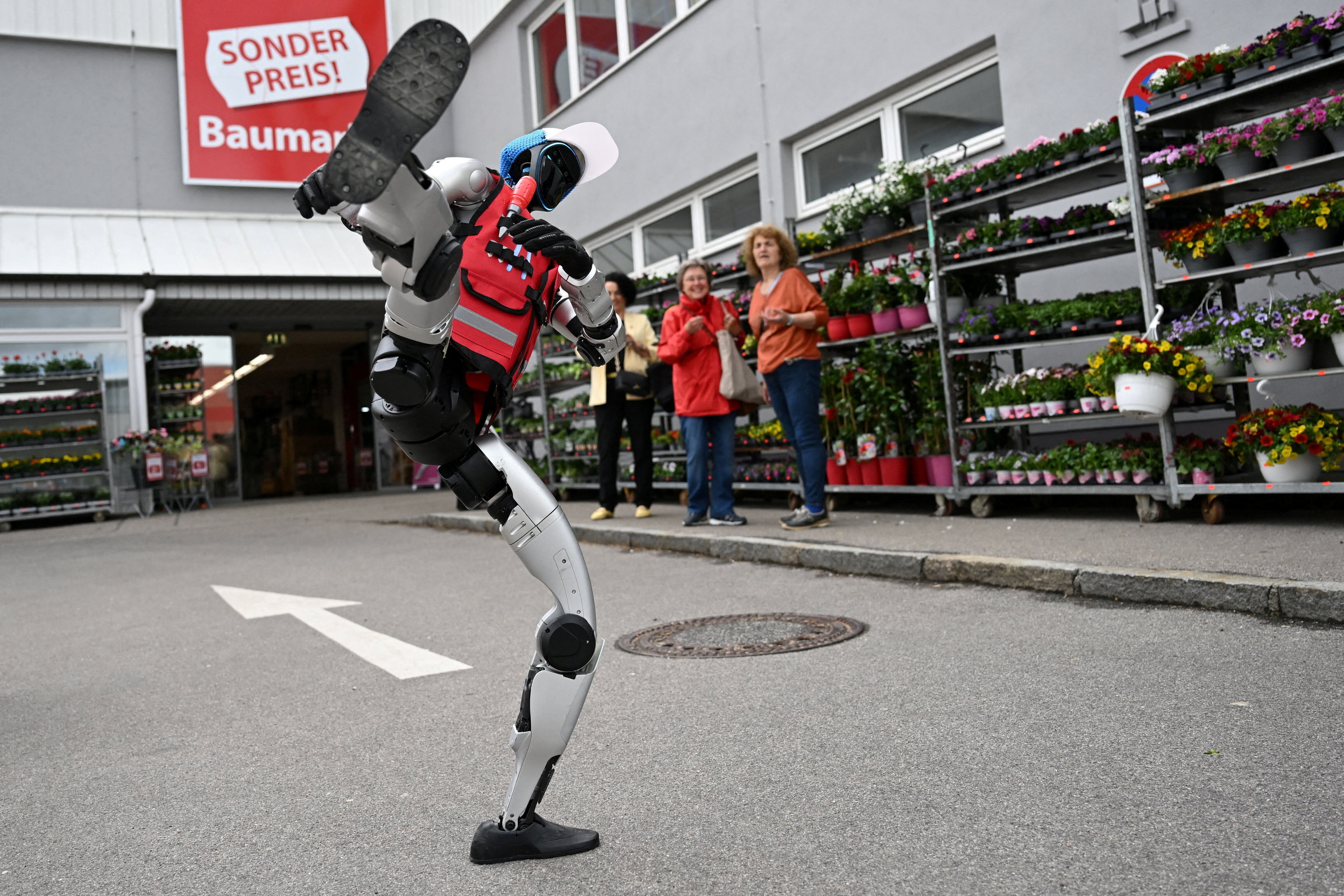
Quality data will help boost tactile intelligence and increased robotics use
Foundation models for robotics, represented by systems such as GR00T N1, show that robot learning is already combining real trajectories, human videos and synthetic data. High-quality tactile interaction data may become a core additional source for improving robotic generalization in the future.
Attaining embodied AI data through more efficient and cost effective collection is still a challenge that Xense Robotics and others are working to address. Xense, for instance, has developed a wearable collection device, which can reduce data collection costs by more than 80%.
To address data quality, it established proprietary data quality standards and developed an in-house data post-processing engine, which also reduced the cost of manual data cleaning by more than 80%. Its proprietary VTLA(Vision-Tactile-Language-Action) embodied AI model helps translate this data into practical robotic capabilities.
The hardware-data-model loop is important because physical AI must solve three problems at once: reliable contact, complex manipulation and environmental adaptation.
Reliable contact means knowing whether an object is slipping, whether a grasp is stable or whether too much force is being applied.
Complex manipulation means handling objects that bend, shift, compress or deform during a task. Environmental adaptation means responding to variation in parts, tools, surfaces and human behaviour without relying entirely on pre-programmed paths.
Touch can provide the feedback needed to close that loop.
As an emerging robotics startup, Xense Robotics is exploring this frontier with the vision that “touch ignites physical intelligence.” The value of tactile perception is not to replace vision systems or large language models but to complete a missing layer in physical AI’s understanding of the real physical world.
Its industrial impact extends far beyond efficiency gains: more reliable robots can reduce rework and material waste, improve manufacturing quality, address labour shortages and help transform human-robot collaboration from “isolated automation” toward a future in which humans and machines work together to accomplish tasks.
If vision and language have taught AI how to understand the world, tactile intelligence may be what enables AI to truly interact with it, allowing machines to act, learn and continuously improve through feedback from the physical environment. This may represent the path toward physical AI in its fullest form.
The next evolution of physical AI could begin with one fundamental capability: teaching machines how to “touch.”
Don't miss any update on this topic
Create a free account and access your personalized content collection with our latest publications and analyses.
License and Republishing
World Economic Forum articles may be republished in accordance with the Creative Commons Attribution-NonCommercial-NoDerivatives 4.0 International Public License, and in accordance with our Terms of Use.
The views expressed in this article are those of the author alone and not the World Economic Forum.
Stay up to date:
Artificial Intelligence
Related topics:


Forum Stories newsletter
Bringing you weekly curated insights and analysis on the global issues that matter.
More on Artificial IntelligenceSee all

Ariel Kastner, Miriam Schive, Sannan Pervaiz and Jessica Margolis
October 2, 2026


