Africa's AI infrastructure: Who pays and who carries the risk?
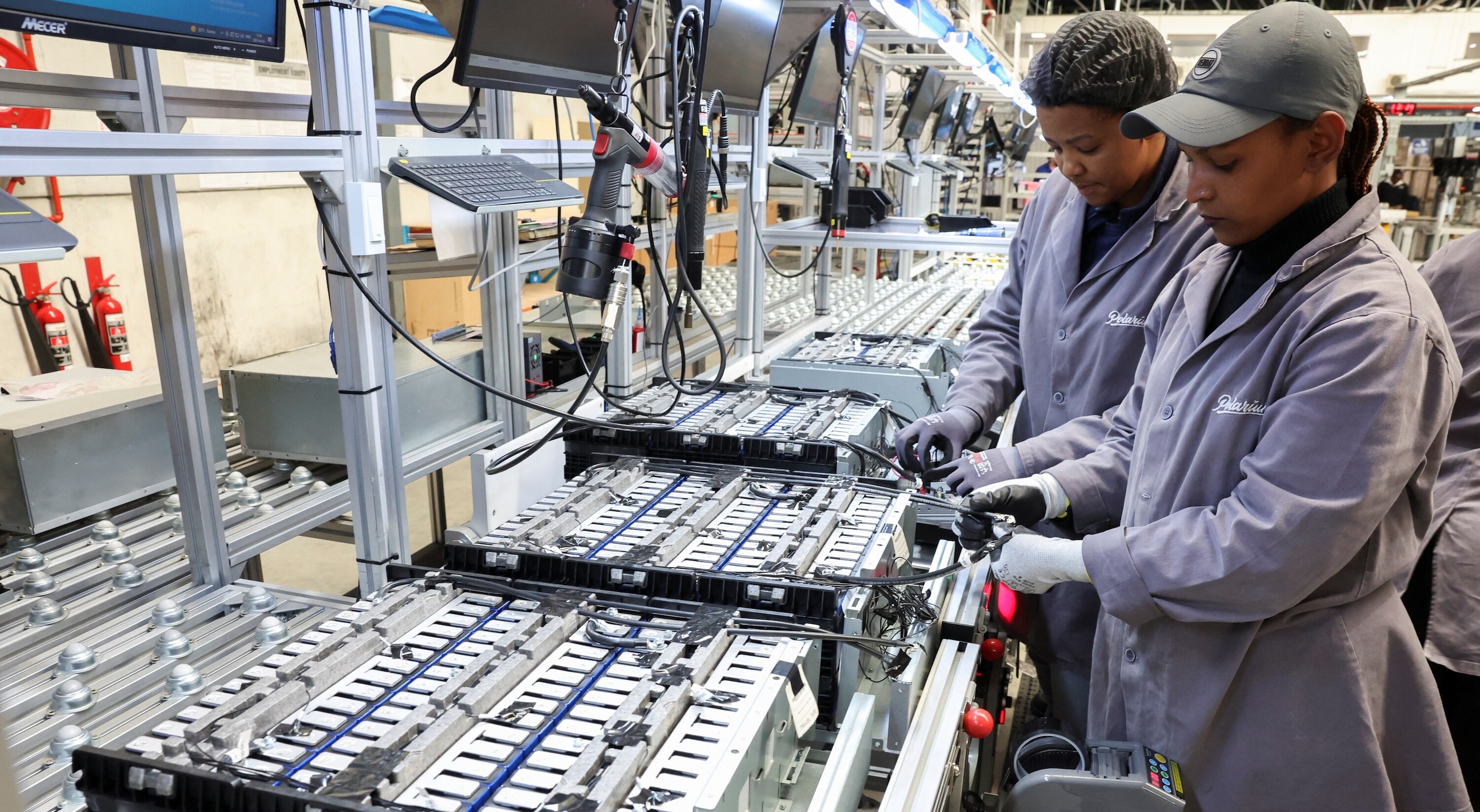
As Africa builds out its AI infrastructure, the continent can take lessons from elsewhere in spreading risk the right way. Image: REUTERS/Esa Alexander
Karikari Achireko
Director for Corporate Strategy & Global Partnerships, Africa Sustainable Energy Centre (ASEC)- Around 600 million people in Africa lack electricity, yet AI data centres need major new power investment.
- If data centre demand falls short, grid costs risk shifting to utilities, existing consumers or governments.
- Connection charges, minimum-demand commitments and long-term contracts can place risk with those best able to manage it.
Africa’s push to attract artificial intelligence investment is creating a new infrastructure challenge. Data centres can bring capital, cloud capacity and digital services, but they can also require substantial investment in generation, transmission and grid connections.
The International Energy Agency (IEA) expects global data centre electricity consumption to double by 2030. The infrastructure needed to serve this demand, though, is expensive and long-lived.
For African countries, where power-sector capital has competing uses and around 600 million people still lack electricity access, this raises fundamental questions: who should pay for the infrastructure required by AI investment, and who should carry the risk if expected demand changes?
Infrastructure commitments can outlast demand forecasts
Consider a developer proposing a large data centre campus. Serving it may require new generation, transmission capacity and substations. Utilities may have to begin investing before the customer reaches its electricity demand.
That process creates project risk. Construction and grid connections can be delayed, costs can rise and a utility may commit capital before the developer has made an equally firm commitment to using the capacity being built.
Kenya’s Microsoft-G42 investment illustrates the challenge. In 2024, the companies announced a $1 billion digital investment initiative centred on a geothermal-powered data centre supporting a new East Africa cloud region, alongside connectivity, digital skills and local AI development. In 2026, Reuters, citing Bloomberg, reported delays amid disagreements over requests for guaranteed annual payments for a certain amount of capacity. Kenyan officials said discussions over the project’s scale and power requirements were continuing.
The issue is broader. A power system needs confidence that demand will materialize before investing, while a developer needs confidence that power will be available before committing capital.
Who finances infrastructure is not necessarily who pays for it
Even when a project proceeds, demand may arrive more slowly than forecast. A customer could request 300 MW but initially use 100 MW or cancel a planned expansion. Infrastructure built around the original forecast may remain underused while its costs still have to be recovered.
That creates demand and stranded-asset risk, but also a cost-allocation problem. A utility might borrow to finance a transmission upgrade, but if the customer does not generate enough revenue, the cost can remain on the utility’s balance sheet, move to existing consumers through tariffs or, where public guarantees are involved, reach the government.
Some African operators are already taking greater responsibility for their power requirements. In South Africa, Teraco is developing a 120 MW solar facility in the Free State, with electricity wheeled through Eskom and municipal networks to its data centres. Africa Data Centres has signed a 20-year agreement with Distributed Power Africa for 12 MW of solar electricity for its South African facilities.
These examples show that utilities or governments need not finance every incremental megawatt of supply.
Contracts can put risk with the parties best able to manage it
Connection charges and developer contributions can allocate customer-specific infrastructure costs. Development milestones can reduce the risk of utilities investing too far ahead of credible projects. Minimum-demand commitments can protect against customers reserving more capacity than they use. Long-term power contracts provide revenue certainty, while credit support can protect utilities if a counterparty cannot meet its obligations.
Other markets provide useful examples. AEP Ohio’s data centre tariff requires long-term commitments, applies minimum billing requirements tied to contracted capacity and can require substantial collateral from customers that do not meet specified financial-strength tests. Ireland has taken another approach. After data centres grew from 5% of national electricity demand in 2015 to 22% in 2024, its regulator required new data centres seeking grid connections to provide generation and/or storage capacity matching their requested maximum import demand.
Neither model should simply be copied in Africa, but they illustrate a broader principle: large customers can carry an appropriate share of the costs and risks their requirements create.
Some risks cut across individual contracts. Foreign-currency financing can expose utilities to exchange-rate movements when revenues are collected locally. Government guarantees can lower financing costs but also move private investment risk onto public balance sheets. Tariff rules determine whether customer-specific costs remain with the customer or migrate to other consumers.
Consider what Africa's economies receive
Protecting utilities, governments and consumers from disproportionate exposure is only half of the equation. African countries should also consider what committing scarce electricity and infrastructure to large digital loads creates for the wider economy.
The Microsoft-G42 proposal shows the potential scope: its planned investment extended beyond a data centre to cloud services, connectivity, skills development and local AI capabilities. Transmission developed around a data centre cluster may also support industrial customers and future demand, while new generation backed by a creditworthy anchor customer can add capacity to the system.
The International Finance Corporation has committed up to $100 million to support Raxio’s phased development of 10 carrier-neutral data centres with 13.5 MW of total capacity across seven African markets. This shows how private investment and development finance can share the capital requirements of digital infrastructure rather than relying primarily on host governments.
These benefits depend on how investments are structured and whether the infrastructure and capabilities extend beyond the project itself.
Africa can set the terms before the scale arrives
Attracting AI investment should not require African power systems to absorb risks created by individual projects. African countries can establish arrangements that make commitments on both sides more credible.
Developers need confidence that power will be available. Utilities need confidence that customers requesting large amounts of capacity will use and pay for it. Governments need to understand the liabilities they assume, and existing consumers should not automatically inherit costs created primarily by individual large users.
Getting those terms right can turn AI infrastructure from another large electricity load into an anchor for investment, stronger power systems and digital capacity. Who pays, who carries the risk and what host economies receive in return will determine how much of that opportunity Africa ultimately captures.
Don't miss any update on this topic
Create a free account and access your personalized content collection with our latest publications and analyses.
License and Republishing
World Economic Forum articles may be republished in accordance with the Creative Commons Attribution-NonCommercial-NoDerivatives 4.0 International Public License, and in accordance with our Terms of Use.
The views expressed in this article are those of the author alone and not the World Economic Forum.
Stay up to date:
Africa

Forum Stories newsletter
Bringing you weekly curated insights and analysis on the global issues that matter.
More on Artificial IntelligenceSee all

Ariel Kastner, Miriam Schive, Sannan Pervaiz and Jessica Margolis
October 2, 2026


