Green ventures, good jobs: How early-stage innovation is building an inclusive economy
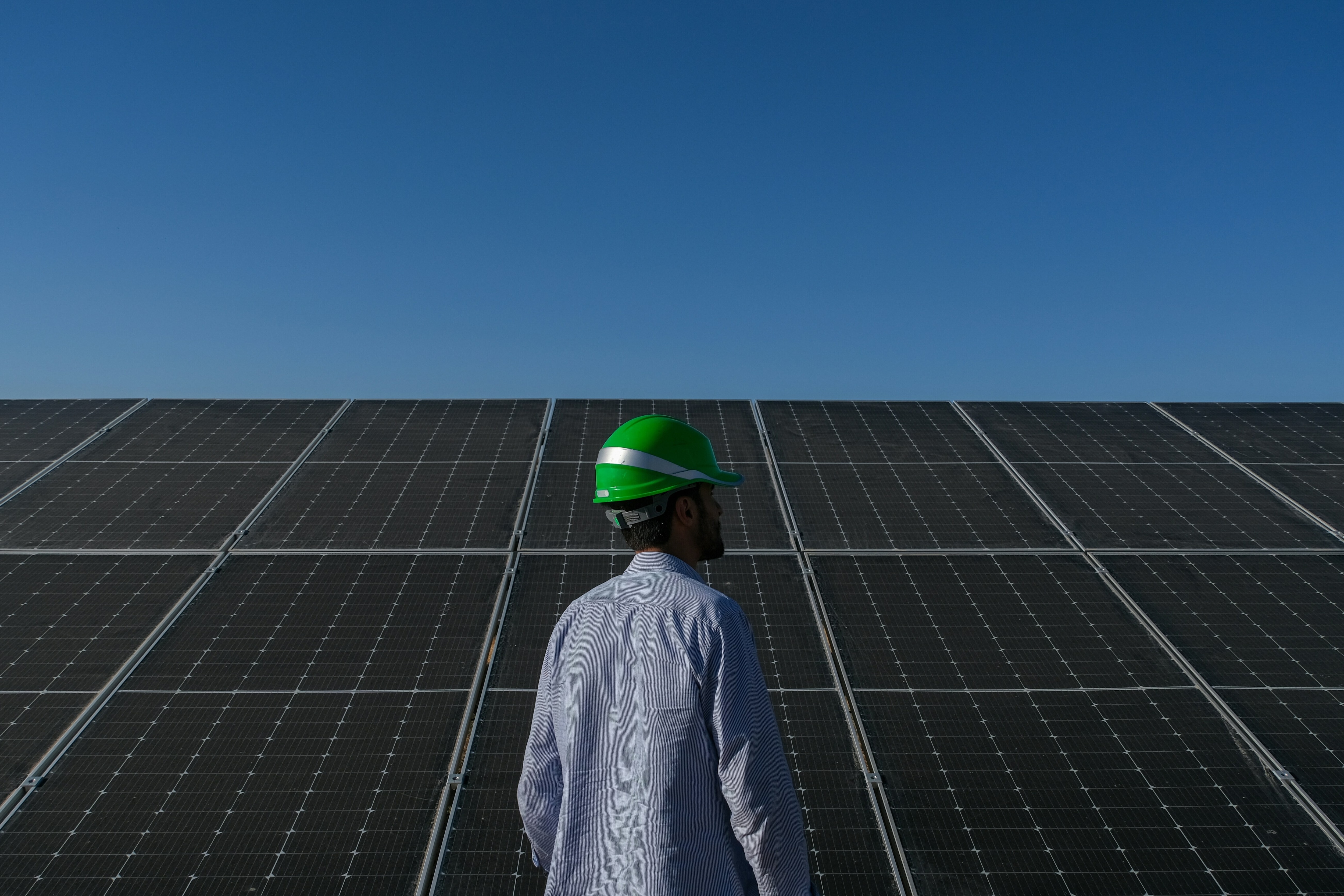
Early stage ventures can create good jobs, collaboration can help them scale Image: Unsplash+/Hrant Kachatryan
- The green transition is projected to be one of the decade's largest drivers of job creation but headline numbers say little about whether those jobs will be good ones.
- Early-stage ventures across waste, recycling and water are building formal, paid work into their business models rather than treating it as a byproduct of environmental impact.
- Scaling what they have proven depends on corporate partnership and policy that recognizes job quality alongside environmental outcomes.
The green transition is reshaping labour markets at scale.
According to the World Economic Forum's Future of Jobs Report 2025, the green transition and technology are two of five macro-trends reshaping global labour markets. These trends combined are expected to create approximately 170 million new roles by 2030, equivalent to 14% of today's global employment, while displacing 92 million others.
Job disruption overall is expected to reach 22% of today's total jobs, and over 120 million workers globally are at medium-term risk of redundancy without reskilling. Yet, these numbers raise an even more vital question: whether the jobs created will be “good jobs,” formal, fairly paid and accessible to the workers who need them most.
The balance struck between deeper automation and broader augmentation will determine much of the answer and it reminds us that the future of work can be shaped for better outcomes. So what does this look like in practice?
Embedding work into environmental objectives
UpLink, the Forum's engine for early-stage innovation, has surfaced ventures tackling environmental and social challenges worldwide. Looking across those working on nature, water, the circular economy and waste reveals a clear pattern for labour market analysis.
Alongside their environmental missions, these ventures are building employment models from scratch, with limited resources and in markets where formal work is scarce. They are not creating jobs as a byproduct of environmental impact.
They are creating formal, protected, income-generating work as an embedded feature of how their businesses function.
Three examples, from different sectors and continents, show what that looks like.
1. Identifying waste build up
Green Mining operates an intelligent reverse logistics network across São Paulo, Rio de Janeiro, Bahia and Belém. Its software reads industry sales data to map where post-consumer packaging accumulates and collection hubs are placed at the highest-volume points.
The company hires former waste pickers and cooperative members as registered collectors with formal employment cards and connects self-employed collectors to the best market value for their recyclables.
Its blockchain system tracks every batch from collection point to recycling plant, with collectors, hubs, transporters and plants validating each other's quantities and issues a purchase invoice for every transaction, giving sellers documented proof of the trade.
Through its Factory Price Station, collectors and residents are paid factory-level rates directly and the company reports over BRL 6.8 million paid to more than 6,000 people to date.
2. Utilizing renewables to power recycling
GIVO (Garbage In, Value Out) operates seven solar-powered recycling centres across Nigeria and Liberia, each sited within five kilometres of the community it serves. The centres run community-based collection, sorting and processing of recyclable materials, creating local employment and paying households financial incentives for what they bring in, providing substitute income.
Its technology platform digitises and tracks collection, processing, logistics and payments in real time, generating the data behind sustainability reporting for corporate partners. The company recycles over 500,000 kilograms of plastic yearly and reports supporting more than 5,000 local community members with dignified jobs and income opportunities.
3. Innovating technology and business models for water filters
Openversum manufactures gravity-driven water filters using Swiss filtration technology that removes bacteria and heavy metals without electricity, designed to be affordable and easy to maintain.
Rather than distributing the technology directly, the company enables local entrepreneurs, mainly women in rural areas, to sell, install and service the filters in underserved communities, creating steady income streams.
Entrepreneurs are supported with digital platform that help them manage sales, customer payments and follow-up. Over 100 entrepreneurs are currently active in Colombia, where more than 2,000 filters had brought clean water to 10,000 people. Partnerships and pilots are at different stages in Nicaragua, Mexico, Ghana and Uganda.
How new employment routes are surfacing
These ventures don't compete with traditional pathways into work. They are building new ones, creating first-time routes into formal employment for people who had none.
Technology is central to how they do it, though not in the way the automation debate usually assumes. In each case, digital systems make work visible, verifiable and therefore payable. Mapping where packaging accumulates turns scattered, unpredictable collection into routes stable enough to employ someone on a contract.
Traceability lets a corporate client trust what they buy, which lets money reach the people doing the collecting. Business and micro-loan tools lower the capital and skill threshold for someone starting a distribution business. In each instance, the technology functions as an access mechanism, extending formal economic participation to workers previously excluded from it.
Why scaling solutions is a shared responsibility
These ventures are evidence that inclusive job creation in the green transition is possible; however, reaching more communities and at the pace the transition requires is where corporate partnership and supportive policy make the difference.
Corporates hold the most direct lever and the opportunity is considerable. Companies that build ventures like these into their procurement and supply chains convert a working model into a scaled one, expanding the number of people who gain formal work through the transition.
Investors can back the infrastructure that individual ventures cannot build alone, from collection networks to verification systems and working capital, unlocking growth that is already waiting to happen. Policymakers can accelerate all of it by recognizing job quality alongside environmental outcomes in how they measure and reward green transition progress.
Good jobs in the green transition are not a future ambition. They are a present opportunity and one worth seizing together.
Don't miss any update on this topic
Create a free account and access your personalized content collection with our latest publications and analyses.
License and Republishing
World Economic Forum articles may be republished in accordance with the Creative Commons Attribution-NonCommercial-NoDerivatives 4.0 International Public License, and in accordance with our Terms of Use.
The views expressed in this article are those of the author alone and not the World Economic Forum.
Stay up to date:
Circular Economy
Related topics:

Forum Stories newsletter
Bringing you weekly curated insights and analysis on the global issues that matter.


