Why an ageing world is a question for young people

Today's youth will live to face new longevity challenges. Image: Pexels
Tobias Lindström Battle
Associate, Impact and Initiatives, Global Shapers Community, World Economic Forum- Young people will be the custodians of a world with lengthening lifespans and declining populations.
- They face mounting longevity-related challenges, including financial insecurity, healthcare access and social isolation.
- The World Economic Forum's new Longevity Economy Playbook provides a framework for identifying local gaps and solutions to longevity preparedness.
Today’s youth will increasingly age into a world that was not designed for their longer lives. So why is longevity still approached as a matter for older adults?
Economies around the world are ageing as a result of falling birthrates and rising lifespans. In fact, over 70% of people worldwide already live in a country whose population is projected to peak before the end of the century. The result is a major transformation at both the societal and individual levels.
At the societal level, systems designed for a young, growing population will need to be rethought. At the individual level, lives will grow increasingly complex and non-linear, with lifelong learning, caregiving and even unretirement becoming more prevalent. This is especially poignant for today’s youth, who will be older adults in a world that looks completely different than the one we live in today.
A playbook for a longer future
Many young people today are already experiencing the effects of evolving financial landscapes, strained healthcare systems and changes to the social fabric. With the foundations for longevity set at youth, they must be empowered as architects of our collective future.
The Longevity Economy Playbook, published by the Global Shapers Longevity Economy Taskforce, places agency in the hands of young people. It provides a framework for identifying local gaps in longevity-preparedness, designing solutions and ensuring locally adapted implementation. The playbook frames longevity not as a future challenge, but as a present-day opportunity to which communities are already responding.
Convergent trends amid divergent realities
The Longevity Economy Playbook sits on a strong base of data offering stark perspectives of longevity as seen by young leaders. It highlights key challenges emerging from systems designed for an earlier demographic era where stable formal employment, predictable retirement pathways, and readily available family care were more prevalent. It also highlights how the urgency of these challenges varies across regions.
Despite varying regional experiences, common themes emerged:
Financial insecurity is the most widespread concern, though its causes varied sharply by region. Pressures on pension systems, inflation driving savings to the ground, and political instability raising costs are all drivers of financial insecurity experienced in many parts of the world today. Healthcare access and healthy ageing are equally prominent, particularly for rural and isolated communities where transport, infrastructure and digital services remain uneven.
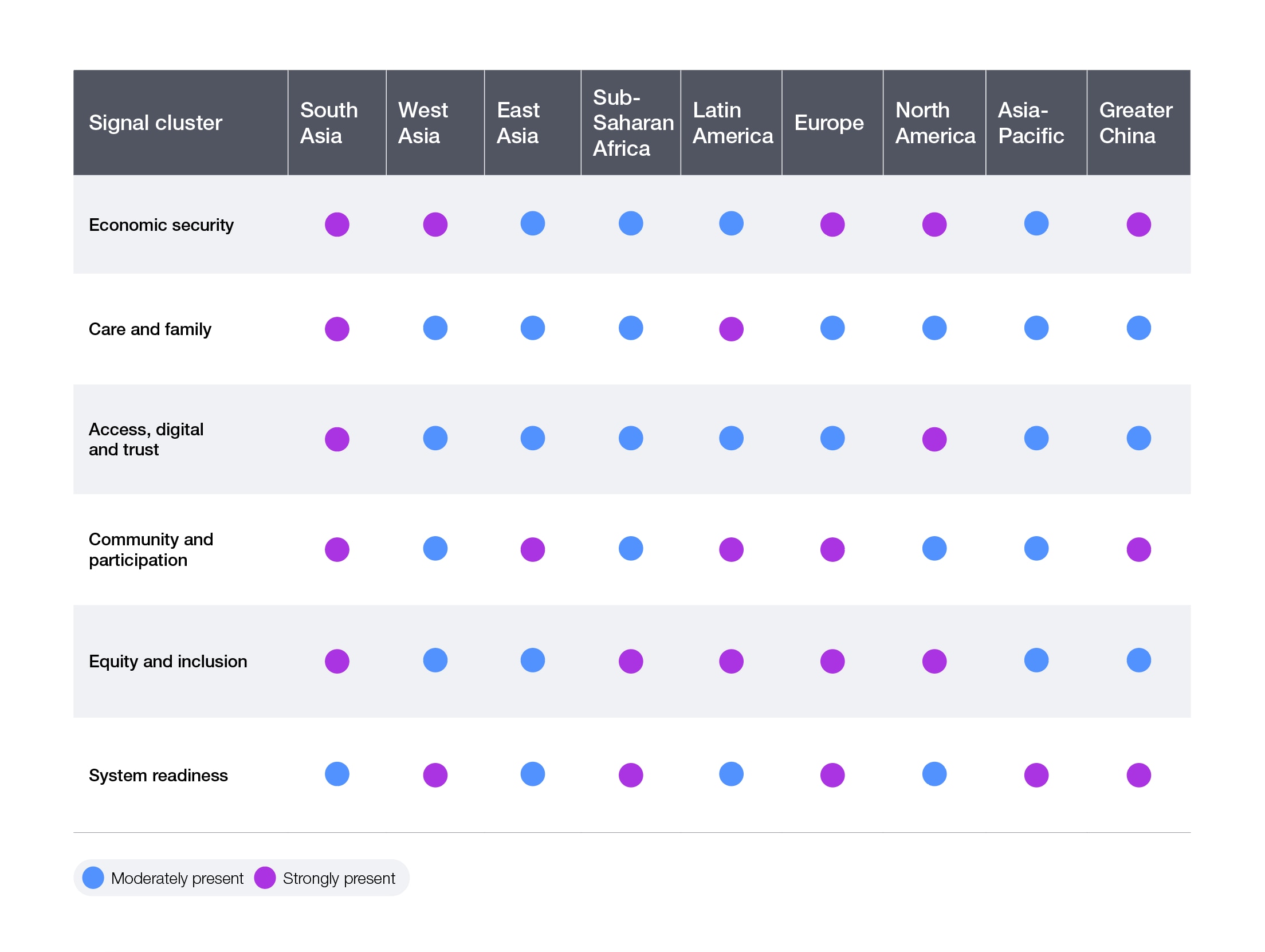
Meanwhile, social isolation is a challenge increasingly experienced throughout regions as longer lives become lonelier lives. Importantly, social connection is not simply a nice-to-have: It also supports health, economic participation and the intergenerational trust needed for longevity systems to work.
When asked about priorities, young people from around the world spell out two clear necessities. First, no one should retire into poverty. Second, prevention must play a central role in enabling longer, healthier lives. These insights underscore the imperative of intergenerational solidarity as a source of resilience, connection and prosperity.
Multistakeholder action with an intergenerational lens
Because the future is not predetermined, understanding longevity requires more than analyzing today’s data. Using the intergenerational foresight method, the Longevity Economy Playbook demonstrates how to access new perspectives and imagine solutions for generations to come.
Foresight uses creative thinking to project how people may live, work and age in the decades ahead. In doing so, it reveals the tensions shaping the policies, institutions and choices still to come, helping leaders develop targeted solutions to broad challenges.
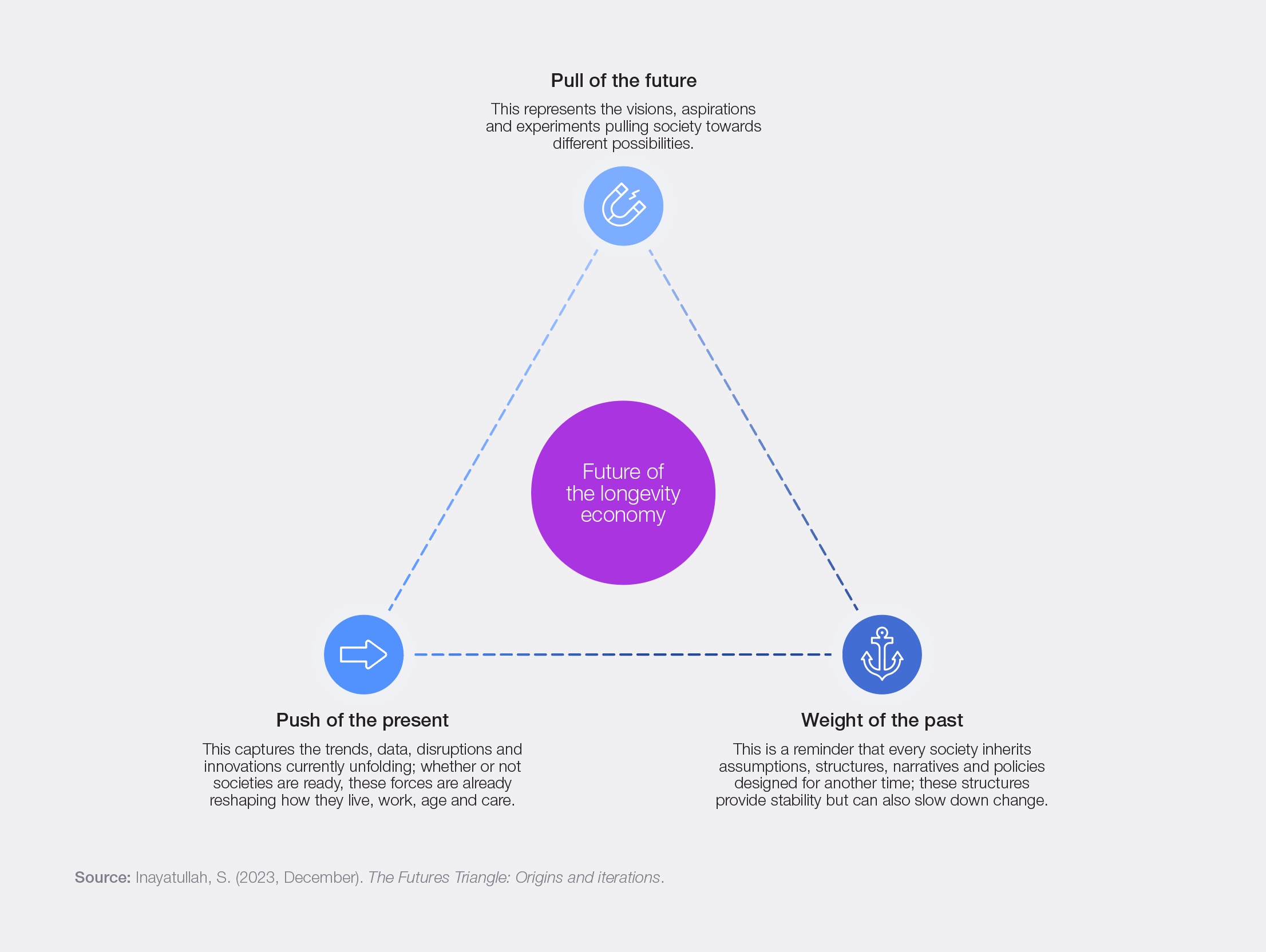
By combining regional analyses with foresight exercises, the playbook surfaces insights that inform a range of stakeholders on the actions needed to make the most of the opportunities that come with longer lives. Employers, policy-makers and young leaders have especially interesting roles to play.
Employers can boost productivity and lifelong resilience by empowering their employees:
- Enable flexible, multi-stage careers by supporting lifelong learning, phased retirement and flexible work arrangements.
- Invest in health through preventive care, well-being programmes, and age-friendly workplaces for all generations.
- Prioritize financial resilience through comprehensive savings plans, access to financial education and support for family caregivers.
Policy-makers can safeguard societal well-being and spur other stakeholders to action through clever policies.
- Create a minister for longevity to break down siloes between finance, health, housing, care and labour to drive a coordinated national response to longer lives.
- Make prevention and healthy ageing a policy priority to boost productivity, decrease unnecessary healthcare expenditure and increase quality of life across generations.
- Design for longer, more diverse lives by using foresight, involving young people and older adults in policy-making, and developing flexible systems that support all generations and adapt to changing needs.
Young people should also see themselves as active participants in the longevity economy, not simply as people moving through it. Their greatest impact will come from taking leadership in shaping more inclusive and resilient communities.
- Leverage the Longevity Economy Playbook to identify local gaps, develop practical solutions and strengthen opportunities in the longevity economy within your community.
- Apply intergenerational foresight to explore how longer lives may affect your community and anticipate the risks and opportunities ahead.
- Plan for longer, less linear lives by remaining open to changing direction and pursuing different paths throughout life.
Longevity is reshaping societies now, but its impact is not predetermined. Communities can move beyond reacting to demographic change and begin designing systems that support lasting financial security, healthy ageing and stronger social connection. But doing so requires intergenerational collaboration and a lifelong view of longevity.
By combining the lived realities of youth across the globe with foresight exercises, the Longevity Economy Playbook puts this challenge in the hands of young people with a vision for not only longer, but better lives.
Don't miss any update on this topic
Create a free account and access your personalized content collection with our latest publications and analyses.
License and Republishing
World Economic Forum articles may be republished in accordance with the Creative Commons Attribution-NonCommercial-NoDerivatives 4.0 International Public License, and in accordance with our Terms of Use.
The views expressed in this article are those of the author alone and not the World Economic Forum.
Stay up to date:
Youth Perspectives
Related topics:

Forum Stories newsletter
Bringing you weekly curated insights and analysis on the global issues that matter.
More on Financial and Monetary SystemsSee all

Rebecca Geldard
October 13, 2026


