The tectonic plates of global higher education are shifting permanently
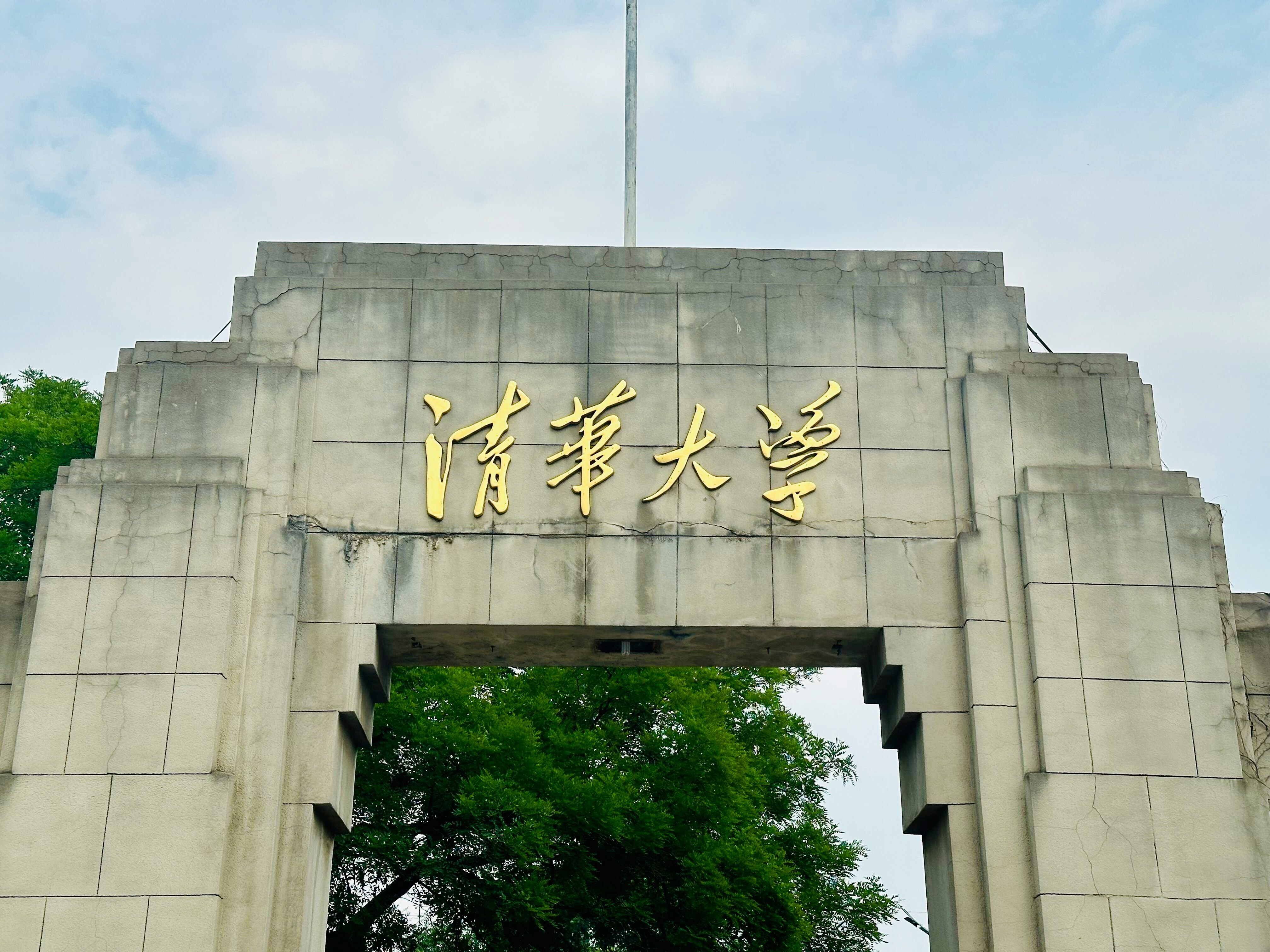
In the Times Higher Education World University Rankings 2027, Tsinghua University in Beijing ranked 11th – becoming the first Chinese institution to surpass every university in continental Europe. Image: Richard Liu/Unsplash
- The latest World University Rankings suggest we are witnessing a historic realignment of academic power from West to East – and it is likely to accelerate.
- Asian universities reach record highs, with three securing spots in the top 15 and China’s Tsinghua overtaking continental Europe’s top institution for the first time.
- The US and UK record their lowest-ever representation in the global top 200, as stagnant funding and financial pressures begin to weaken traditional Western dominance.
We have been monitoring the tremors for years. But today, the new edition of the Times Higher Education World University Rankings heralds the earthquake: the tectonic plates of global higher education are shifting permanently, with a historic realignment of academic and research power from the West to the East.
The signals in today’s 2027 world rankings are powerful:
- It is the first time in the rankings’ 23-year history that three Asian universities make the world top 15 – the National University of Singapore (15th) joining China’s Tsinghua and Peking universities in that elite group.
- It is the first time a Chinese university is ranked higher than any university in continental Europe – with Tsinghua University in 11th overtaking Switzerland’s ETH Zurich in 12th.
- There are the lowest ever number of US, UK and continental European universities in the world top 200 – and the highest number of Chinese universities.
- Top US schools like Chicago, Johns Hopkins and Duke are pushed down by rising Asian universities.
But alongside the eye-catching headline results, the underlying data from a record 2,297 ranked universities from 118 countries shows the deeper, seismic shift: we are entering a new era of a transformed geography of academic excellence.
The World University Rankings measure – across 17 separate performance indicators – what matters most to policy-makers, university sector leaders and indeed all of those with an interest in the dynamics of the global knowledge economy: research excellence and impact; resources and the teaching environment; global academic reputation; links with industry beyond the ivory towers; and international talent attraction, reach and influence.
Western dominance frays at the edges
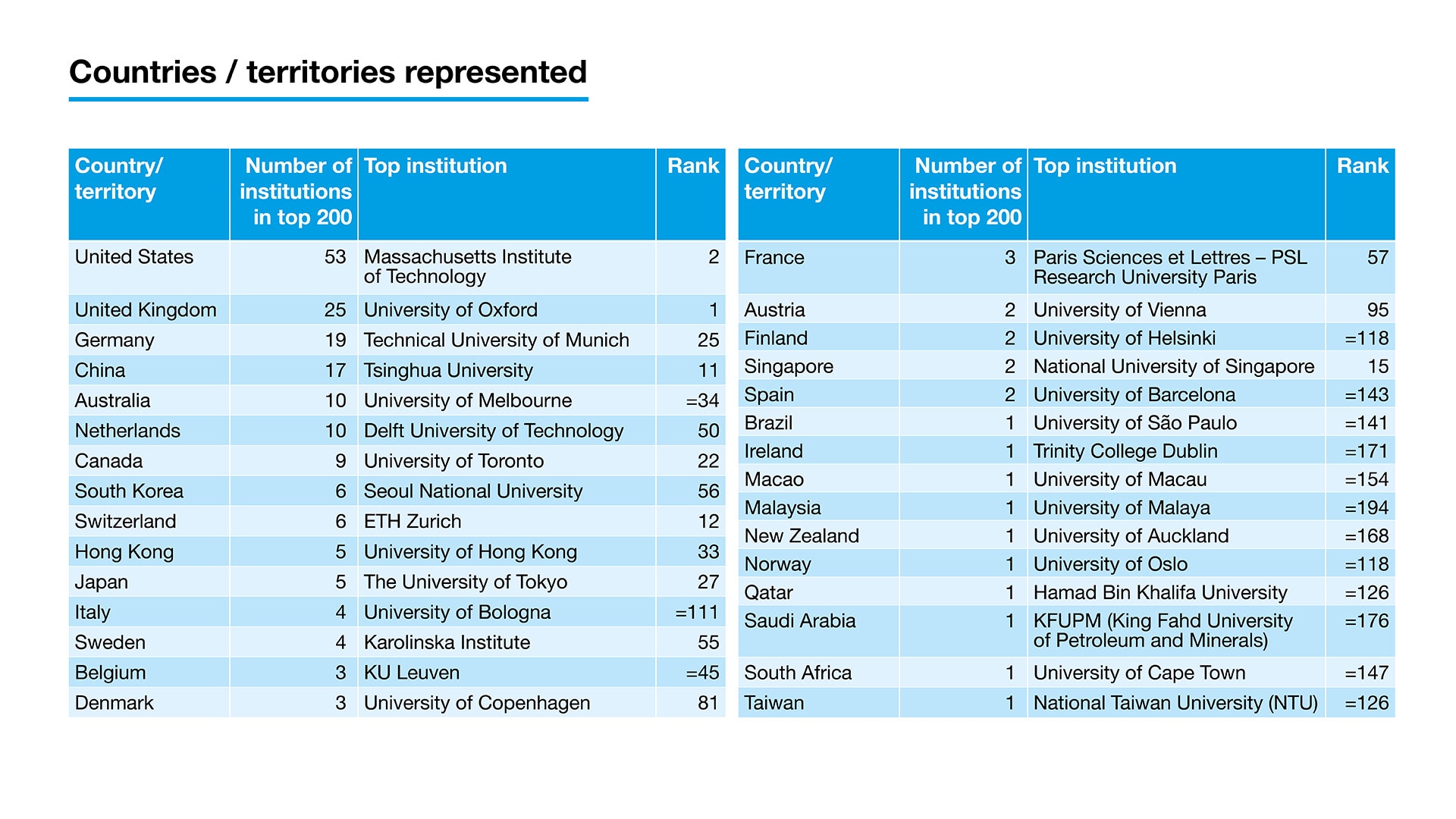
The very top of the rankings remains remarkably stable – and Western – with the University of Oxford topping the list for a record 11th consecutive year, followed by the US’s Massachusetts Institute of Technology in second, and only the US and UK making the top ten.
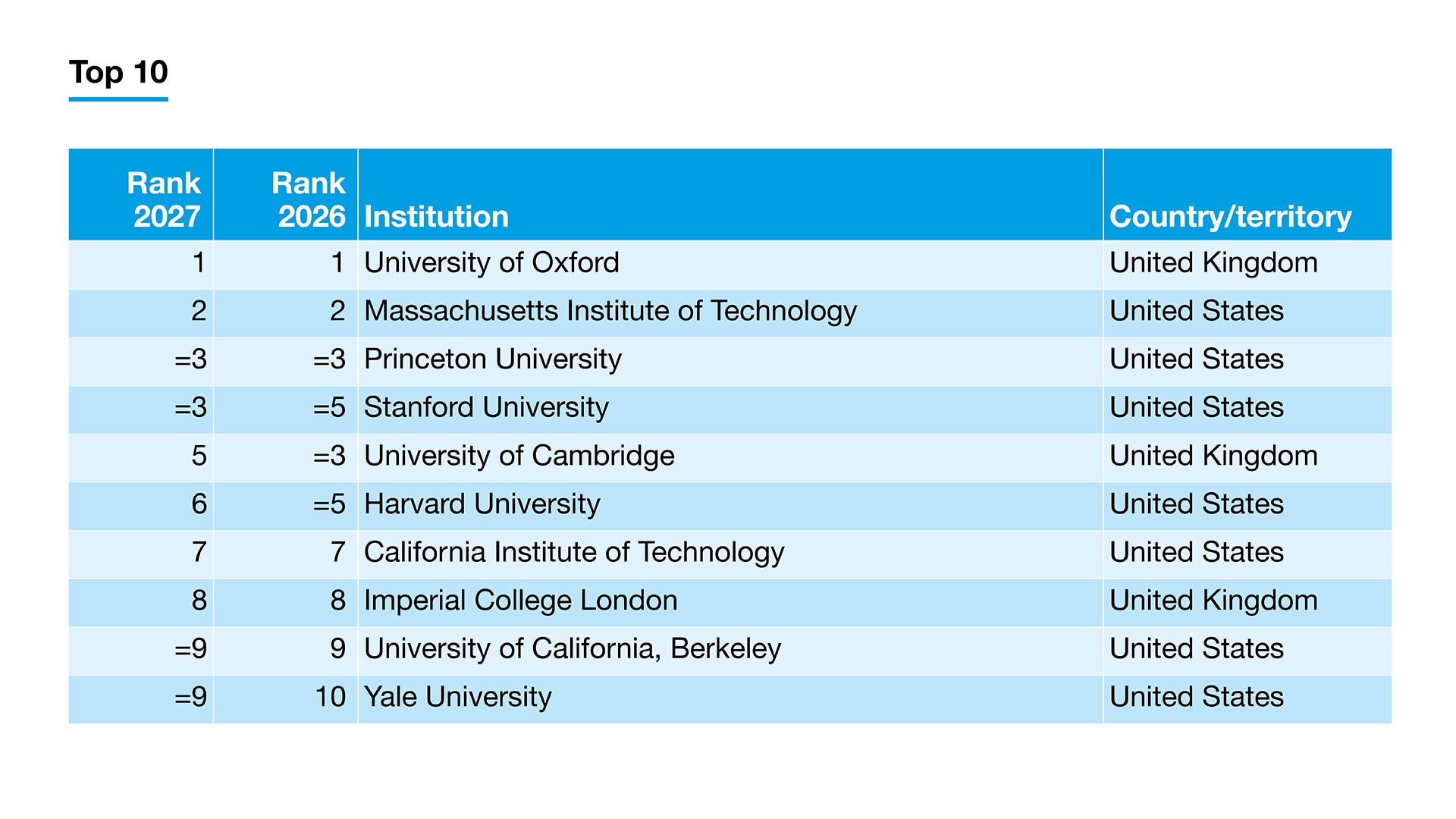
But widening out the view, the US has a record low of 53 institutions in the world top 200 – two fewer than last year – and down from 60 in 2020. Among those remaining in the top 200 for 2027, 33% did manage to increase their position, but 46% fell.
“The US declined in the majority of metrics,” reports Times Higher Education news journalist Helen Packer, “including research strength, citation impact and international students.”
For the UK, 25 institutions made the top 200 list, down from 26 last year and 28 in 2020.
Although several of the UK’s higher-ranked universities improved this year, based largely on strong international reputations, the overall picture is a concern. “The UK is particularly suffering from the financial challenges gripping much of the higher education sector, with all income metrics – institutional income, research income and industry income – decreasing relative to the rest of the world, and research strength and productivity down significantly,” explains Packer.
Overall, Packer warns that further pressure on the US and UK in particular is likely: “Western universities’ monopoly on the highest echelons of global academia looks increasingly shaky, with traditional powerhouse institutions relying on the enduring strength of their reputations to offset weakening research performance.”
The East Asian juggernaut and wider regional surge
Meanwhile, China increased its representation in the world top 200 to a record high of 17, up from just 13 last year, and only seven in 2020. With a further five top 200 universities from Hong Kong, and another from Macau, that Greater China grouping of 23 top-200 universities overtook Germany (which has 19) for the first time for representation in the elite top-200 group.
And while East Asia is at the forefront of the West-to-East power shift, the rest of the Asian continent is also making remarkable progress: in Southeast Asia, in addition to NUS’s record high of 15th place, Singapore’s Nanyang Technological University also reached a record high, jumping from joint 31st to 28th place this year.
The latest rankings also see the first ever top-200 position for Malaysia (with the University of Malaya in joint 194th) and the highest ranking for the University of Indonesia under the current methodology, now in the world top 700 list. In Thailand, top-ranked Chulalongkorn University moved into the world top 550, while Mahidol enters the top 600.
In Central Asia, Kazakhstan’s national flagship university, Nazarbayev University, founded in 2010, has broken into the world top 400 for the first time – after first joining the rankings as recently as 2024, in the 501-600 band.
In West Asia, another very young university is doing remarkably well. The Qatar Foundation-backed, 16-year-old Hamad Bin Khalifa University made its debut in the rankings in joint 126th place, making it the new number one in the Arab world. Saudi Arabia’s KFUPM (King Fahd University of Petroleum and Minerals) secured the next highest ranking for the region at joint 176th, up from joint 184th place last year.
Following the funding
For Simon Marginson, professor of higher education at the University of Bristol, the drive behind the power shift is quite simple: “The iron law of higher education, especially in research, is that stellar performance is only sustainable with funding and especially public funding,” he told Times Higher Education. “The rising higher education systems are all driven by annual increases in government funding.”
And the momentum is clearly moving further and further eastward.
Don't miss any update on this topic
Create a free account and access your personalized content collection with our latest publications and analyses.
License and Republishing
World Economic Forum articles may be republished in accordance with the Creative Commons Attribution-NonCommercial-NoDerivatives 4.0 International Public License, and in accordance with our Terms of Use.
The views expressed in this article are those of the author alone and not the World Economic Forum.
Stay up to date:
Higher Education in Emerging Economies

Forum Stories newsletter
Bringing you weekly curated insights and analysis on the global issues that matter.
More on Education and SkillsSee all

Allison Dadoun
September 24, 2026