How Japan is turning climate and flood risk into economic growth through infrastructure innovations
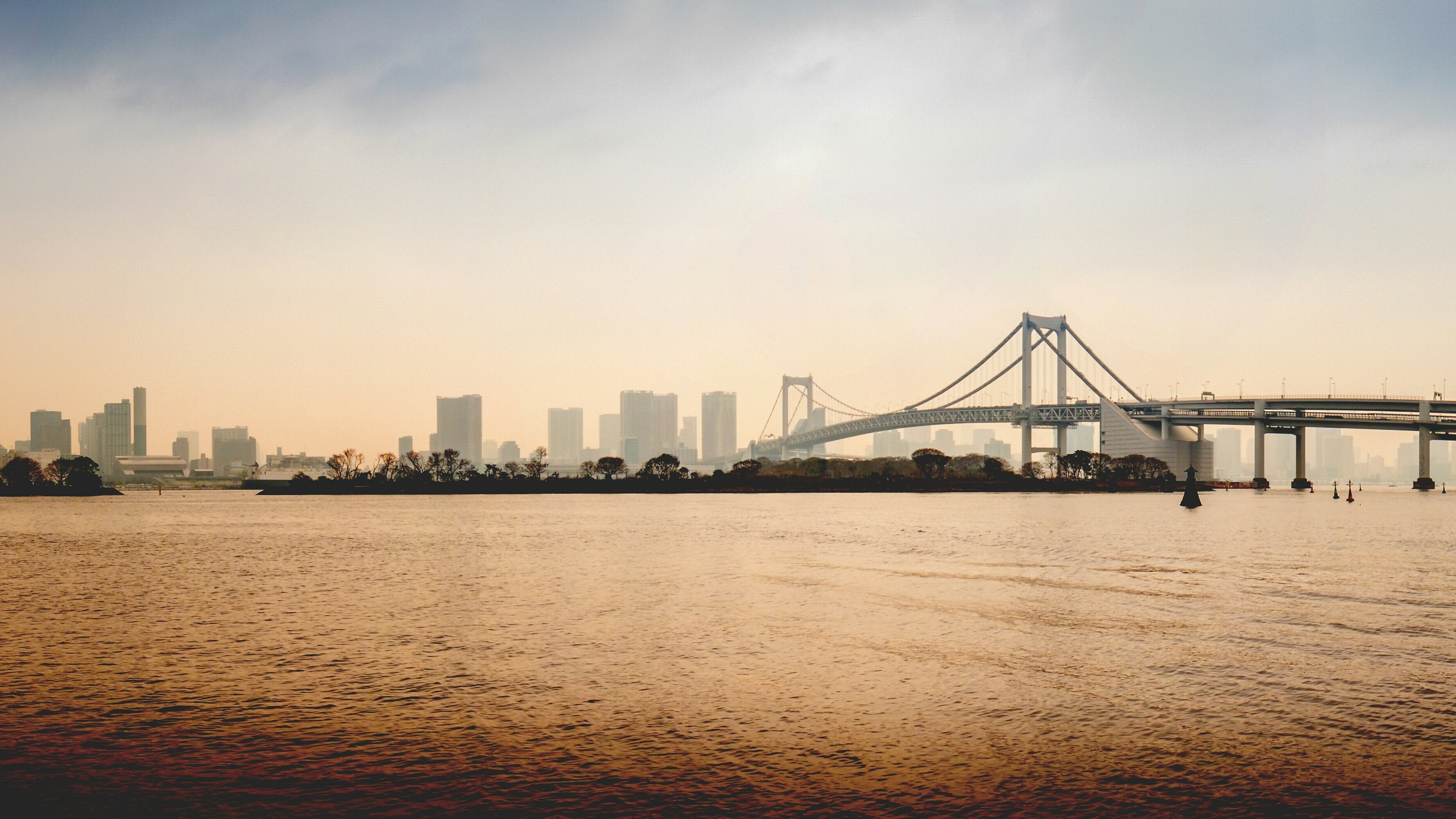
Japan’s approach to growing climate and flood risks combines large-scale infrastructure, nature-based solutions and new technologies. Image: Paz Ifical/Unsplash
- Reactive climate disaster response is financially unsustainable and heavily threatens global economic stability and market competitiveness.
- Japan offers a scalable blueprint by combining engineering feats with decentralized, nature-based agricultural solutions.
- Global leaders must invest proactively and foster public-private collaborations to transform climate resilience into economic growth.
Extreme weather risk is no longer an abstract global challenge. It is deeply place-based, compounding and accelerating across the urban-rural continuum. With advancing global warming, catastrophic flooding is a systemic threat that actively erodes public budgets, weakens supply chains, and displaces vulnerable populations.
For industry leaders and policy-makers, the economic reality is stark. Flooding remains one of our most pervasive risks: one in four people globally face substantial risk, and roughly $18 trillion of global GDP sits in flood-prone areas. In 2025 alone, water-related disasters led to $360 billion in economic losses globally and displaced approximately 8 million people.
A recent briefing paper by the World Economic Forum and Deloitte, Resilient Economies: Flood Adaptation Infrastructure Innovations from Japan highlights a critical message: that reactive disaster response is financially unsustainable. Building climate resilience is no longer about corporate social responsibility or environmental, social and governance (ESG) compliance; it is a core determinant of market competitiveness, investment attractiveness and supply chain reliability.
The compounding cost of inaction
To understand the urgency, decision-makers must look closely at how extreme weather systematically erodes capital. Over the past decade, climate-related disasters have cost the global economy more than $2 trillion. In 2025, the 10 worst disasters caused an estimated $296 billion in direct losses but left behind a $167 billion insurance protection gap, pushing the financial burden onto households, businesses and governments.
The true economic toll is likely far higher, as losses from business interruptions, prolonged recovery periods, eroded asset value, workforce disruptions and supply chain shocks can materialize over years. These impacts absorb capital that could otherwise be channelled into public services. When flooding collides with challenges, such as land subsidence, sea-level rise or critical systems failure from flooding itself, the severity and costs can compound.
Bridging this vulnerability requires a decisive transition away from reactive disaster response towards proactive, systemic investment in built environment, infrastructure and innovation capable of absorbing shocks and speeding recovery.
Infrastructure innovations from Japan
To move from vulnerability to systemic preparedness, global decision-makers can look to Japan. As an archipelago encountering several tropical cyclones in the western North Pacific annually, Japan has developed generational expertise in flood adaptation, treating preparedness as an ongoing commitment rather than a one-time capital development expense. The country's experience offers practical models and learning opportunities for three distinct types of interventions.
1. Large-scale engineering: Underground discharge channel
Built to safeguard Greater Tokyo and the wider prefecture from flood risks, Japan’s Ministry of Land, Infrastructure, Transport and Tourism (MLIT), in collaboration with the Tokyo Metropolitan Government and Saitama Prefecture, developed the Metropolitan Area Outer Underground Discharge Channel (G-Cans).
It is a creative solution consisting of 6.3km of underground tunnels that intake floodwaters from overflow-prone rivers, diverting them into a vast pressure-regulating tank that can hold 670,000 cubic metres of water before pumping it into the larger Edogawa river.
The return on investment has been promising. Flood-affected households fell from over 84,000 in the 1980s to under 6,000 by the 2000s in the area. By 2024, the system was estimated to have prevented 148.4 billion yen ($942.7 million) in flood damage. Crucially, in Kasukabe City, once deemed too flood-prone to attract investment, 28 companies relocated, creating 3,200 jobs and reviving local tax revenue. Today, G-Cans also serves as a platform for both tourism and climate education, proving that risk reduction can actively generate economic growth.
2. Peri-urban infrastructure: Advancing traditional practices
Japan also utilizes a low-cost, decentralized solution: the paddy field dam system across peri-urban and rural areas. By retrofitting existing agricultural drainage outlets with flow-regulating valves, communities can temporarily manage stormwater on rice paddies during extreme downpours. This method slows the rush of runoff into downstream locations, turning farms into active flood-retention assets.
Farmers can install the equipment with participation incentivized through direct municipal payments for contribution to regional flood risk reduction and can receive additional support by the Multi-functional Payment for Agriculture Scheme. The modest incentives can offset perceived operational inconvenience and position communities as active contributors to regional climate resilience for flood mitigation and adaptation.
During rainfall events in Niigata City in 2021, water levels in drainage channels were reported at 8cm in areas with paddy field dams compared to 15cm in unprotected areas. While not every region globally possesses rice paddies, the broader lesson is clear: integrating nature-based solutions and traditional conservation practices can offer cost-effective, scalable protection.
3. Multi-purpose innovations and solutions
Japan’s approach demonstrates how climate adaptation and resilience are advanced by public and private collaboration, with private sector pioneers integrating solutions into the built environment and infrastructure.
In Tokyo, Mori Building has transformed urban layouts by weaving green belts and emergency shelter capabilities directly into commercial real estate, enough to house 5,000 stranded people at Roppongi Hills and 5,200 at Toranomon Hills, while functioning normally day-to-day. Companies such as WOTA have deployed localized water-recycling and purification technology to guarantee continuous access to water resources even during municipal grid failures.
Simultaneously, technology companies are integrating sensors, monitoring cameras and AI-based inundation forecasting into everyday infrastructure. In Suginami City, a partnership with NEC deployed smart streetlights equipped with such technologies. A centralized dashboard offers views of river conditions and issues alerts, while opening live footage to the public during flood events.
Implications for the public and private sectors
The global protection gap signals that overall climate resilience must be defined as a proactive capability – the strategic ability to mitigate, adapt, withstand shocks and recover fast.
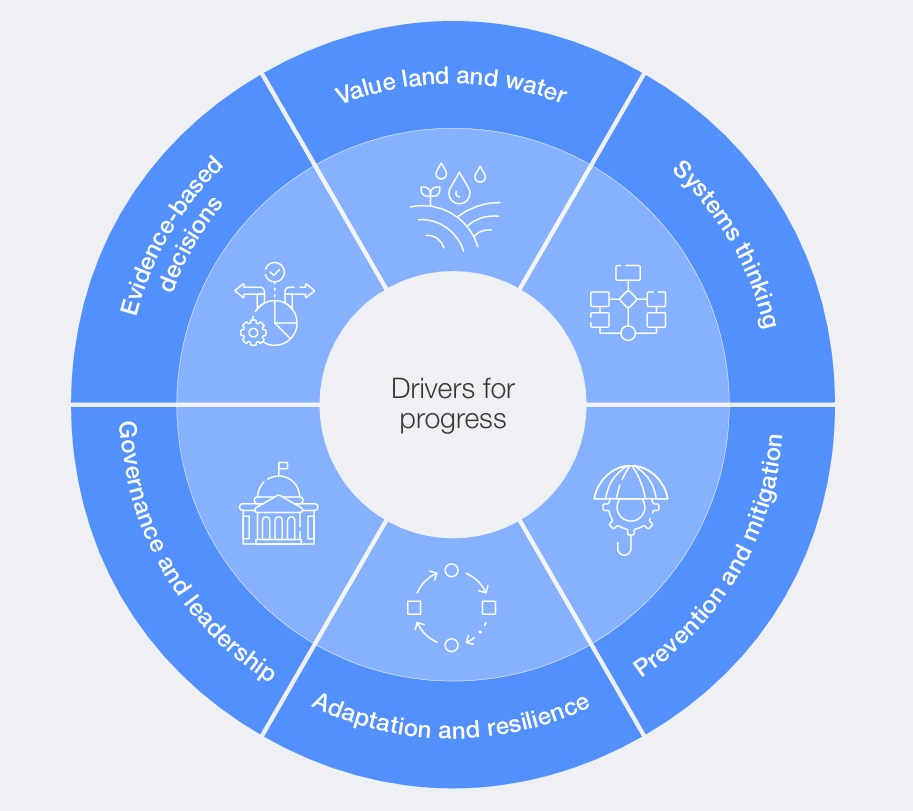
Addressing escalating flood risks demands systems thinking, one that values land and water, grounds decisions in evidence, and prioritizes proactive prevention and mitigation alongside adaptive and resilient infrastructure and community empowerment. To effectively mitigate compounding climate risks, we must rigorously analyse where these drivers succeed, share scalable solutions, and apply the hard lessons of both past failures and successes.
Examples from Japan indicate that building resilience is never just a single project, it requires a portfolio of measures enabled by governance, data, targeted incentives, collaboration and continuous investment.
For private sector leaders, post-incident recovery models are no longer enough to secure business continuity. Instead, companies must treat resilience as a core strategic priority, embedding it directly into business strategies, product and service design, site selection, R&D and partnerships. To make this shift investable, metrics and financial models quantifying the ROI of proactive measures must be advanced (e.g. reduced operational and supply chain disruptions from preparedness).
The frontier lies in dual or multi-use solutions that deliver commercial value under normal conditions while ensuring disaster readiness. To unlock this potential, it is essential to de-risk such innovation and scale them from localized pilots to global market opportunities. Ultimately, targeted innovative solutions can transform climate resilience from a crisis management and recovery expense into a suite of high-demand products and services.
For public sector leaders, legacy infrastructure that was not built for growing climate risks is a compounding liability. Systemic resilience requires shifting away from fragmented, one-off capital projects towards a continuous cycle of proactive learning, for example, where engineered systems, nature-based solutions and adaptive evidence-based tools are deliberately interwoven and have shown real results.
Crucially, effective water and flood management cannot stop at urban municipal borders. Governments should adopt a holistic, basin-wide approach that recognizes the interdependence between urban, peri-urban and rural landscapes. Managing these interconnected climate risks demands that governments break down institutional silos, build cross-agency partnerships, align national strategies with local priorities, and provide the right incentives.
This can contribute to shifting the mindset to one where resilience is viewed as a shared responsibility rather than a sole public mandate. It can create pathways to de-risk private market investments, give industries confidence to co-invest in projects, and transform infrastructure into a civic asset that anchors local economies against escalating environmental shocks.
Why Japan serves as an example for climate and flooding preparedness
The World Economic Forum’s 2026 Global Risks Report ranks extreme weather as one of the most severe threats facing the global economy over the next decade. As climate uncertainty accelerates, no country, corporation or community can afford to rely on systems unprepared for extreme shocks and costs.
The solutions from Japan demonstrate that safeguarding our collective future requires bold and creative innovations, collaboration, inter-city cooperation and proactive investment.
The cost of building these adaptive systems is a symbol of growth, not a burden. While the required upfront capital may be high, the data clearly indicates that the cost of doing nothing is a price economies, societies and households cannot afford to pay.
Read the official briefing paper 'Resilient Economies: Flood Adaptation Infrastructure Innovation from Japan' here: in English and in Japanese.
Don't miss any update on this topic
Create a free account and access your personalized content collection with our latest publications and analyses.
License and Republishing
World Economic Forum articles may be republished in accordance with the Creative Commons Attribution-NonCommercial-NoDerivatives 4.0 International Public License, and in accordance with our Terms of Use.
The views expressed in this article are those of the author alone and not the World Economic Forum.
Stay up to date:
Climate and Energy Disruption

Forum Stories newsletter
Bringing you weekly curated insights and analysis on the global issues that matter.
More on Climate Action and Waste Reduction See all

Daniel Mahadzir
September 24, 2026